

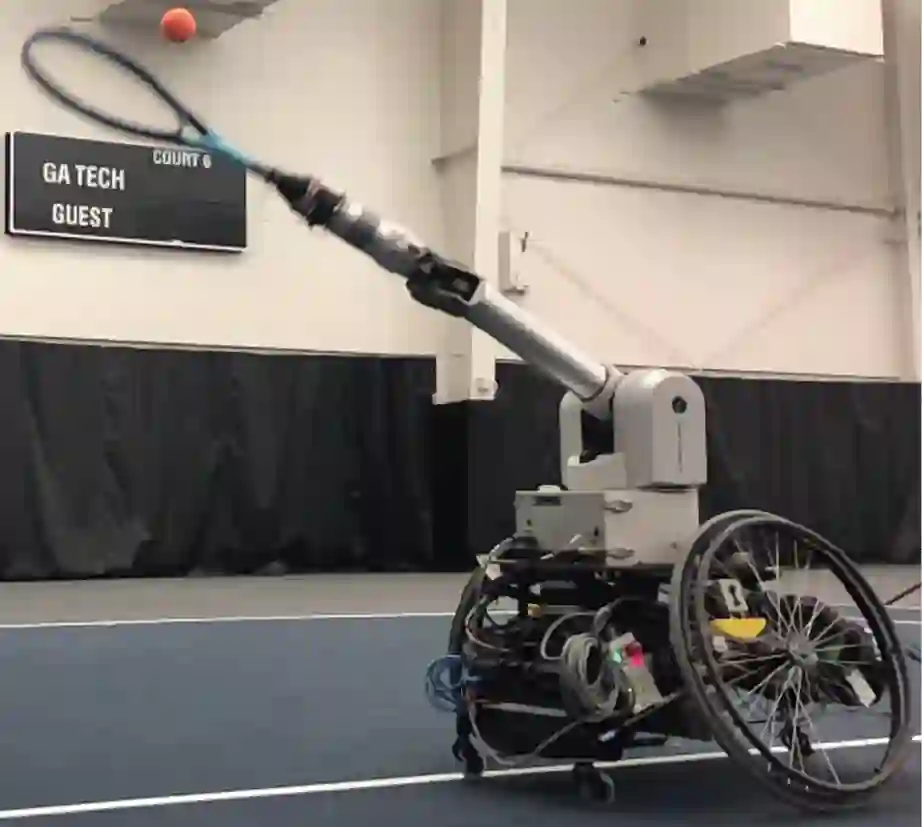
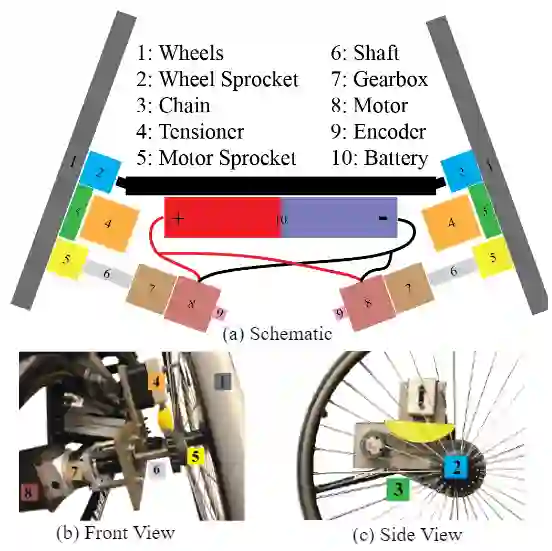
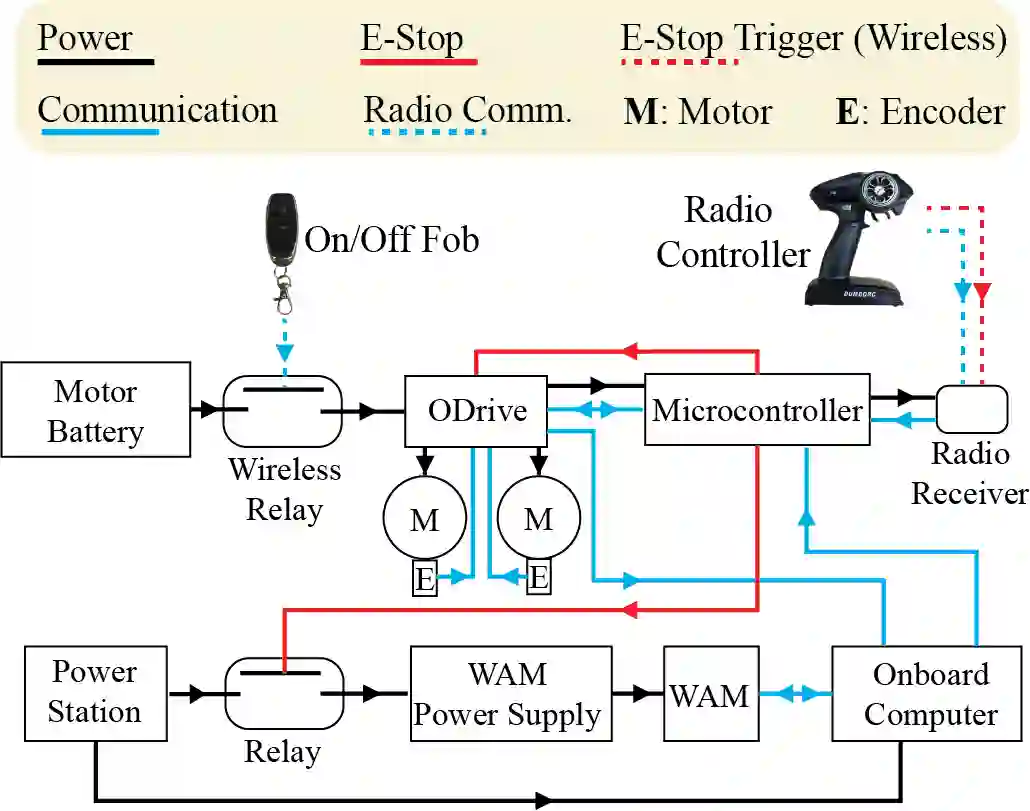
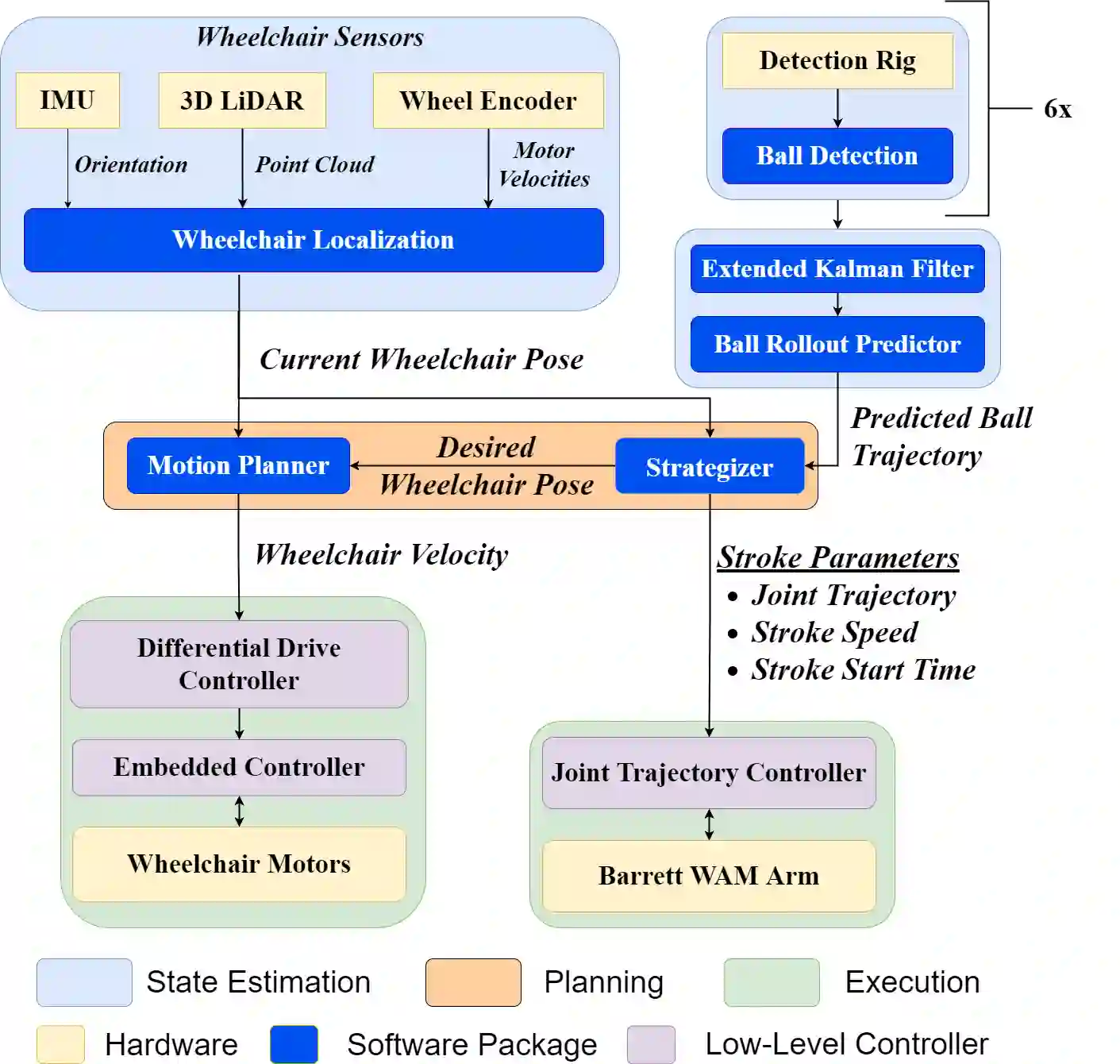
Athletics are a quintessential and universal expression of humanity. From French monks who in the 12th century invented jeu de paume, the precursor to modern lawn tennis, back to the K'iche' people who played the Maya Ballgame as a form of religious expression over three thousand years ago, humans have sought to train their minds and bodies to excel in sporting contests. Advances in robotics are opening up the possibility of robots in sports. Yet, key challenges remain, as most prior works in robotics for sports are limited to pristine sensing environments, do not require significant force generation, or are on miniaturized scales unsuited for joint human-robot play. In this paper, we propose the first open-source, autonomous robot for playing regulation wheelchair tennis. We demonstrate the performance of our full-stack system in executing ground strokes and evaluate each of the system's hardware and software components. The goal of this paper is to (1) inspire more research in human-scale robot athletics and (2) establish the first baseline for a reproducible wheelchair tennis robot for regulation singles play. Our paper contributes to the science of systems design and poses a set of key challenges for the robotics community to address in striving towards robots that can match human capabilities in sports.
翻译:体育运动是人类本质且普遍的表达方式。从12世纪发明现代草地网球前身"掌球游戏"的法国修道士,到三千多年前将玛雅球戏作为宗教表达形式的基切人,人类始终追求通过体育竞赛来训练身心。机器人技术的进步为体育领域引入了机器人参与的可能性。然而,现有体育机器人研究大多局限于理想传感环境、无需产生显著力输出、或采用不适合人机协作的微型化尺度,因此关键挑战依然存在。本文提出了首个用于规范轮椅网球比赛的开源自主动机器人系统。我们展示了全栈系统执行地面击球的表现,并评估了各软硬件组件性能。本文旨在:(1)激发更多人尺度机器人体育研究;(2)为可复现的规范单打轮椅网球机器人建立首个基准。本研究贡献于系统设计科学,并为机器人社区提出了若干关键挑战,以推动实现与人类运动能力相匹配的机器人系统。




相关内容




 微信扫码咨询专知VIP会员