

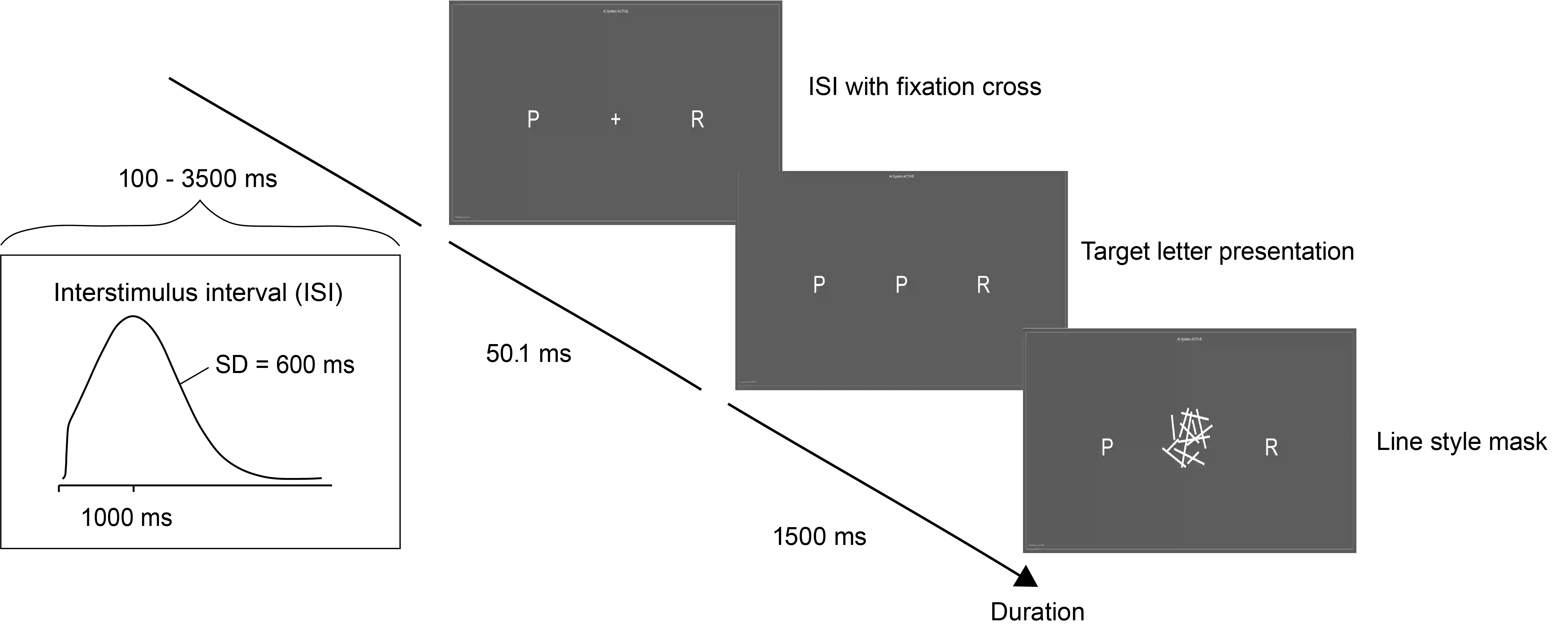
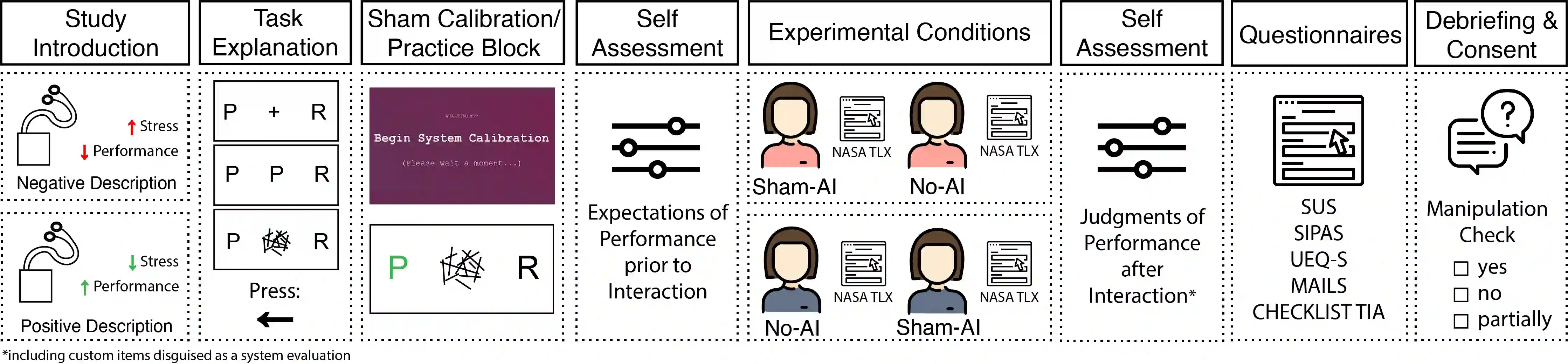
Heightened AI expectations facilitate performance in human-AI interactions through placebo effects. While lowering expectations to control for placebo effects is advisable, overly negative expectations could induce nocebo effects. In a letter discrimination task, we informed participants that an AI would either increase or decrease their performance by adapting the interface, but in reality, no AI was present in any condition. A Bayesian analysis showed that participants had high expectations and performed descriptively better irrespective of the AI description when a sham-AI was present. Using cognitive modeling, we could trace this advantage back to participants gathering more information. A replication study verified that negative AI descriptions do not alter expectations, suggesting that performance expectations with AI are biased and robust to negative verbal descriptions. We discuss the impact of user expectations on AI interactions and evaluation and provide a behavioral placebo marker for human-AI interaction
翻译:对AI的过高期望会通过安慰剂效应提升人机交互中的表现。尽管降低期望以控制安慰剂效应是明智的,但过度负面的期望可能诱发反安慰剂效应。在一项字母辨别任务中,我们告知参与者AI将通过调整界面来提高或降低其表现,但实际上任何条件下都不存在AI。贝叶斯分析表明,在伪AI存在的情况下,无论AI描述如何,参与者均保持高期望且描述性表现更优。通过认知建模,我们发现这种优势可追溯至参与者收集了更多信息。一项重复实验证实,对AI的负面描述不会改变期望,表明对AI表现期望存在偏差,且对负面描述具有鲁棒性。本文探讨了用户期望对AI交互与评估的影响,并为人机交互提供了行为层面的安慰剂标记。





相关内容





 微信扫码咨询专知VIP会员