

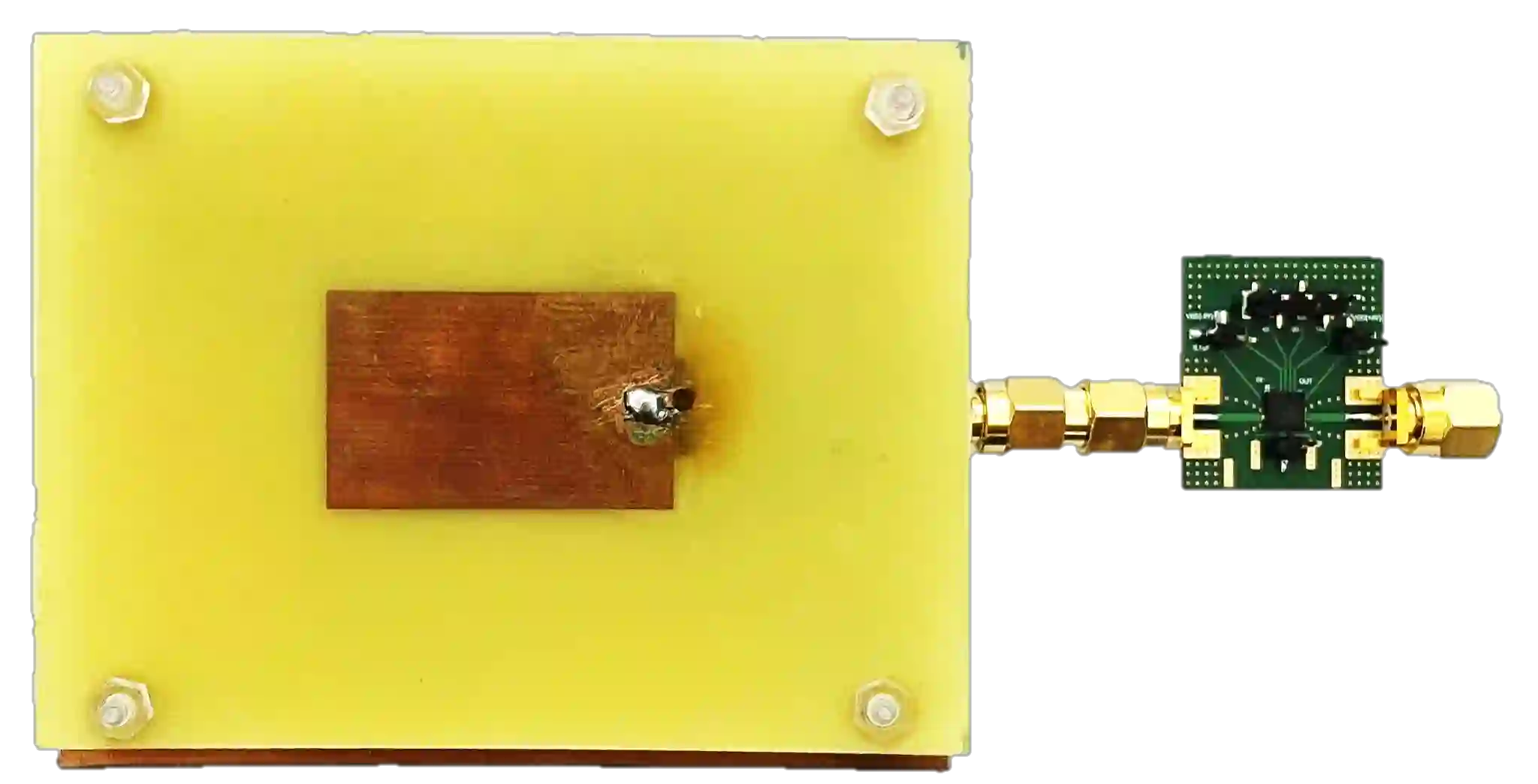
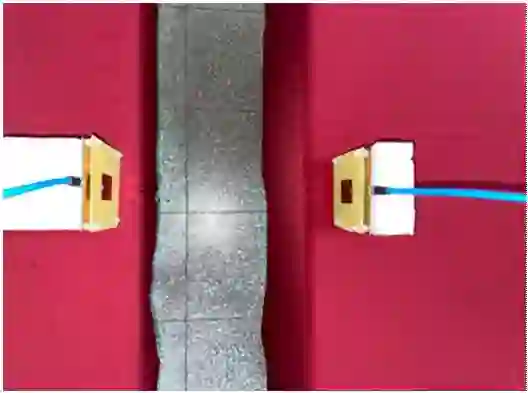
Future wireless networks require the ability to actively adjust the wireless environment to meet strict performance indicators. Reconfigurable Intelligent Surface (RIS) technology is gaining attention for its advantages of low power consumption, cost-effectiveness, and ease of deployment. However, existing channel models for RIS often ignore important properties, such as the impairment in the RIS's switch component and the polarization efficiency among antennas, limiting their practical use. In this paper, we propose a new channel model for RIS that considers these ignored properties, including the reflected field, scattered field, and antenna resonant mode. We verify the proposed model through the practical implementation of a 4 x 4 RIS array with patch antennas in the 3.5 GHz band, using a phase shifter as the switch component of a RIS element. The equivalent model of the phase shifter is also formulated and incorporated into the channel model. We propose a blind controlling algorithm to discuss the properties of our channel model and emphasize the importance of considering polarization and tracking mechanisms for the controlling algorithm. Our channel model is an improvement over existing models and can be used in the practical design of RIS technology. The proposed algorithm provides a practical approach to controlling the wireless environment, suitable for various wireless applications.
翻译:未来无线网络需具备主动调控无线环境的能力,以满足严苛的性能指标。可重构智能表面(RIS)技术因具有低功耗、低成本及易于部署等优势而备受关注。然而,现有RIS信道模型常忽略重要特性,如RIS开关元件的损耗及天线间的极化效率,限制了其实用性。本文提出一种考虑上述被忽略特性(包括反射场、散射场及天线谐振模式)的新型RIS信道模型。通过3.5 GHz频段下采用贴片天线的4×4 RIS阵列实际实现,以移相器作为RIS单元的开关元件,验证所提模型的有效性。同时,本文构建了移相器的等效模型并将其纳入信道模型,进一步提出一种盲控制算法以探讨所提信道模型的特性,并强调控制算法中考虑极化与跟踪机制的重要性。所提模型较现有模型有所改进,可用于RIS技术的实际设计。该算法为调控无线环境提供了一种实用方法,适用于多种无线应用场景。







相关内容

 微信扫码咨询专知VIP会员