

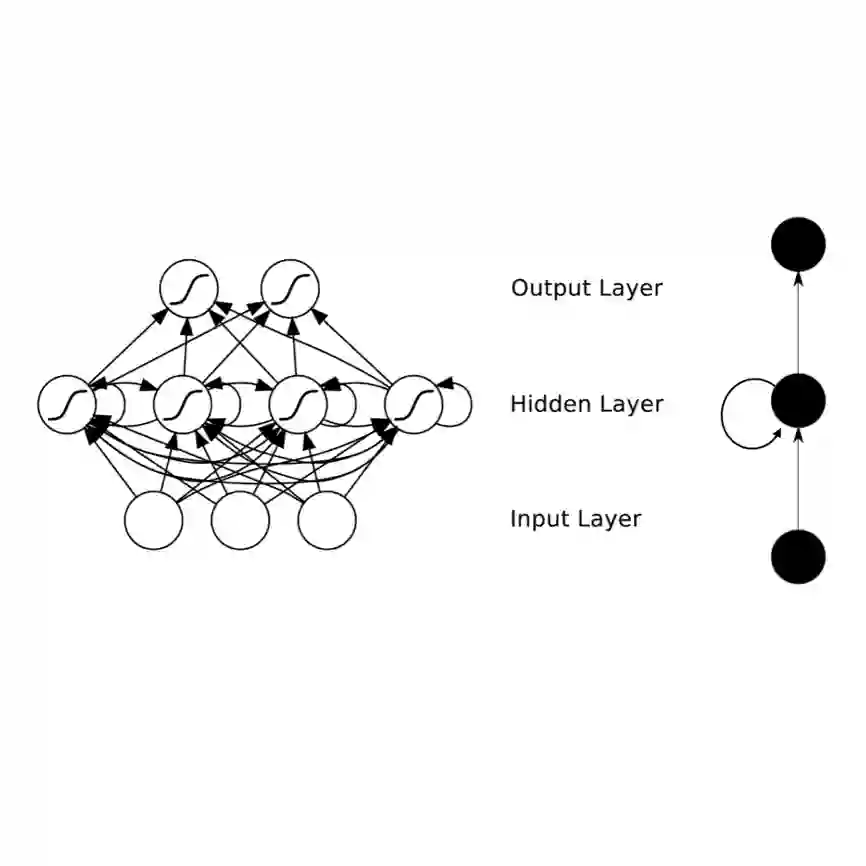
The great behavioral heterogeneity observed between individuals with the same psychiatric disorder and even within one individual over time complicates both clinical practice and biomedical research. However, modern technologies are an exciting opportunity to improve behavioral characterization. Existing psychiatry methods that are qualitative or unscalable, such as patient surveys or clinical interviews, can now be collected at a greater capacity and analyzed to produce new quantitative measures. Furthermore, recent capabilities for continuous collection of passive sensor streams, such as phone GPS or smartwatch accelerometer, open avenues of novel questioning that were previously entirely unrealistic. Their temporally dense nature enables a cohesive study of real-time neural and behavioral signals. To develop comprehensive neurobiological models of psychiatric disease, it will be critical to first develop strong methods for behavioral quantification. There is huge potential in what can theoretically be captured by current technologies, but this in itself presents a large computational challenge -- one that will necessitate new data processing tools, new machine learning techniques, and ultimately a shift in how interdisciplinary work is conducted. In my thesis, I detail research projects that take different perspectives on digital psychiatry, subsequently tying ideas together with a concluding discussion on the future of the field. I also provide software infrastructure where relevant, with extensive documentation. Major contributions include scientific arguments and proof of concept results for daily free-form audio journals as an underappreciated psychiatry research datatype, as well as novel stability theorems and pilot empirical success for a proposed multi-area recurrent neural network architecture.
翻译:在患有相同精神疾病的个体之间,甚至同一个体随时间推移所观察到的巨大行为异质性,既复杂化了临床实践,也增加了生物医学研究的难度。然而,现代技术为改善行为特征描述提供了令人兴奋的机遇。现有精神病学方法(如患者调查或临床访谈)多为定性或不可扩展,如今可以更大量地收集并分析以产生新的量化指标。此外,近期持续收集被动传感器数据流(如手机GPS或智能手表加速度计)的能力,开辟了此前完全不切实际的新探究途径。这些数据在时间上的密集性使得实时神经和行为信号的统一研究成为可能。为了开发精神疾病的全面的神经生物学模型,首先建立强大的行为量化方法至关重要。现有技术理论上能够捕捉的内容潜力巨大,但这本身也构成了一个巨大的计算挑战——一项将需要新的数据处理工具、新的机器学习技术,并最终推动跨学科工作方式转变的挑战。在我的论文中,我详细阐述了从不同视角研究数字精神病学的研究项目,并通过关于该领域未来的总结性讨论将观点整合在一起。我还提供了相关的软件基础设施及详尽文档。主要贡献包括:论证日常自由形式音频日志作为被低估的精神病学研究数据类型的科学依据及概念验证结果,以及针对所提出的多区域递归神经网络架构的新颖稳定性定理和初步实证成功。




相关内容




 微信扫码咨询专知VIP会员