

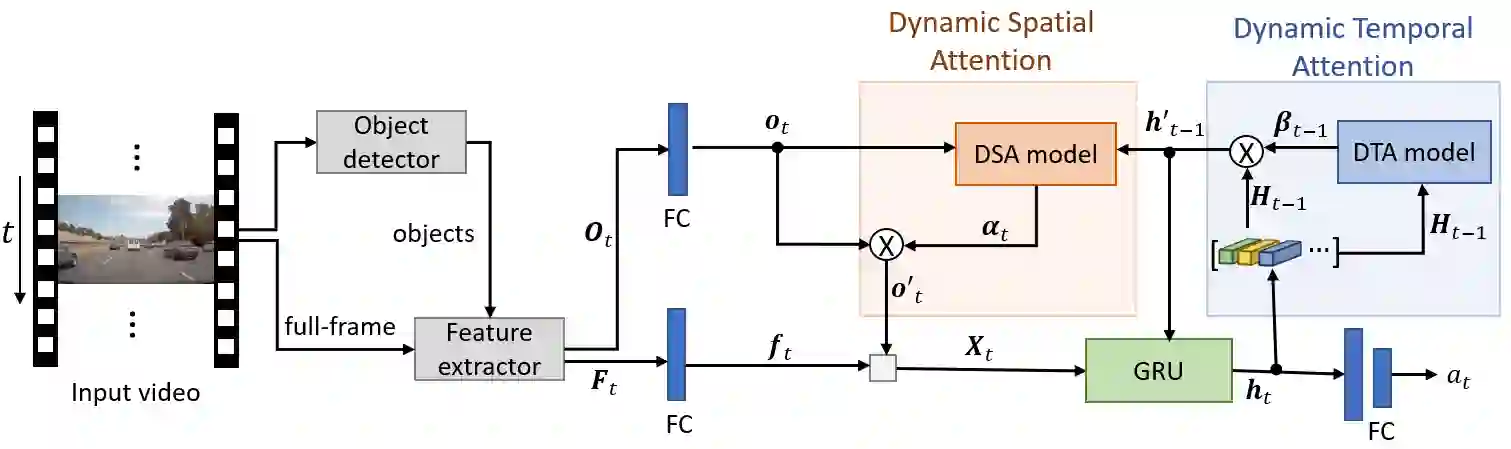
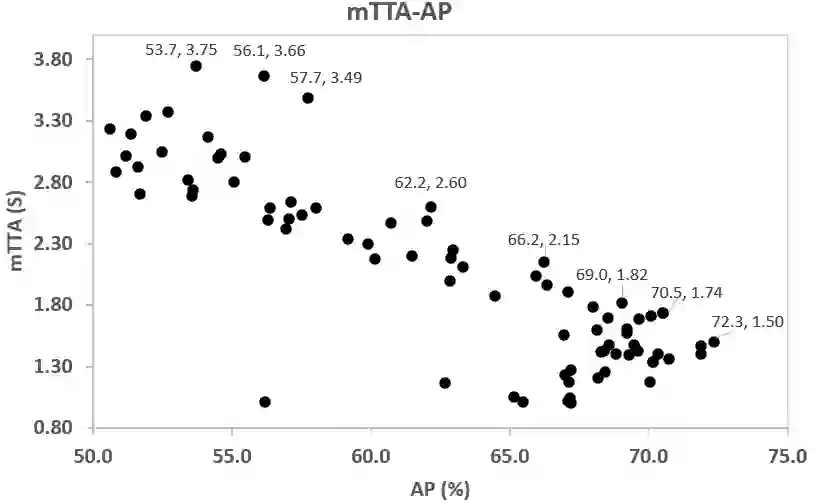
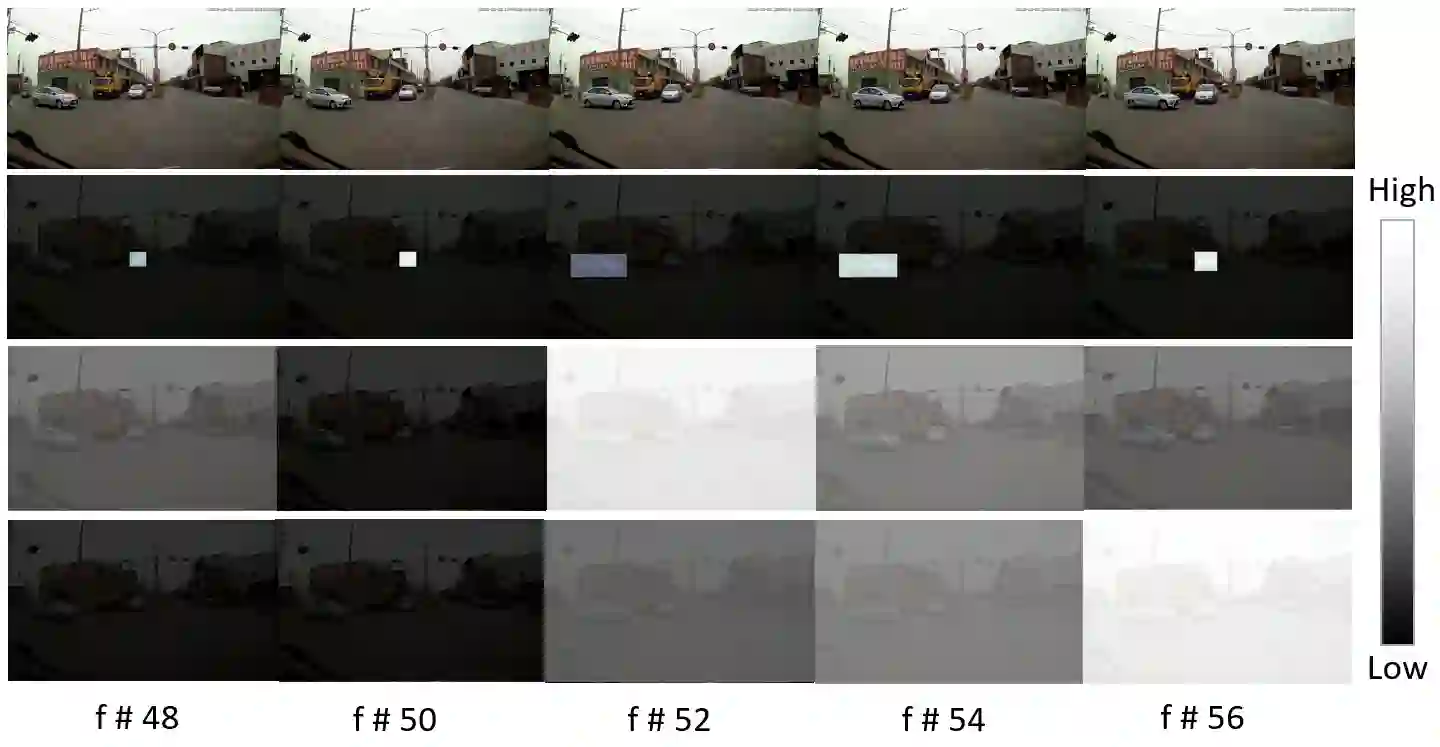
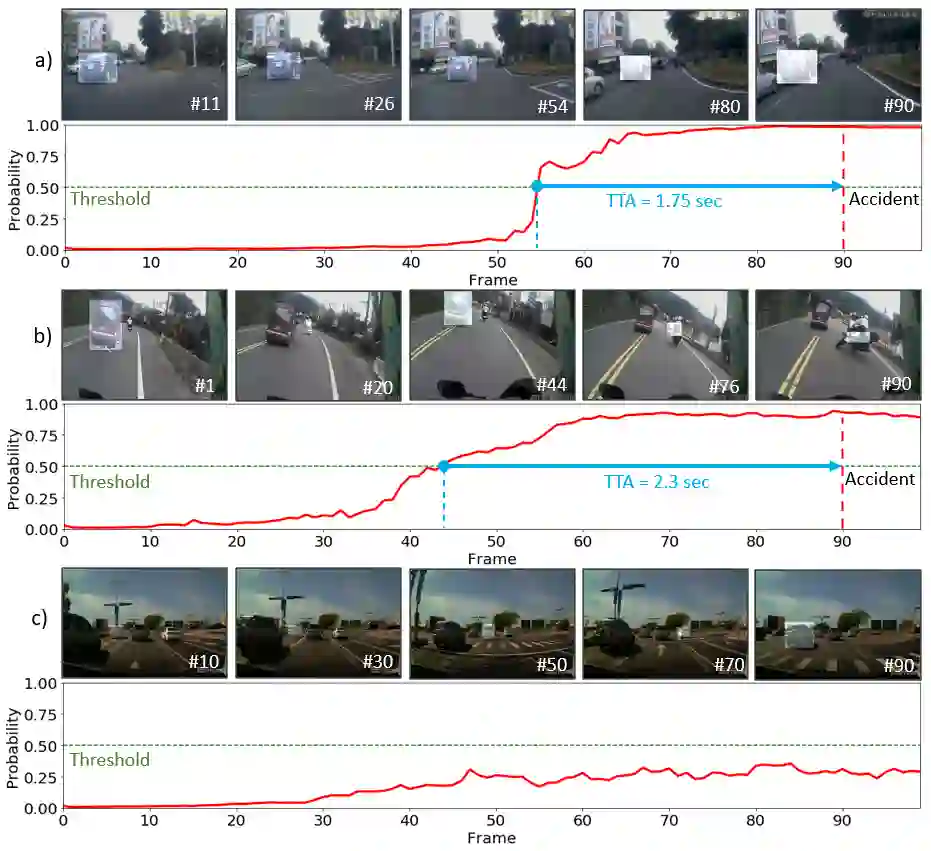
Recently, autonomous vehicles and those equipped with an Advanced Driver Assistance System (ADAS) are emerging. They share the road with regular ones operated by human drivers entirely. To ensure guaranteed safety for passengers and other road users, it becomes essential for autonomous vehicles and ADAS to anticipate traffic accidents from natural driving scenes. The dynamic spatial-temporal interaction of the traffic agents is complex, and visual cues for predicting a future accident are embedded deeply in dashcam video data. Therefore, early anticipation of traffic accidents remains a challenge. To this end, the paper presents a dynamic spatial-temporal attention (DSTA) network for early anticipation of traffic accidents from dashcam videos. The proposed DSTA-network learns to select discriminative temporal segments of a video sequence with a module named Dynamic Temporal Attention (DTA). It also learns to focus on the informative spatial regions of frames with another module named Dynamic Spatial Attention (DSA). The spatial-temporal relational features of accidents, along with scene appearance features, are learned jointly with a Gated Recurrent Unit (GRU) network. The experimental evaluation of the DSTA-network on two benchmark datasets confirms that it has exceeded the state-of-the-art performance. A thorough ablation study evaluates the contributions of individual components of the DSTA-network, revealing how the network achieves such performance. Furthermore, this paper proposes a new strategy that fuses the prediction scores from two complementary models and verifies its effectiveness in further boosting the performance of early accident anticipation.
翻译:最近,自治车辆和配备高级司机协助系统(ADAS)的车辆正在出现,它们与由人类驾驶员完全经营的正常车辆共用道路。为确保乘客和其他道路使用者的安全,自主车辆和ADAS必须从自然驾驶场预测交通事故。交通代理的动态空间-时空互动十分复杂,预测未来事故的视觉提示深深嵌入了破摄像机视频数据中。因此,对交通事故的早期预测仍是一项挑战。为此,本文件展示了一个动态空间时空关注网络,以便从破摄像头视频中及早预测交通事故。拟议的DSTA网络学会从一个名为动态时钟注意(DTA)的模块中选择一段有区别的视频时间段来预测交通事故。还学习了以另一个名为动态空间注意(DSA)的模块来提供信息的空间区域。 事故的空间-时空关系特征以及场景特征,与Greded 常规股(GRU)网络一起学习。对DSTA网络在两个数据库的早期预测性能表现进行实验性评估,这两份数据库的预估性业绩评估都超过了DRISTA的预估。




相关内容




 微信扫码咨询专知VIP会员