

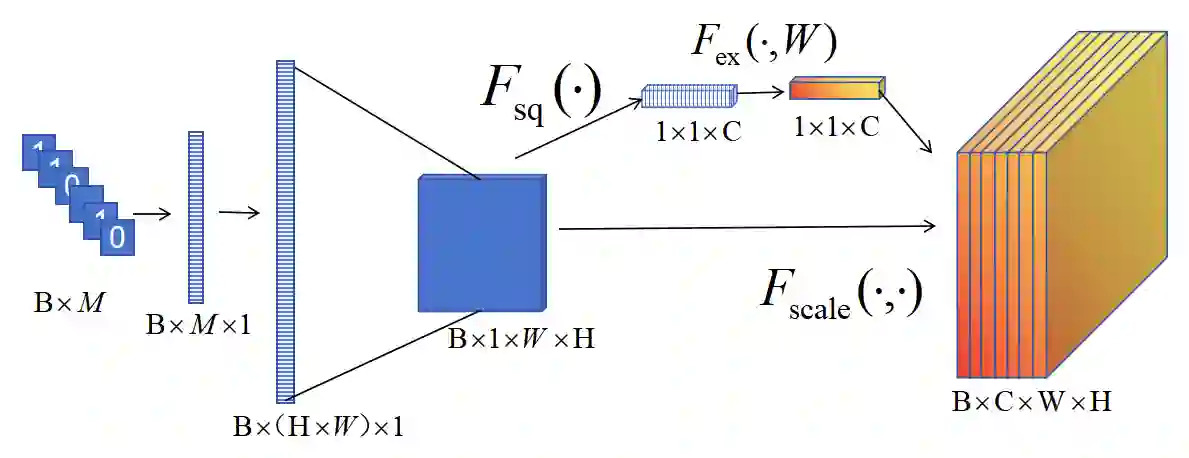
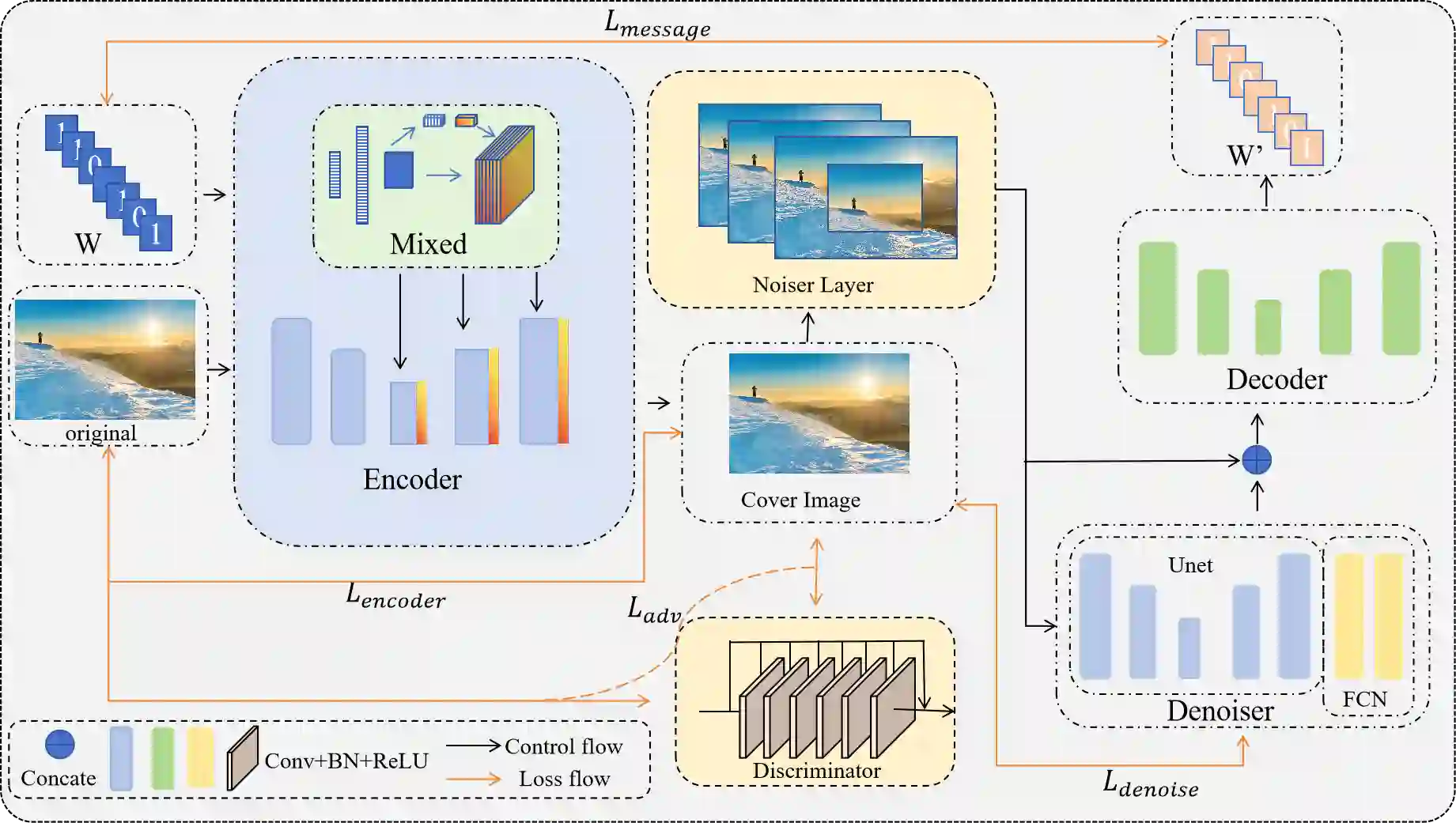
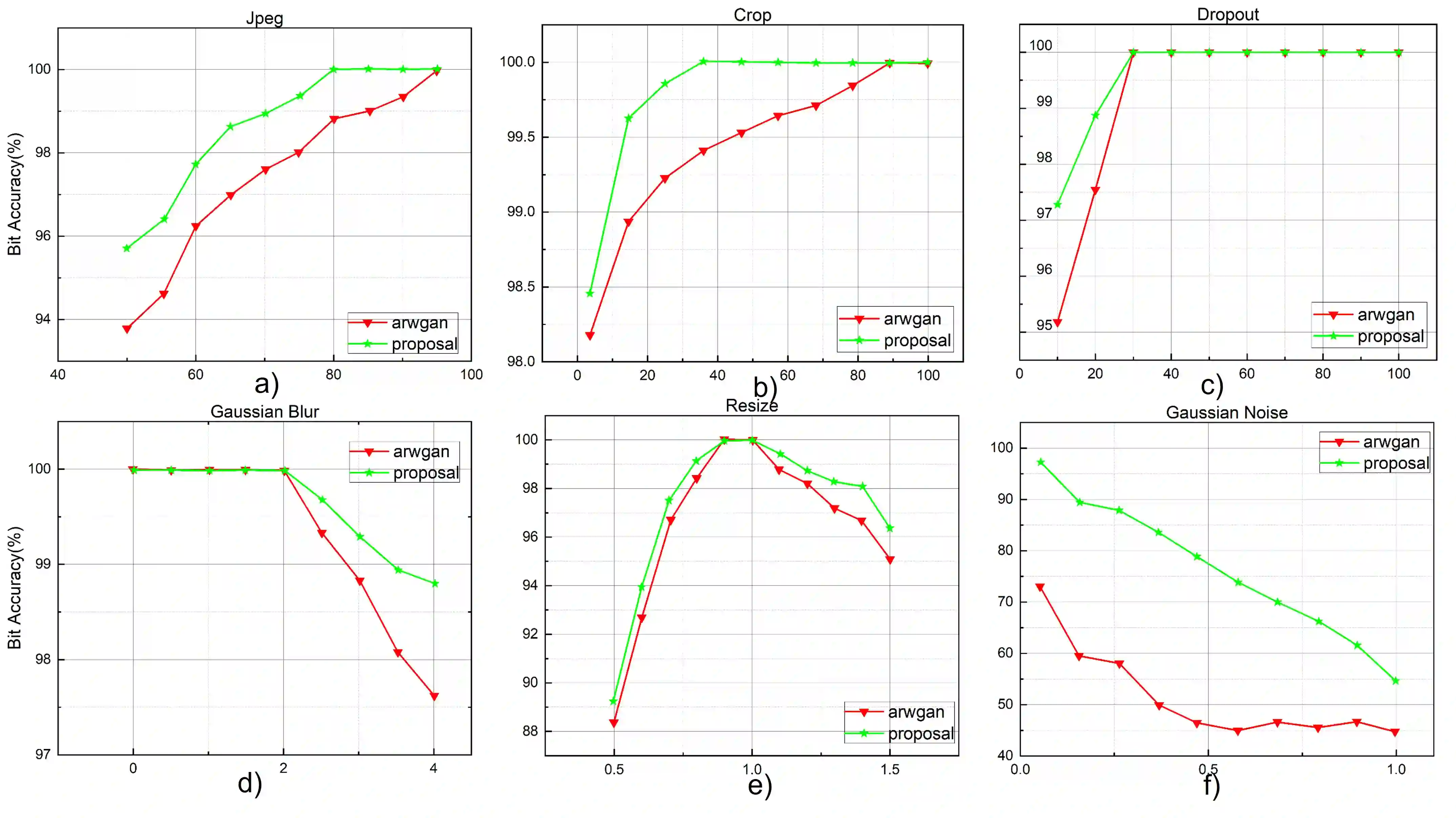
Digital watermarking is the process of embedding secret information by altering images in a way that is undetectable to the human eye. To increase the robustness of the model, many deep learning-based watermarking methods use the encoder-decoder architecture by adding different noises to the noise layer. The decoder then extracts the watermarked information from the distorted image. However, this method can only resist weak noise attacks. To improve the robustness of the algorithm against stronger noise, this paper proposes to introduce a denoise module between the noise layer and the decoder. The module is aimed at reducing noise and recovering some of the information lost during an attack. Additionally, the paper introduces the SE module to fuse the watermarking information pixel-wise and channel dimensions-wise, improving the encoder's efficiency. Experimental results show that our proposed method is comparable to existing models and outperforms state-of-the-art under different noise intensities. In addition, ablation experiments show the superiority of our proposed module.
翻译:数字水印是通过以人眼不可察觉的方式修改图像来嵌入秘密信息的过程。为了增强模型的鲁棒性,许多基于深度学习的水印方法采用编码器-解码器架构,并在噪声层中添加不同类型的噪声。解码器随后从失真图像中提取水印信息。然而,此类方法仅能抵抗弱噪声攻击。为提升算法对强噪声的鲁棒性,本文提出在噪声层与解码器之间引入去噪模块。该模块旨在降低噪声并恢复攻击过程中丢失的部分信息。此外,本文引入SE模块以在像素维度和通道维度上融合水印信息,从而提高编码器的效率。实验结果表明,所提方法在性能上与现有模型相当,且在不同噪声强度下均优于当前最优方法。消融实验进一步证明了所提模块的优越性。




相关内容




 微信扫码咨询专知VIP会员