

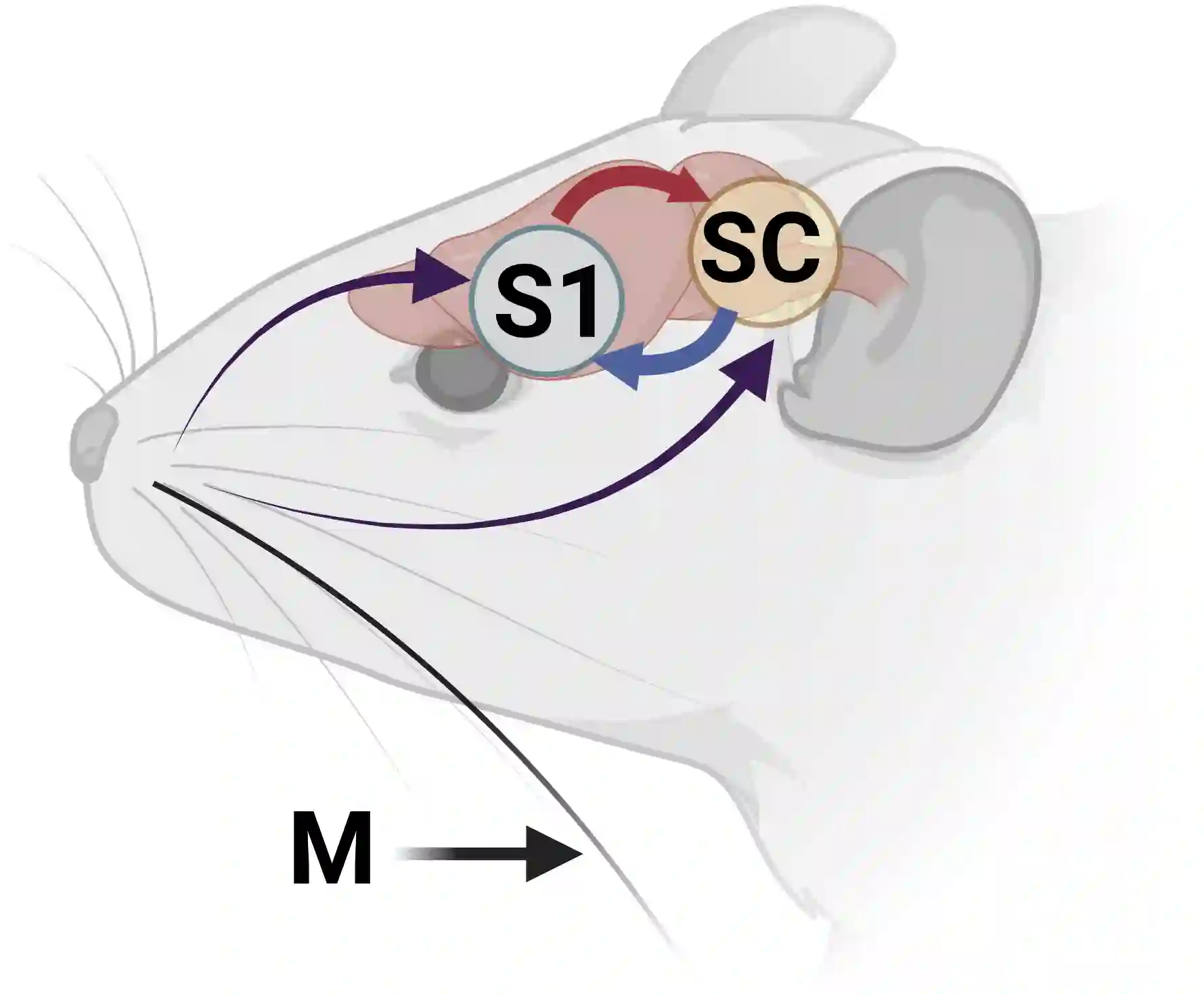
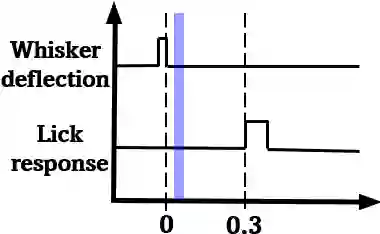
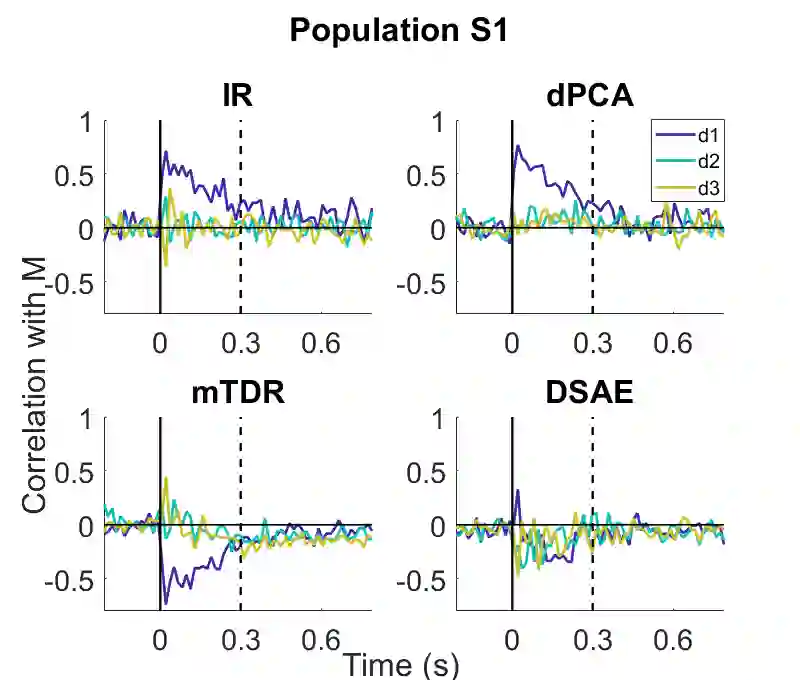
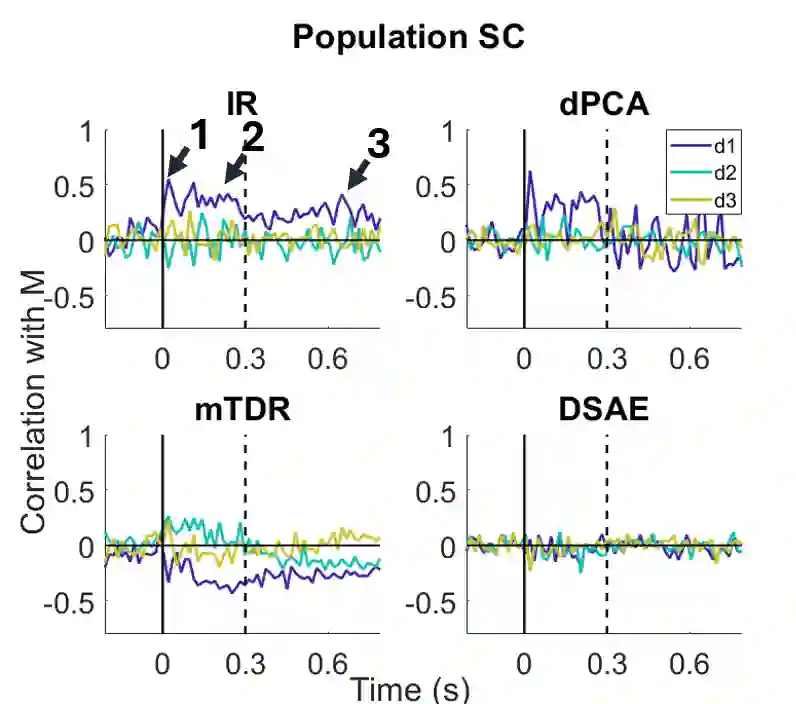
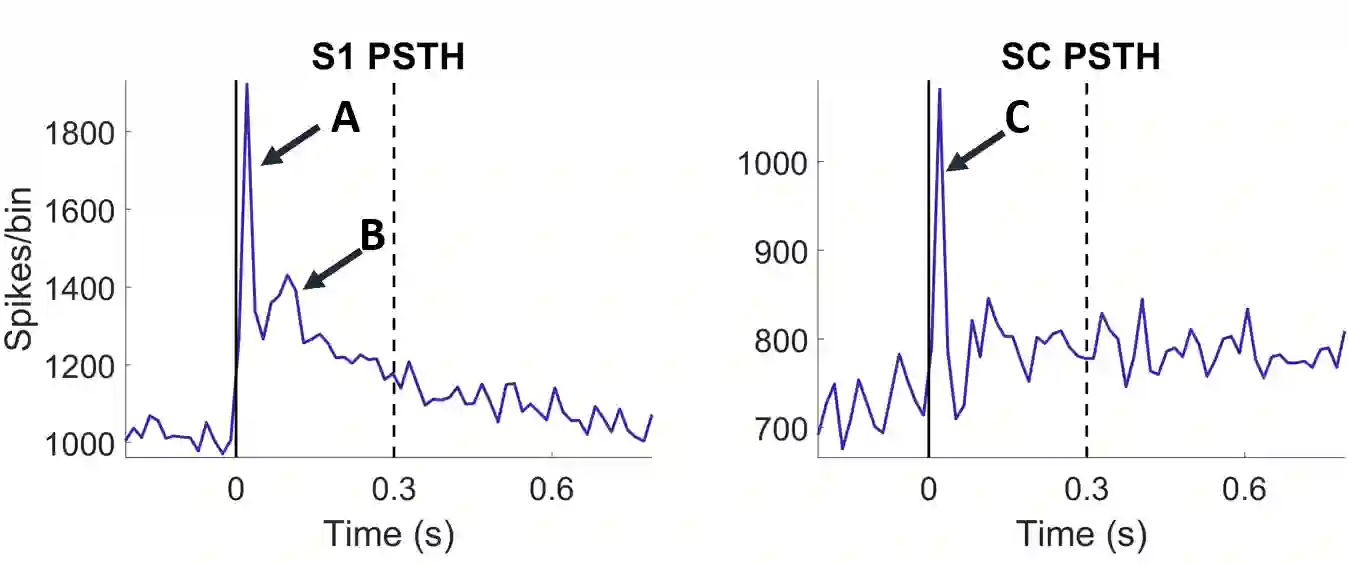
Quantifying relevant interactions between neural populations is a prominent question in the analysis of high-dimensional neural recordings. However, existing dimension reduction methods often discuss communication in the absence of a formal framework, while frameworks proposed to address this gap are impractical in data analysis. This work bridges the formal framework of M-Information Flow with practical analysis of real neural data. To this end, we propose Iterative Regression, a message-dependent linear dimension reduction technique that iteratively finds an orthonormal basis such that each basis vector maximizes correlation between the projected data and the message. We then define 'M-forwarding' to formally capture the notion of a message being forwarded from one neural population to another. We apply our methodology to recordings we collected from two neural populations in a simplified model of whisker-based sensory detection in mice, and show that the low-dimensional M-forwarding structure we infer supports biological evidence of a similar structure between the two original, high-dimensional populations.
翻译:量化神经群体间的相关交互是高维神经记录分析中的一个重要问题。然而,现有的降维方法常在缺乏形式化框架的情况下讨论通信问题,而针对这一空白提出的框架在数据分析中往往不具实用性。本研究将M-信息流的形式化框架与真实神经数据的实际分析相结合。为此,我们提出了迭代回归法——一种基于消息的线性降维技术,该方法通过迭代寻找一组标准正交基,使得每个基向量都能最大化投影数据与消息之间的相关性。随后,我们定义了“M-转发”以形式化地捕捉消息从一个神经群体向另一个神经群体传递的概念。我们将该方法应用于从小鼠胡须感官检测简化模型中采集的两个神经群体记录数据,结果表明,我们推断出的低维M-转发结构支持了两个原始高维群体间存在类似结构的生物学证据。




相关内容




 微信扫码咨询专知VIP会员