

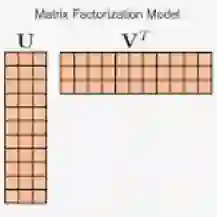
The solar spectral irradiance (SSI) depicts the spectral distribution of solar energy flux reaching the top of the Earth's atmosphere. Daily SSI measurements constitute a matrix with spectrally (rows) and temporally (columns) resolved solar energy flux measurements. The most recent SSI measurements have been made by NASA's Total and Spectral Solar Irradiance Sensor-1 (TSIS-1) Spectral Irradiance Monitor (SIM) since March 2018. This data has considerable missing data due to both random factors and instrument downtime, a periodic trend related to the Sun's cyclical magnetic activity, and varying degrees of correlation among the spectra, some approaching unity. We propose a low-rank matrix factorization method for SSI reconstruction that incorporates autoregressive temporal regularization, periodic spline detrending, and cross-spectral covariance information. The method is implemented as a two-stage procedure designed to address scattered missingness and extended downtime missingness, respectively, and is fitted using efficient alternating optimization algorithms. We further accompany the reconstructed SSI values with a distribution-free interval estimation procedure based on conformal prediction. Through synthetic experiments and real-data analyses, we compare this method with Gaussian process regression, linear time series smoothing, and existing matrix-completion approaches in terms of imputation accuracy, interval coverage, interval length, and computational efficiency. The results show that exploiting the periodic, temporal, and cross-spectral structure of SSI substantially improves reconstruction performance and yields calibrated uncertainty intervals, producing a reconstructed SSI data product suitable for downstream climate science studies.
翻译:太阳光谱辐照度描述了到达地球大气层顶部的太阳能量通量的光谱分布。每日太阳光谱辐照度测量值构成一个矩阵,该矩阵包含按光谱(行)和时间(列)解析的太阳能量通量测量值。最新的太阳光谱辐照度测量由美国国家航空航天局的太阳总辐照度和光谱辐照度传感器-1光谱辐照度监测仪自2018年3月起提供。由于随机因素和仪器停机,该数据存在大量缺失值,同时还包含与太阳周期性磁活动相关的趋势,以及光谱间不同程度的相关性(部分接近单位相关)。我们提出了一种低秩矩阵分解方法用于太阳光谱辐照度重建,该方法融合了自回归时间正则化、周期性样条去趋势以及交叉谱协方差信息。该方法采用两阶段流程实现,分别针对散乱缺失和长时间停机缺失进行设计,并通过高效的交替优化算法进行拟合。此外,我们基于保形预测为重建的太阳光谱辐照度值提供了一种无分布假设的区间估计方法。通过合成实验和真实数据分析,我们从插补精度、区间覆盖率、区间长度和计算效率四个方面,将该方法与高斯过程回归、线性时间序列平滑以及现有矩阵补全方法进行了比较。结果表明,利用太阳光谱辐照度的周期性、时间性和交叉谱结构能够显著提升重建性能,并提供校准后的不确定性区间,最终生成适用于下游气候科学研究的重建太阳光谱辐照度数据产品。




相关内容


 微信扫码咨询专知VIP会员