We present $\textbf{$\texttt{SkillQG}$}$: a question generation framework with controllable comprehension types for assessing and improving machine reading comprehension models. Existing question generation systems widely differentiate questions by $\textit{literal}$ information such as question words and answer types to generate semantically relevant questions for a given context. However, they rarely consider the $\textit{comprehension}$ nature of questions, i.e. the different comprehension capabilities embodied by different questions. In comparison, our $\texttt{SkillQG}$ is able to tailor a fine-grained assessment and improvement to the capabilities of question answering models built on it. Specifically, we first frame the comprehension type of questions based on a hierarchical skill-based schema, then formulate $\texttt{SkillQG}$ as a skill-conditioned question generator. Furthermore, to improve the controllability of generation, we augment the input text with question focus and skill-specific knowledge, which are constructed by iteratively prompting the pre-trained language models. Empirical results demonstrate that $\texttt{SkillQG}$ outperforms baselines in terms of quality, relevance, and skill-controllability while showing a promising performance boost in downstream question answering task.


翻译:我们提出$\textbf{$\texttt{SkillQG}$}$:一个具备可控理解类型的题目生成框架,用于评估和改进机器阅读理解模型。现有题目生成系统主要依据问题词和答案类型等$\textit{字面}$信息来区分类别,从而为给定上下文生成语义相关的问题。然而,这些系统极少考虑问题的$\textit{理解}$本质,即不同问题所体现的不同理解能力。相比之下,我们的$\texttt{SkillQG}$能够针对基于该框架构建的问答模型的能力进行细粒度评估与改进。具体而言,我们首先基于分层技能模式定义问题的理解类型,然后将$\texttt{SkillQG}$构建为技能条件化的题目生成器。为提升生成结果的可控性,我们通过迭代提示预训练语言模型来构建问题焦点与技能特定知识,并将其融入输入文本。实验结果表明,$\texttt{SkillQG}$在质量、相关性和技能可控性方面均优于基线模型,同时在下游问答任务中展现出显著的性能提升。


0
下载
关闭预览

相关内容

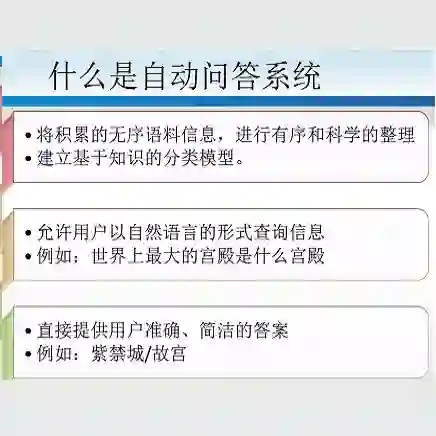
包括微软、CMU、Stanford在内的顶级人工智能专家和学者们正在研究更复杂的任务:让机器像人类一样阅读文本,进而根据对该文本的理解来回答问题。这种阅读理解就像是让计算机来做我们高考英语的阅读理解题。

知识荟萃

精品入门和进阶教程、论文和代码整理等

更多

查看相关VIP内容、论文、资讯等
【如何做研究】How to research ,22页ppt
专知会员服务
114+阅读 · 2021年4月17日
最新《自监督表示学习》报告,70页ppt
专知会员服务
86+阅读 · 2020年12月22日
专知会员服务
52+阅读 · 2020年12月14日
强化学习最新教程,17页pdf
专知会员服务
182+阅读 · 2019年10月11日
机器学习入门的经验与建议
专知会员服务
94+阅读 · 2019年10月10日
【哈佛大学商学院课程Fall 2019】机器学习可解释性
专知会员服务
105+阅读 · 2019年10月9日
【SIGGRAPH2019】TensorFlow 2.0深度学习计算机图形学应用
专知会员服务
41+阅读 · 2019年10月9日
Hierarchically Structured Meta-learning
CreateAMind
27+阅读 · 2019年5月22日
Transferring Knowledge across Learning Processes
CreateAMind
29+阅读 · 2019年5月18日
强化学习的Unsupervised Meta-Learning
CreateAMind
18+阅读 · 2019年1月7日
无监督元学习表示学习
CreateAMind
27+阅读 · 2019年1月4日
Unsupervised Learning via Meta-Learning
CreateAMind
44+阅读 · 2019年1月3日
国家自然科学基金
6+阅读 · 2015年12月31日
国家自然科学基金
2+阅读 · 2014年12月31日
国家自然科学基金
3+阅读 · 2013年12月31日
国家自然科学基金
2+阅读 · 2013年12月31日
国家自然科学基金
0+阅读 · 2012年12月31日
国家自然科学基金
0+阅读 · 2011年12月31日
国家自然科学基金
0+阅读 · 2011年12月31日
国家自然科学基金
0+阅读 · 2009年12月31日
国家自然科学基金
1+阅读 · 2009年12月31日
Arxiv
0+阅读 · 2023年6月20日
Arxiv
0+阅读 · 2023年6月16日
VIP会员
最新内容
无人机自主控制与人工智能:系统性综述
专知会员服务
5+阅读 · 今天7:25
巡飞弹与反无人机系统——现代战场的两大支柱
专知会员服务
2+阅读 · 今天6:54
《打造“黄金舰队”》57页报告
专知会员服务
1+阅读 · 今天6:52
《北约数字教官网络发展路径》128页报告
专知会员服务
1+阅读 · 今天6:33
ECCV 2026 | MIMFlow:MIM与归一化流统一图像生成
专知会员服务
6+阅读 · 6月25日
网状网络及其在军事领域的运用
专知会员服务
7+阅读 · 6月25日
无美国参与的欧洲战争方式(万字长文)
专知会员服务
8+阅读 · 6月25日
《国防领域敏感性分析白皮书》
专知会员服务
9+阅读 · 6月25日
综述 | 从问答到任务完成:Agent系统与Harness设计
专知会员服务
10+阅读 · 6月24日
Agentic RL:框架、实践与长程智能体训练
专知会员服务
10+阅读 · 6月24日
相关VIP内容
【如何做研究】How to research ,22页ppt
专知会员服务
114+阅读 · 2021年4月17日
最新《自监督表示学习》报告,70页ppt
专知会员服务
86+阅读 · 2020年12月22日
专知会员服务
52+阅读 · 2020年12月14日
强化学习最新教程,17页pdf
专知会员服务
182+阅读 · 2019年10月11日
机器学习入门的经验与建议
专知会员服务
94+阅读 · 2019年10月10日
【哈佛大学商学院课程Fall 2019】机器学习可解释性
专知会员服务
105+阅读 · 2019年10月9日
【SIGGRAPH2019】TensorFlow 2.0深度学习计算机图形学应用
专知会员服务
41+阅读 · 2019年10月9日
相关基金
国家自然科学基金
6+阅读 · 2015年12月31日
国家自然科学基金
2+阅读 · 2014年12月31日
国家自然科学基金
3+阅读 · 2013年12月31日
国家自然科学基金
2+阅读 · 2013年12月31日
国家自然科学基金
0+阅读 · 2012年12月31日
国家自然科学基金
0+阅读 · 2011年12月31日
国家自然科学基金
0+阅读 · 2011年12月31日
国家自然科学基金
0+阅读 · 2009年12月31日
国家自然科学基金
1+阅读 · 2009年12月31日
Top
微信扫码咨询专知VIP会员