

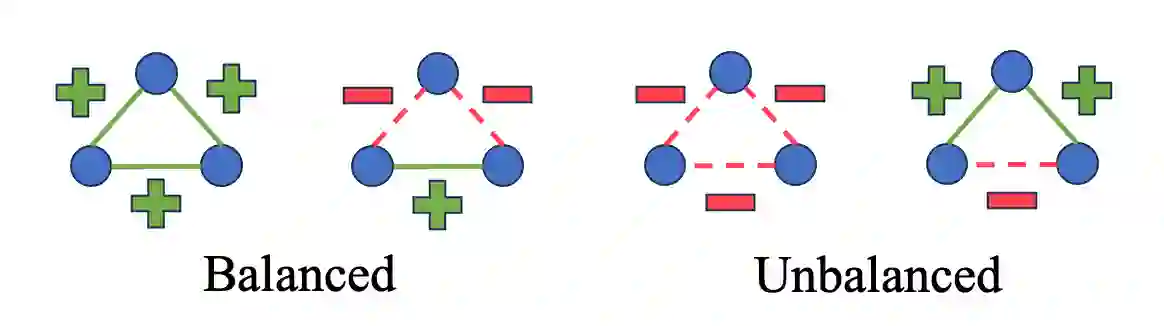
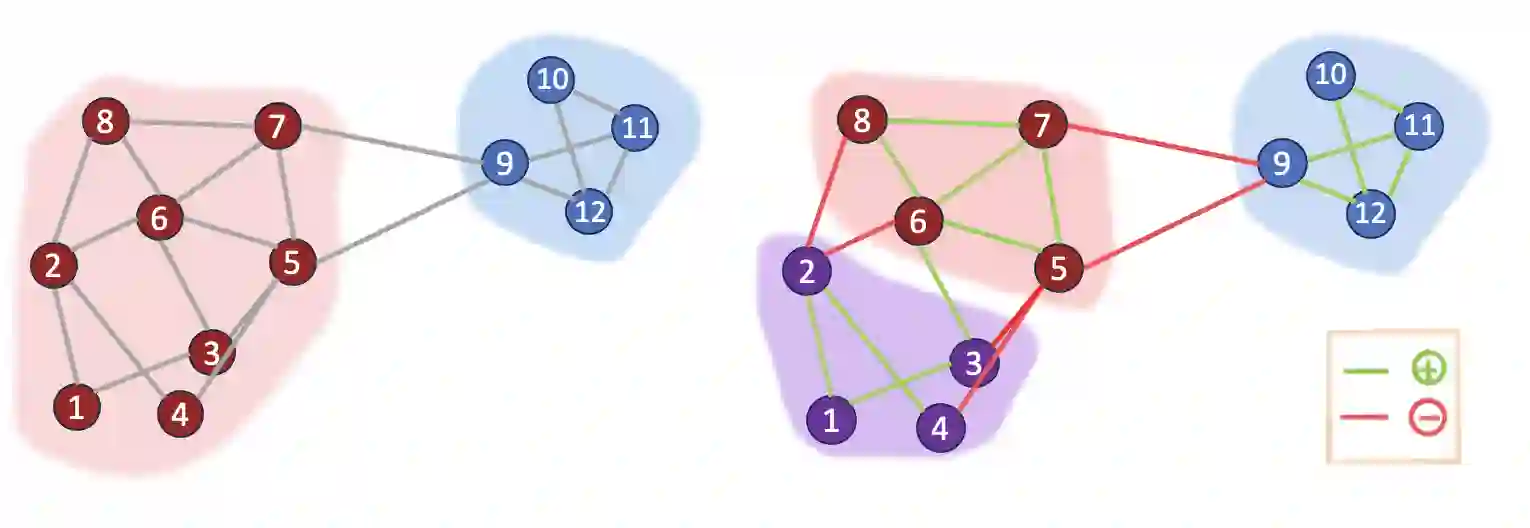
Community detection, discovering the underlying communities within a network from observed connections, is a fundamental problem in network analysis, yet it remains underexplored for signed networks. In signed networks, both edge connection patterns and edge signs are informative, and structural balance theory (e.g., triangles aligned with ``the enemy of my enemy is my friend'' and ``the friend of my friend is my friend'' are more prevalent) provides a global higher-order principle that guides community formation. We propose a Balanced Stochastic Block Model (BSBM), which incorporates balance theory into the network generating process such that balanced triangles are more likely to occur. We develop a fast profile pseudo-likelihood estimation algorithm with provable convergence and establish that our estimator achieves strong consistency under weaker signal conditions than methods for the binary SBM that rely solely on edge connectivity. Extensive simulation studies and two real-world signed networks demonstrate strong empirical performance.
翻译:社区检测是通过观测到的连接关系发现网络中潜在社区的基本问题,但在符号网络领域仍未得到充分探索。在符号网络中,边的连接模式和边的符号均具有信息价值,而结构平衡理论(例如符合“敌人的敌人是朋友”与“朋友的朋友是朋友”的三角形结构更为普遍)为社区形成提供了全局性的高阶指导原则。本文提出一种平衡随机块模型(BSBM),该模型将平衡理论融入网络生成过程,使得平衡三角形更可能形成。我们开发了一种具有可证明收敛性的快速轮廓伪似然估计算法,并证明在比仅依赖边连接性的二元随机块模型方法更弱的信号条件下,该估计量仍能实现强一致性。大量仿真研究和两个真实世界符号网络数据均验证了该方法的优异实证性能。




相关内容


 微信扫码咨询专知VIP会员