

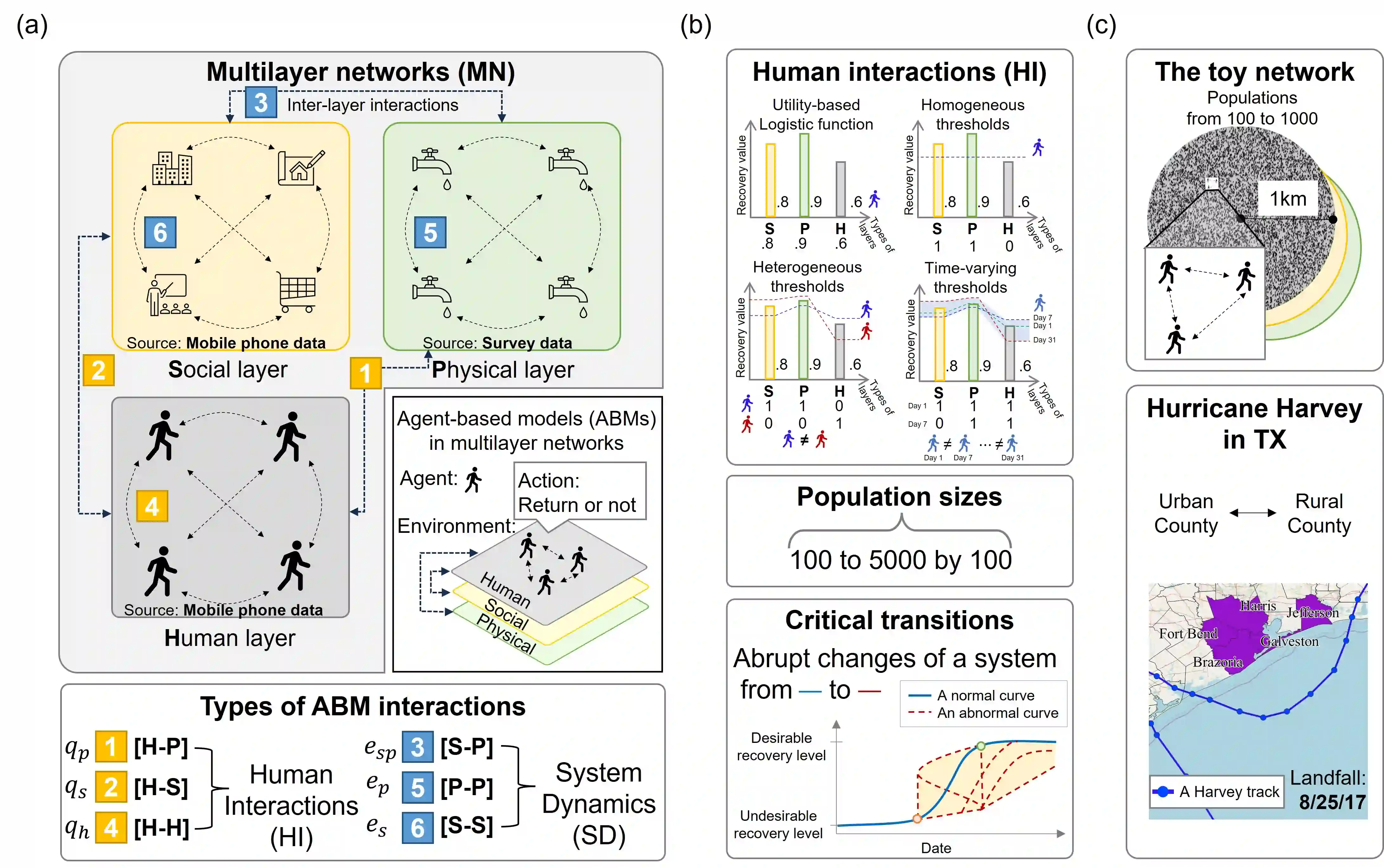
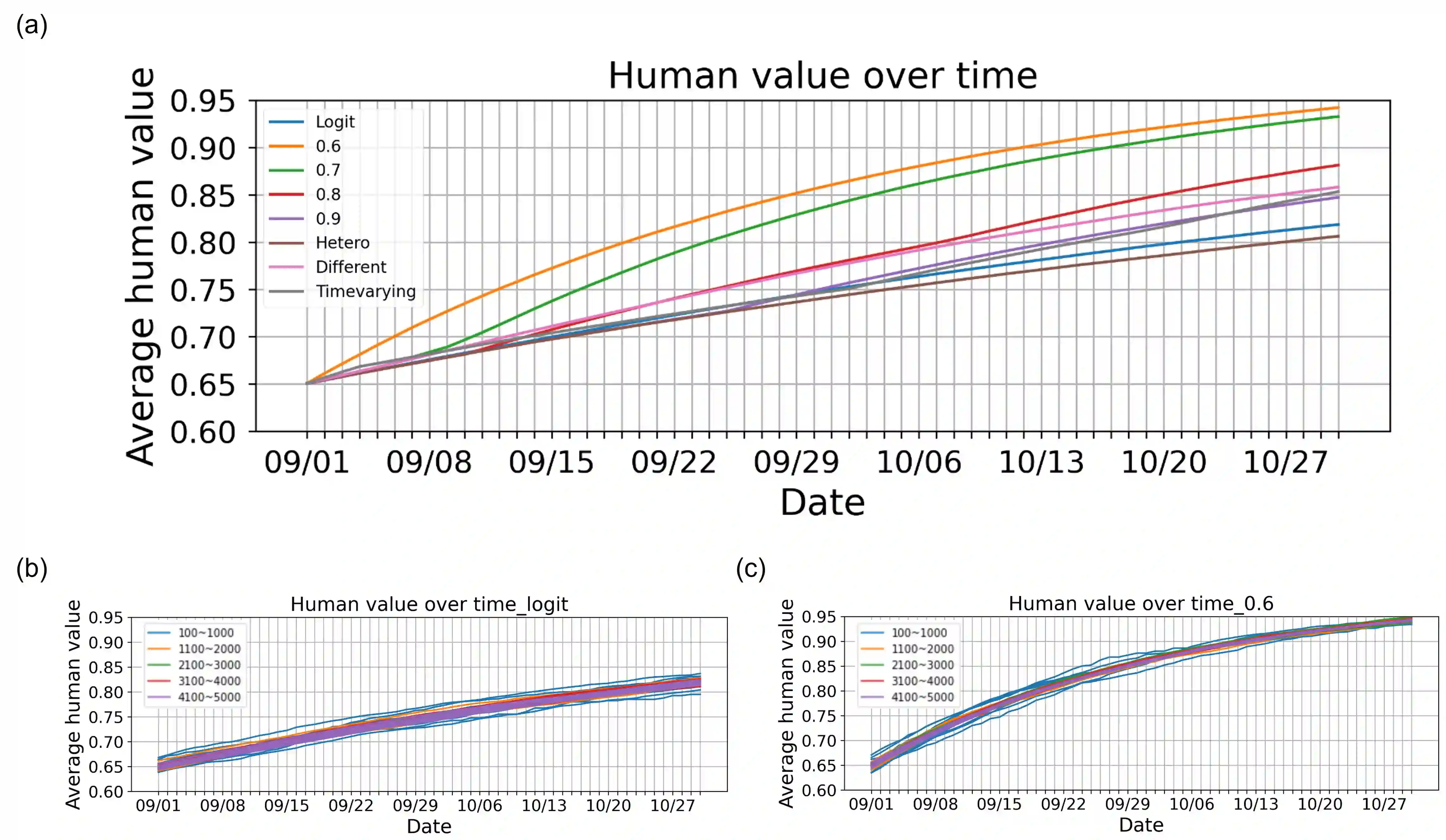
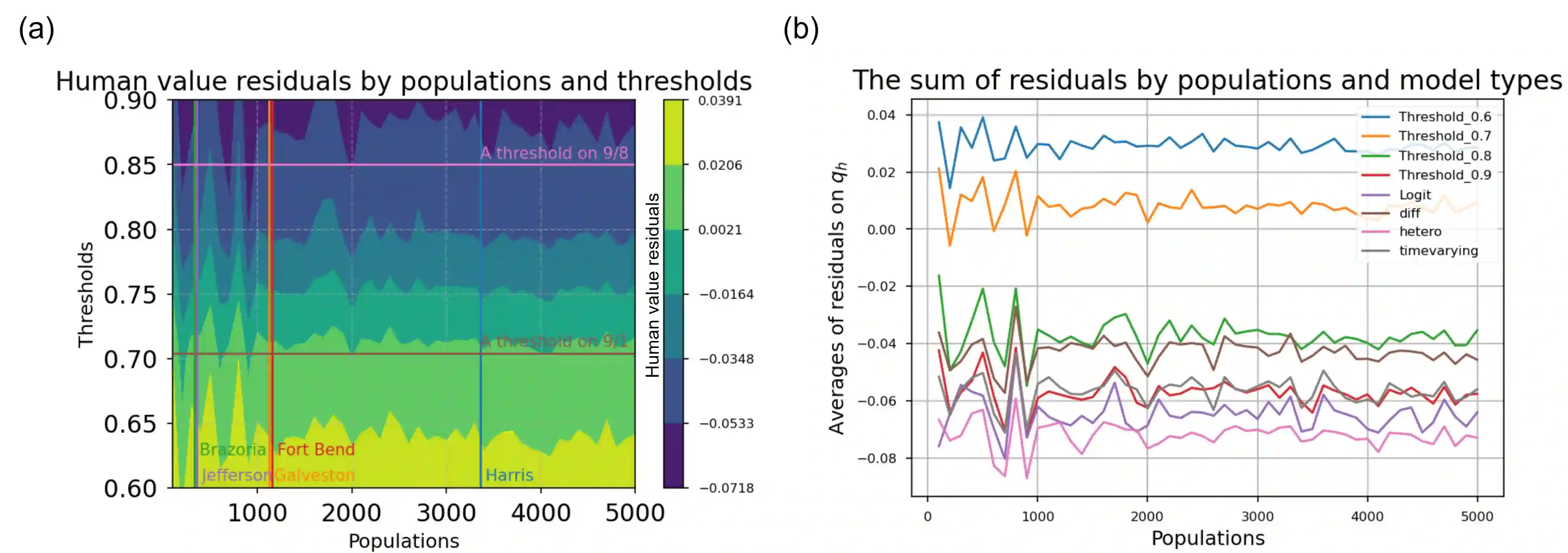
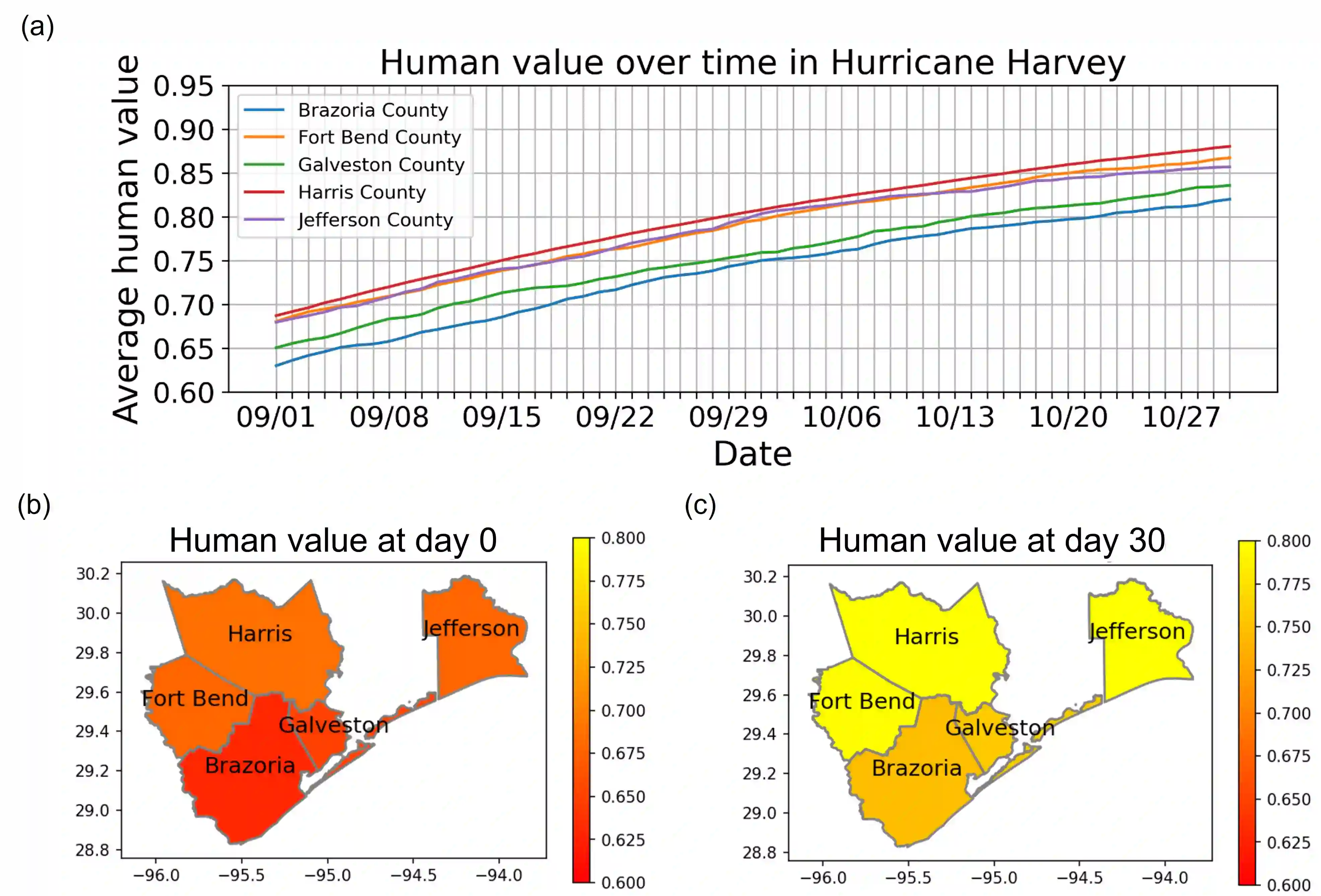
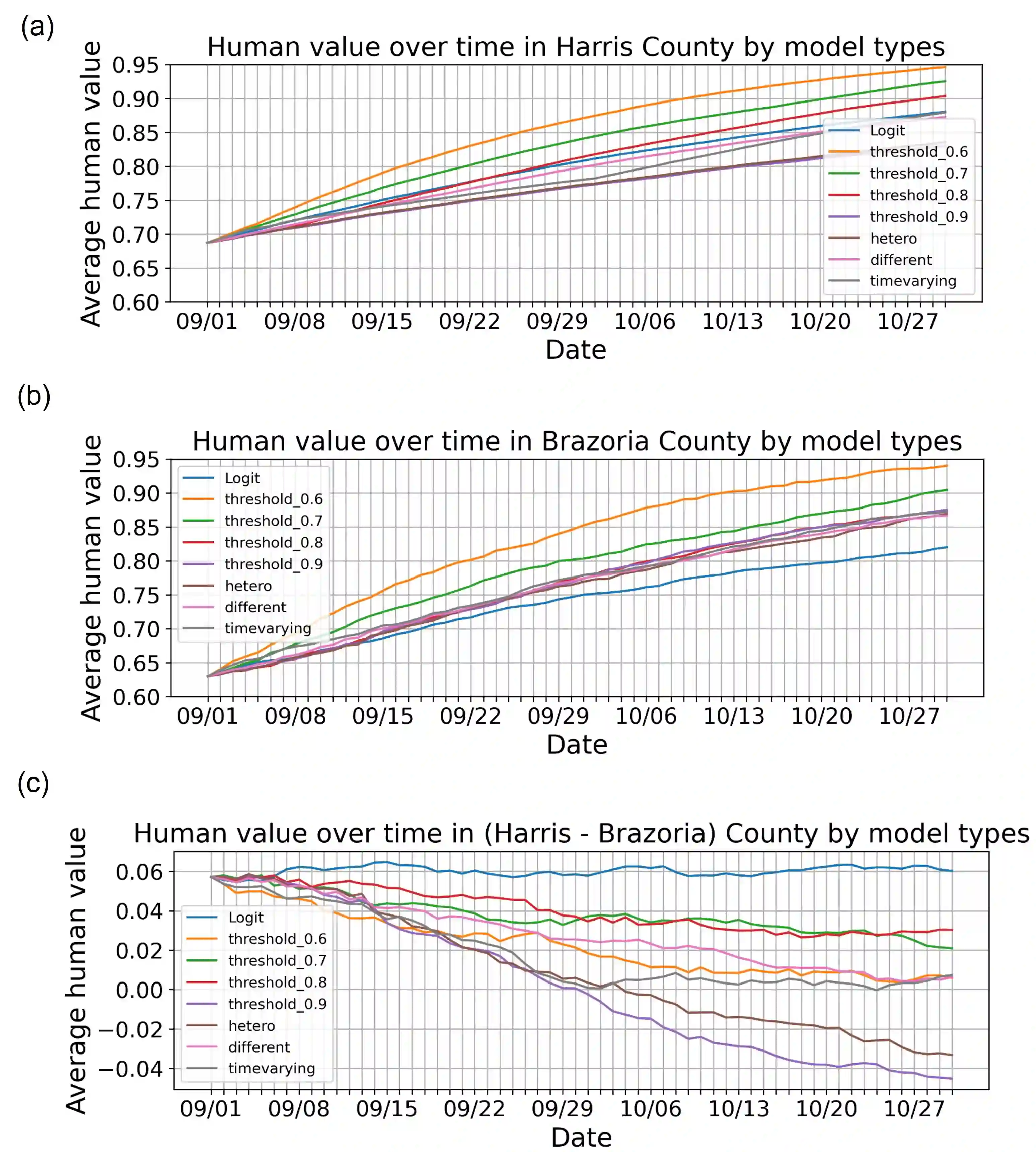
Frequent and intensive disasters make the repeated and uncertain post-disaster recovery process. Despite the importance of the successful recovery process, previous simulation studies on the post-disaster recovery process did not explore the sufficient number of household return decision model types, population sizes, and the corresponding critical transition conditions of the system. This paper simulates the recovery process in the agent-based model with multilayer networks to reveal the impact of household return decision model types and population sizes in a toy network. After that, this paper applies the agent-based model to the five selected counties affected by Hurricane Harvey in 2017 to check the urban-rural recovery differences by types of household return decision models. The agent-based model yields three conclusions. First, the threshold model can successfully substitute the binary logit model. Second, high thresholds and less than 1,000 populations perturb the recovery process, yielding critical transitions during the recovery process. Third, this study checks the urban-rural recovery value differences by different decision model types. This study highlights the importance of the threshold models and population sizes to check the critical transitions and urban-rural differences in the recovery process.
翻译:频繁且剧烈的灾害导致灾后恢复过程充满重复性与不确定性。尽管成功恢复过程至关重要,但以往关于灾后恢复过程的模拟研究并未充分探索家庭返回决策模型类型、人口规模以及系统相应的临界转变条件。本文在多层网络智能体模型中对恢复过程进行仿真,以揭示在玩具网络中家庭返回决策模型类型与人口规模的影响。随后,将智能体模型应用于2017年受哈维飓风影响的五个选定县,检验不同家庭返回决策模型类型下的城乡恢复差异。该智能体模型得出三项结论:第一,阈值模型可成功替代二元Logit模型;第二,高阈值与少于1000人口的规模会扰动恢复过程,导致恢复过程中出现临界转变;第三,本研究通过不同决策模型类型检验城乡恢复价值差异。本研究强调了阈值模型与人口规模在检验恢复过程中临界转变与城乡差异方面的重要性。




相关内容




 微信扫码咨询专知VIP会员