

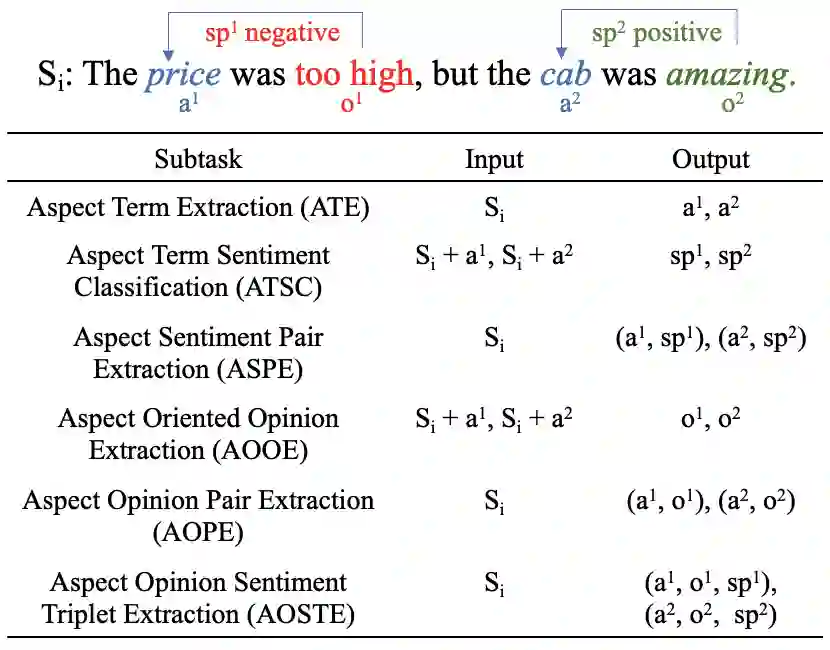
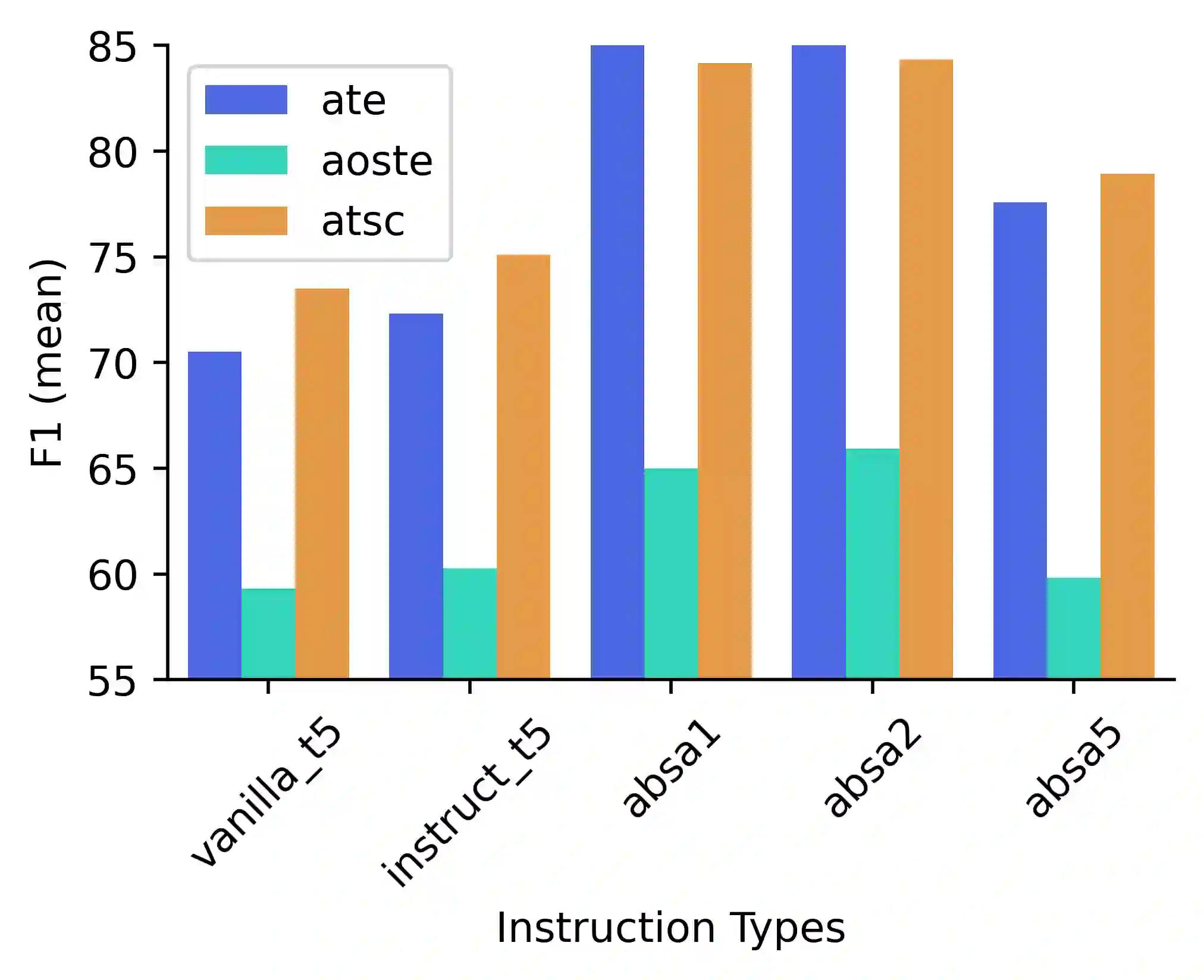
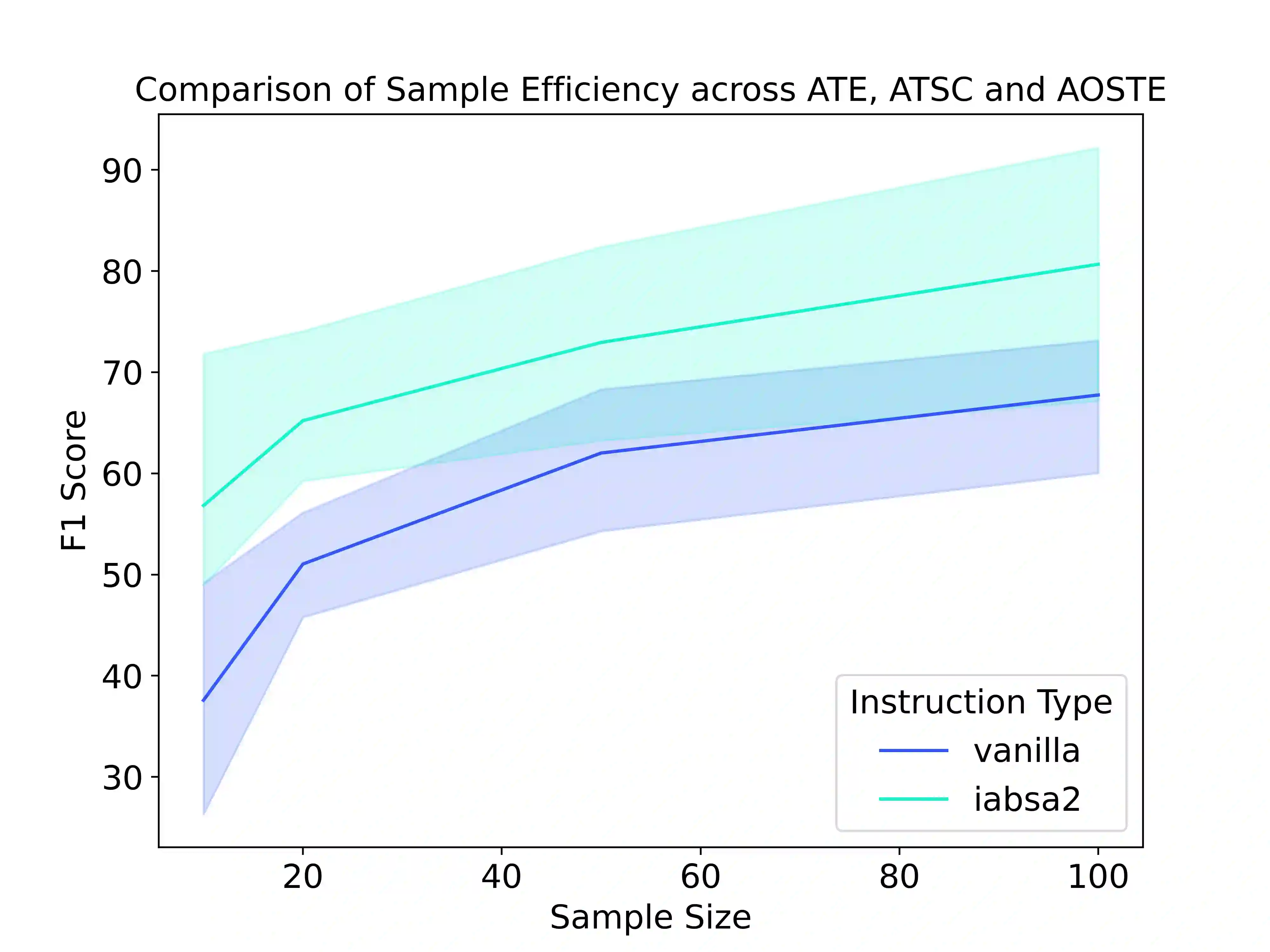
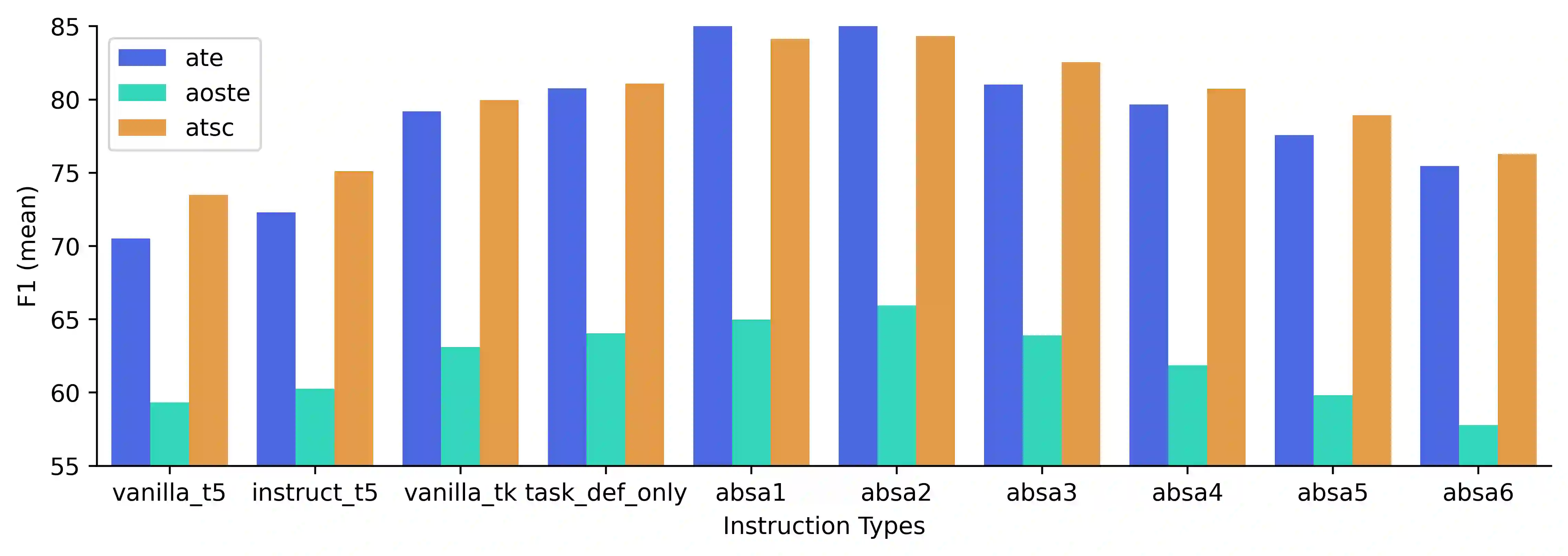
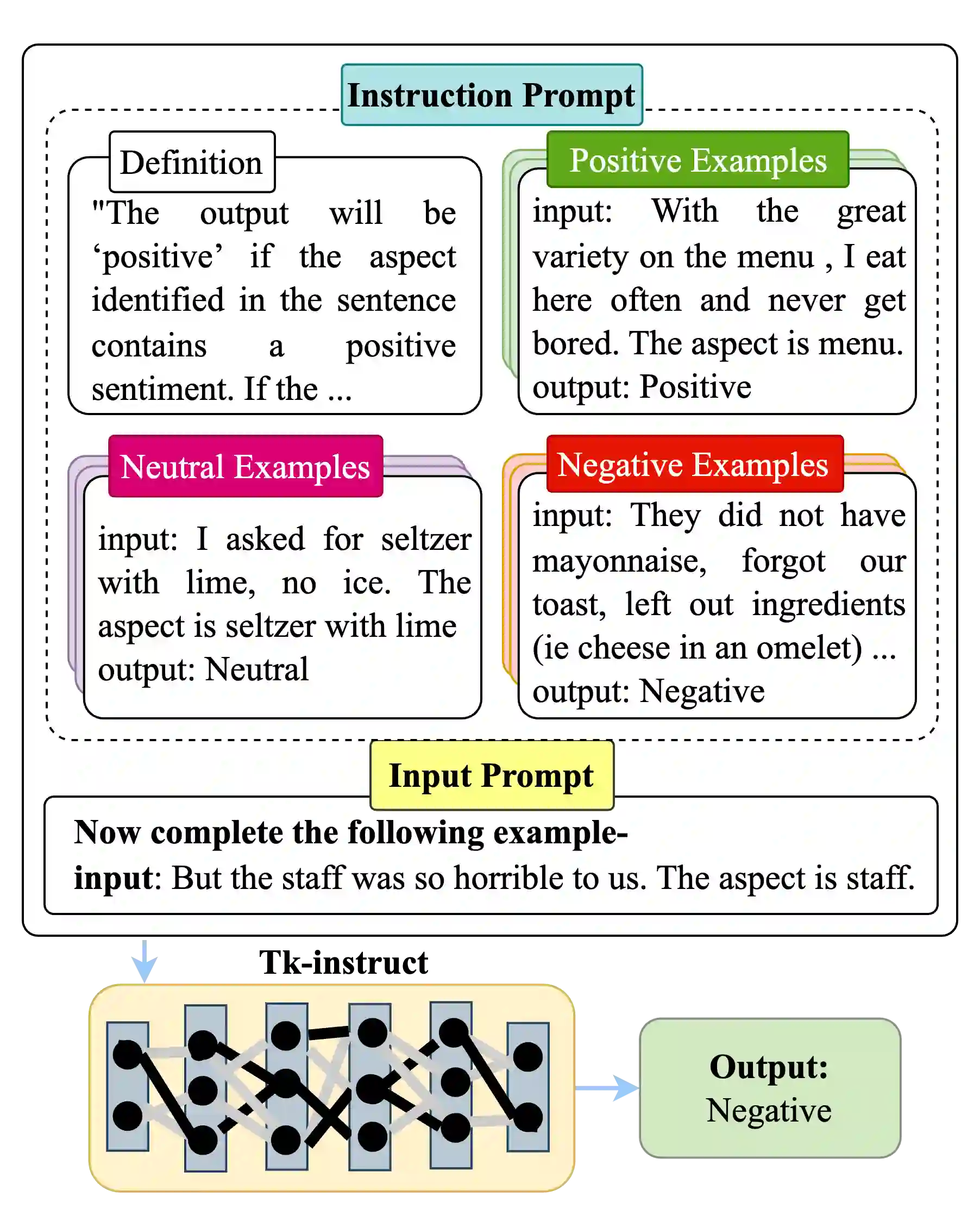
We introduce InstructABSA, an instruction learning paradigm for Aspect-Based Sentiment Analysis (ABSA) subtasks. Our method introduces positive, negative, and neutral examples to each training sample, and instruction tune the model (Tk-Instruct) for ABSA subtasks, yielding significant performance improvements. Experimental results on the Sem Eval 2014, 15, and 16 datasets demonstrate that InstructABSA outperforms the previous state-of-the-art (SOTA) approaches on Term Extraction (ATE), Sentiment Classification(ATSC) and Sentiment Pair Extraction (ASPE) subtasks. In particular, InstructABSA outperforms the previous state-of-the-art (SOTA) on the Rest14 ATE subtask by 5.69% points, the Rest15 ATSC subtask by 9.59% points, and the Lapt14 AOPE subtask by 3.37% points, surpassing 7x larger models. We also get competitive results on AOOE, AOPE, and AOSTE subtasks indicating strong generalization ability to all subtasks. Exploring sample efficiency reveals that just 50% train data is required to get competitive results with other instruction tuning approaches. Lastly, we assess the quality of instructions and observe that InstructABSA's performance experiences a decline of ~10% when adding misleading examples.
翻译:我们提出InstructABSA,一种面向方面级情感分析(ABSA)子任务的指令学习范式。该方法为每个训练样本引入正例、负例和中性示例,并对模型(Tk-Instruct)进行指令微调以处理ABSA子任务,从而带来显著的性能提升。在SemEval 2014、2015和2016数据集上的实验结果表明,InstructABSA在术语提取(ATE)、情感分类(ATSC)和情感对提取(ASPE)子任务上均优于先前的最优方法(SOTA)。具体而言,InstructABSA在Rest14数据集ATE子任务上超越先前SOTA达5.69个百分点,在Rest15数据集ATSC子任务上超越9.59个百分点,在Lapt14数据集AOPE子任务上超越3.37个百分点,且性能优于规模大7倍的模型。我们在AOOE、AOPE和AOSTE子任务上也取得了具有竞争力的结果,表明其对所有子任务均具备强泛化能力。样本效率分析揭示,仅需50%的训练数据即可获得与其他指令微调方法相媲美的结果。最后,我们评估了指令质量,观察到在添加误导性示例时,InstructABSA的性能下降约10%。




相关内容


 微信扫码咨询专知VIP会员