

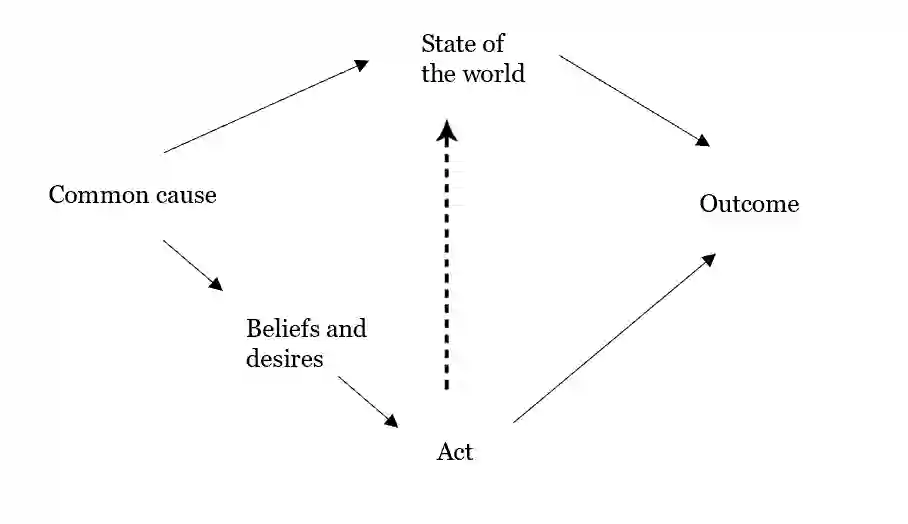
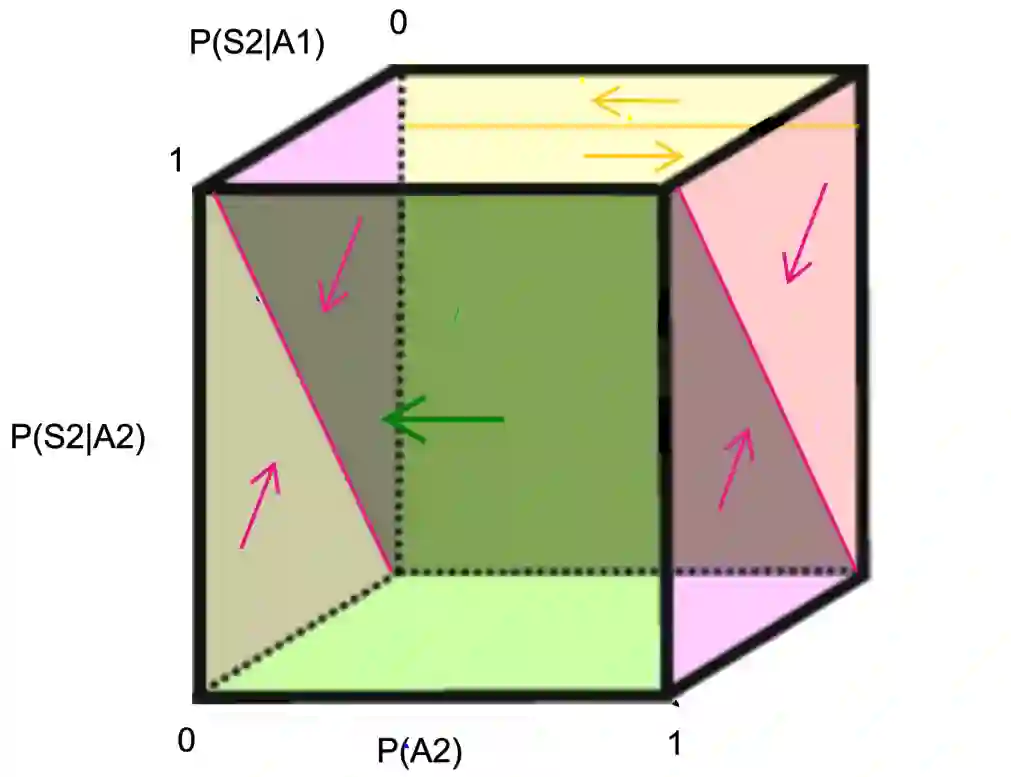
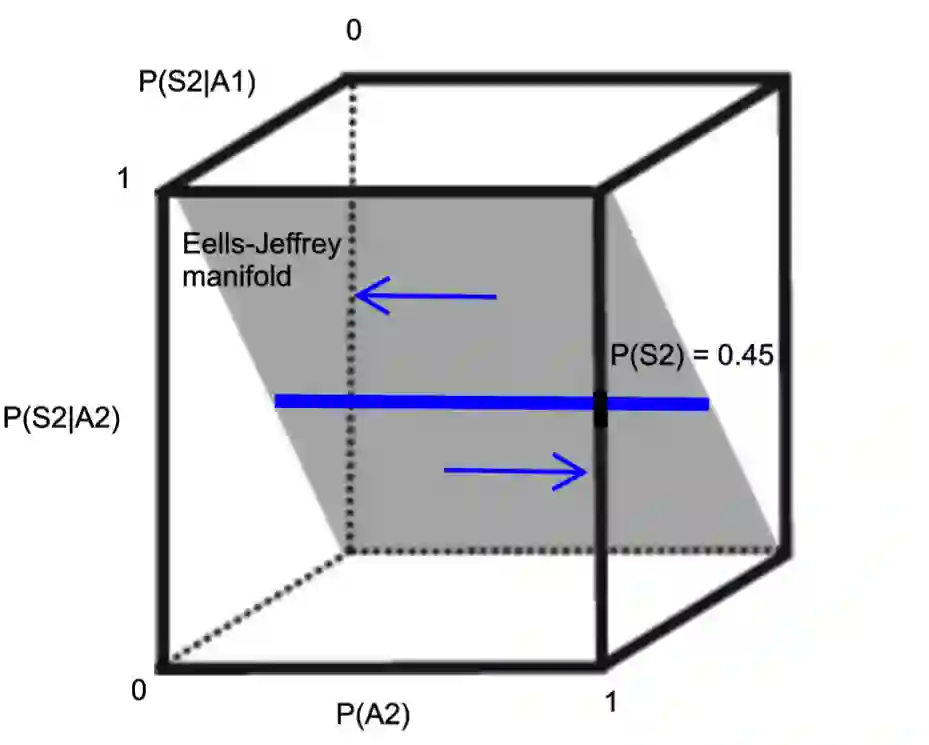
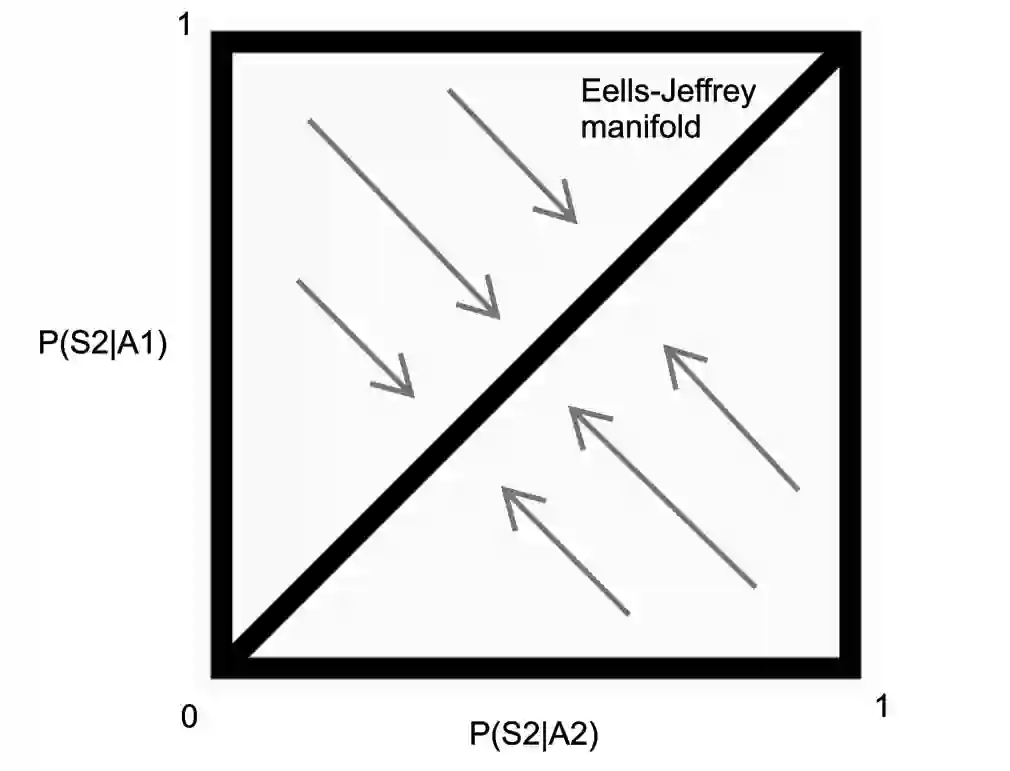
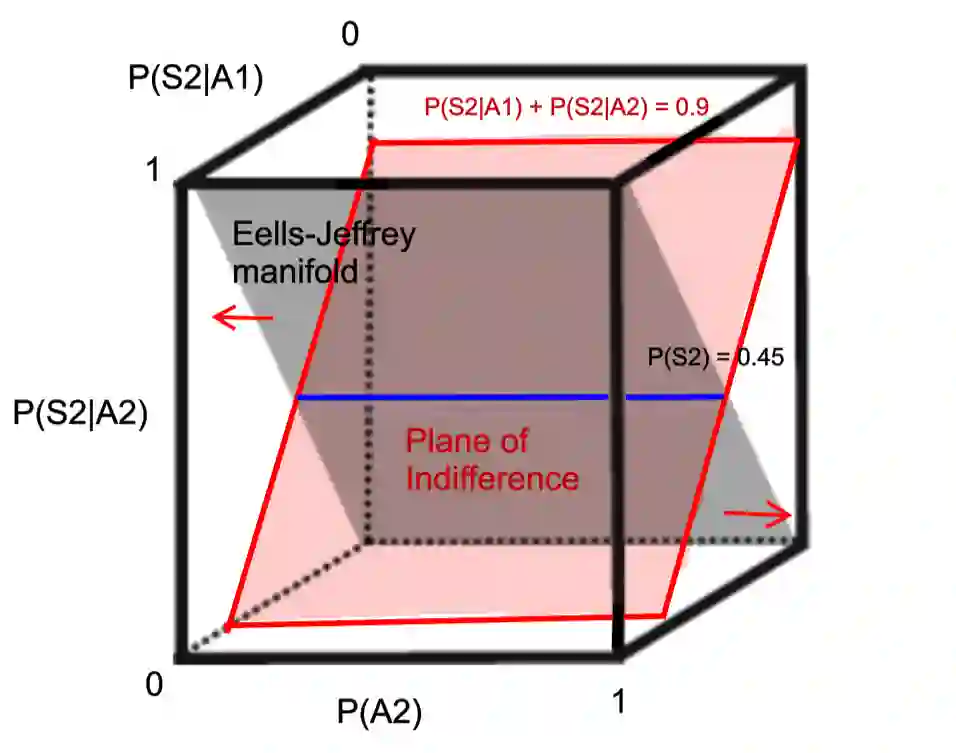
The prescriptions of our two most prominent strands of decision theory, evidential and causal, differ in a general class of problems known as Newcomb problems. In these, evidential decision theory prescribes choosing a dominated act. Attempts have been made at reconciling the two theories by relying on additional requirements such as ratification (Jeffrey 1983) or "tickles" (Eells 1982). It has been argued that such attempts have failed (Lewis 1981a; Skyrms 1982). More recently, Huttegger (forthcoming) has developed a version of deliberative decision theory that reconciles the prescriptions of the evidentialist and causalist. In this paper, I extend this framework to problems characterised by decision instability, and show that it cannot deliver a resolute answer under a plausible specification of the tickle. I prove that there exists a robust method of determining whether the specification of the tickle matters for all two-state, two-act problems whose payoff tables exhibit some basic mathematical relationships. One upshot is that we have a principled way of knowing ex-ante whether a reconciliation of evidential and causal decision theory is plausible for a wide range of decision problems under this framework. Another upshot is that the tickle approach needs further work to achieve full reconciliation.
翻译:我们最突出的两种决策理论流派——证据主义与因果主义——在被称为“纽科姆问题”的广义问题类别中给出了不同的处方。在这些问题中,证据决策理论建议选择受支配行为。已有尝试通过依赖附加要求(如杰弗里1983年提出的“批准”或伊尔斯1982年提出的“搔痒”)来调和这两种理论。然而,有论证表明这类尝试已失败(刘易斯1981a;斯基尔姆斯1982年)。近期,胡特格(待出版)发展了一种审议式决策理论的变体,能够调和证据主义与因果主义者的处方。本文将此框架扩展至以决策不稳定性为特征的问题,并证明在搔痒的合理设定下,该框架无法给出确定的答案。我证明了存在一种稳健方法,能够判定搔痒的设定是否影响所有满足基本数学关系的两状态、两行动问题。这一结果的一个推论是,我们拥有一种先验原则性方法,可判断在此框架下对广泛决策问题而言,证据决策理论与因果决策理论的调和是否合理。另一推论是,搔痒方法仍需进一步研究以实现完全调和。




相关内容



 微信扫码咨询专知VIP会员