

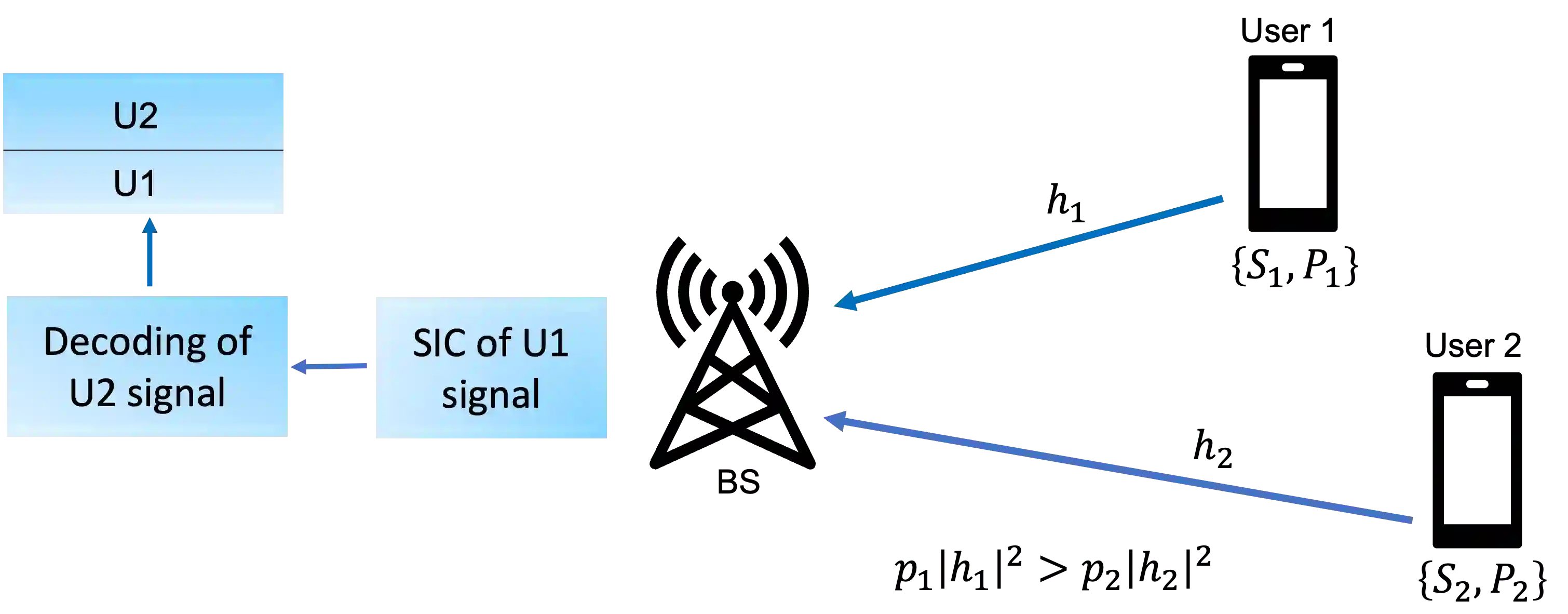
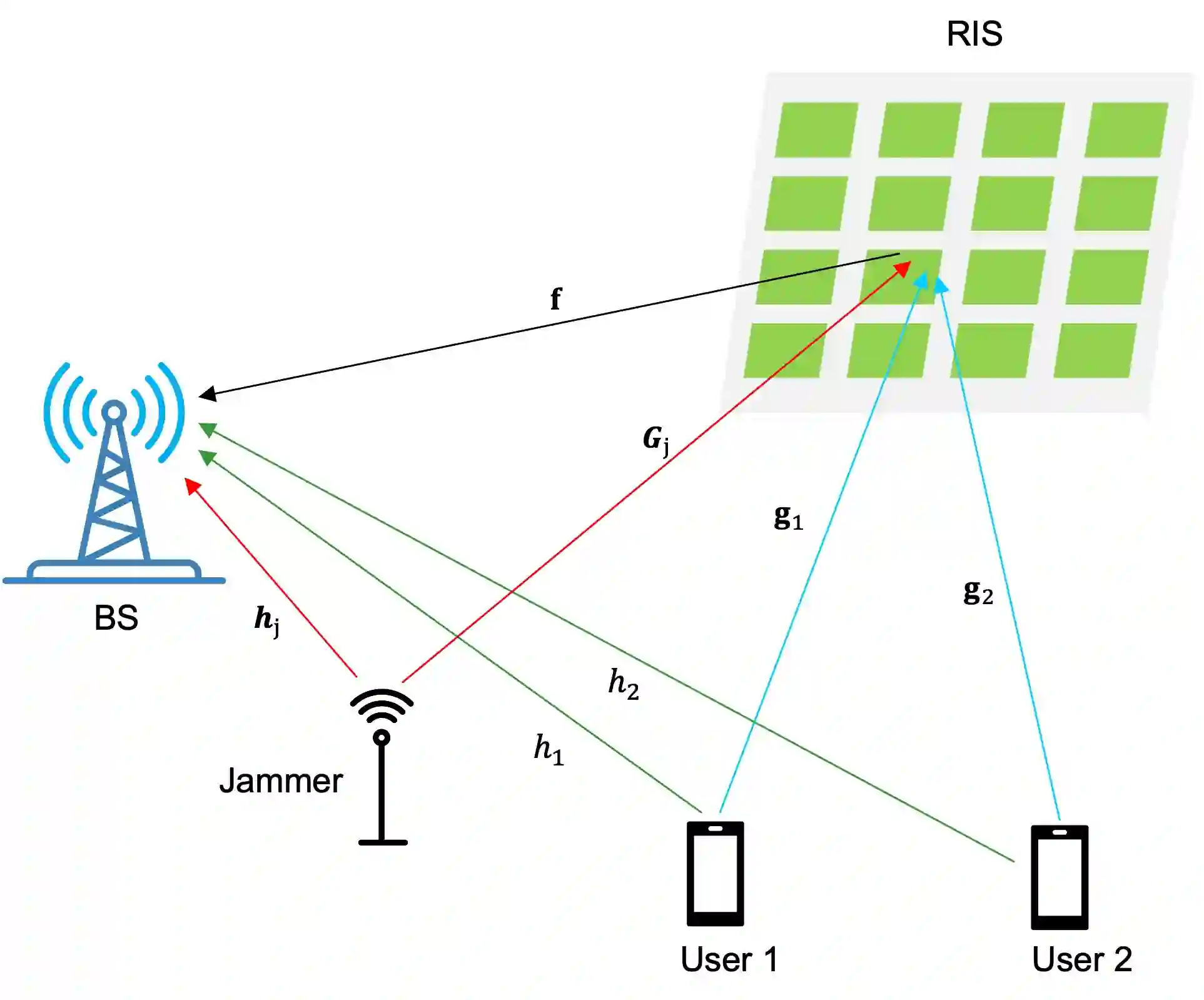
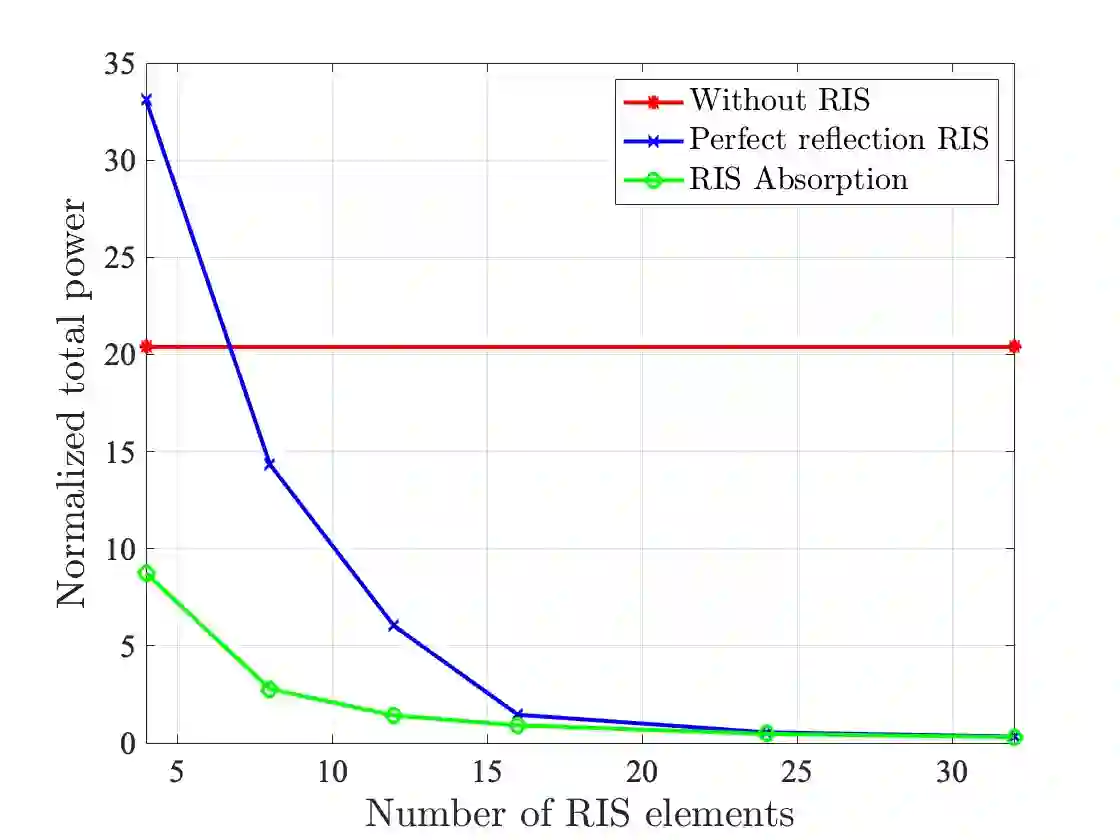
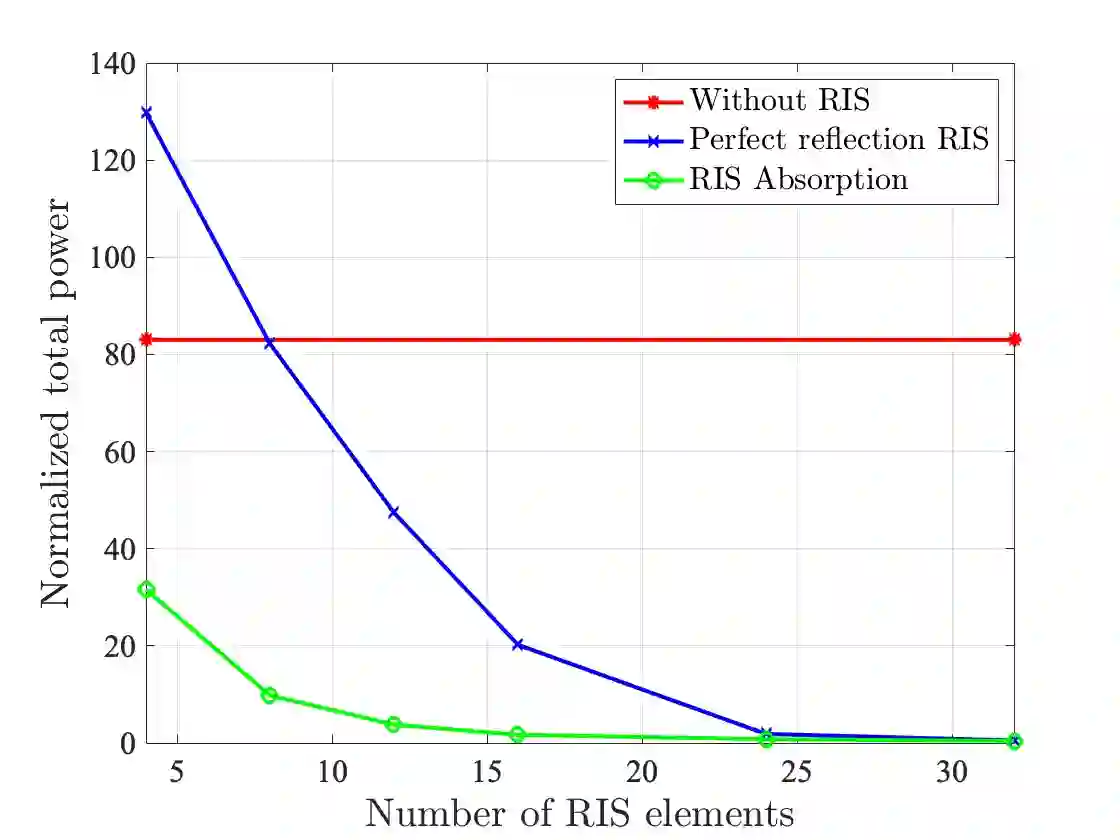
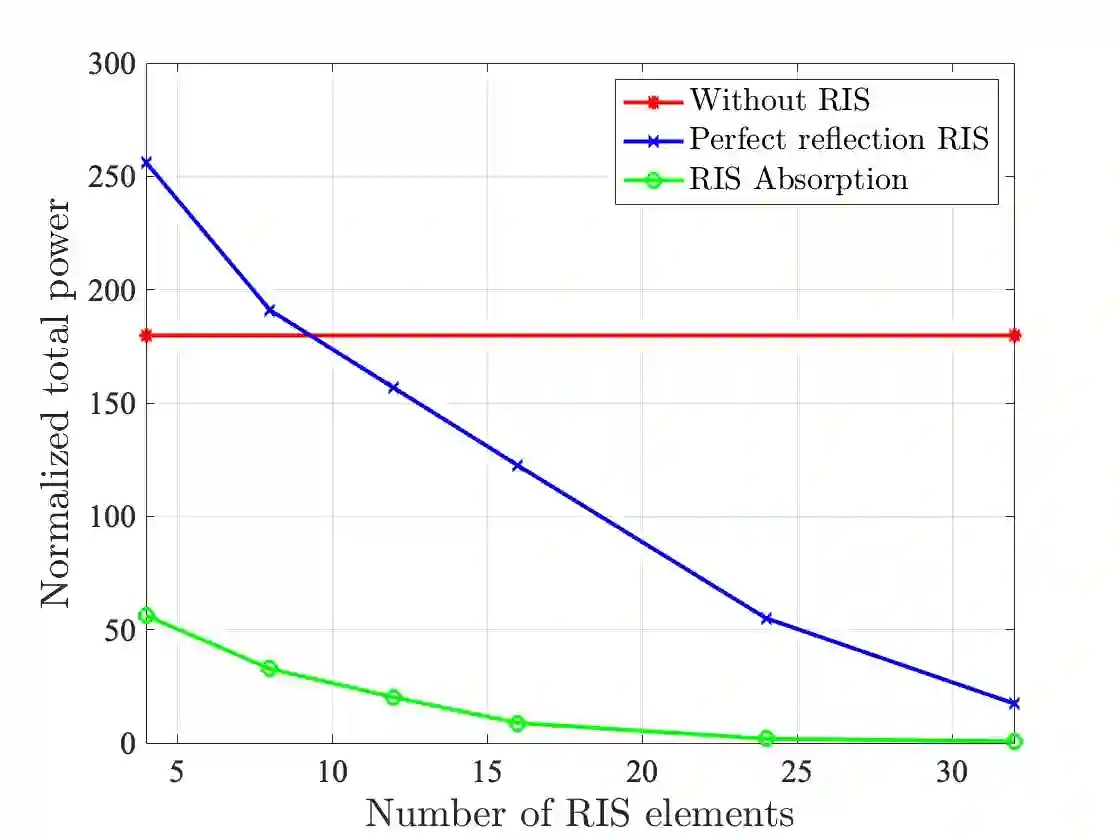
Non-orthogonal multiple access (NOMA) has become a promising technology for next-generation wireless communications systems due to its capability to provide access for multiple users on the same resource. In this paper, we consider an uplink power-domain NOMA system aided by a reconfigurable intelligent surface (RIS) in the presence of a jammer that aims to maximize its interference on the base station (BS) uplink receiver. We consider two kinds of RISs, a regular RIS whose elements can only change the phase of the incoming wave, and an RIS whose elements can also attenuate the incoming wave. Our aim is to minimize the total power transmitted by the user terminals under quality-of-service constraints by controlling both the propagation from the users and the jammer to the BS with help of the RIS. The resulting objective function and constraints are both non-linear and non-convex, so we address this problem using numerical optimization. Our numerical results show that the RIS can help to dramatically reduce the per user required transmit power in an interference-limited scenario.
翻译:非正交多址接入(NOMA)因其能够在相同资源上为多个用户提供接入的能力,已成为下一代无线通信系统中具有前景的技术。本文考虑在存在干扰机的场景下,研究可重构智能表面(RIS)辅助的上行功率域NOMA系统,其中干扰机旨在最大化对基站(BS)上行接收机的干扰。我们考虑两种类型的RIS:一种常规RIS,其单元仅能改变入射波的相位;另一种RIS,其单元还能衰减入射波。我们的目标是通过利用RIS控制用户和干扰机到基站的传播,在服务质量约束下最小化用户终端的总发射功率。由于目标函数和约束条件均为非线性且非凸,我们采用数值优化方法解决该问题。数值结果表明,在干扰受限场景下,RIS能够显著降低每个用户所需的发射功率。




相关内容



 微信扫码咨询专知VIP会员