

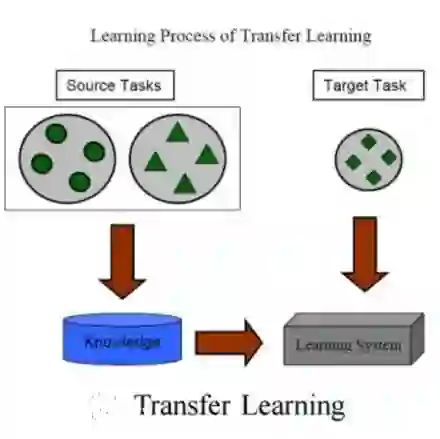
Transfer learning is a popular paradigm for utilizing existing knowledge from previous learning tasks to improve the performance of new ones. It has enjoyed numerous empirical successes and inspired a growing number of theoretical studies. This paper addresses the feasibility issue of transfer learning. It begins by establishing the necessary mathematical concepts and constructing a mathematical framework for transfer learning. It then identifies and formulates the three-step transfer learning procedure as an optimization problem, allowing for the resolution of the feasibility issue. Importantly, it demonstrates that under certain technical conditions, such as appropriate choice of loss functions and data sets, an optimal procedure for transfer learning exists. This study of the feasibility issue brings additional insights into various transfer learning problems. It sheds light on the impact of feature augmentation on model performance, explores potential extensions of domain adaptation, and examines the feasibility of efficient feature extractor transfer in image classification.
翻译:迁移学习是一种利用先前学习任务中的现有知识来提升新任务性能的流行范式。它已在众多实验中取得成功,并激发了日益增多的理论研究。本文探讨了迁移学习的可行性问题。首先,本文建立了必要的数学概念,并构建了迁移学习的数学框架。随后,本文将三步迁移学习过程识别并表述为一个优化问题,从而能够解决可行性问题。重要的是,本文证明了在适当选择损失函数和数据集等特定技术条件下,存在最优的迁移学习过程。对可行性问题的研究为各种迁移学习问题带来了新的见解。它揭示了特征增强对模型性能的影响,探索了领域适应的潜在扩展,并考察了图像分类中高效特征提取器迁移的可行性。




相关内容




 微信扫码咨询专知VIP会员