

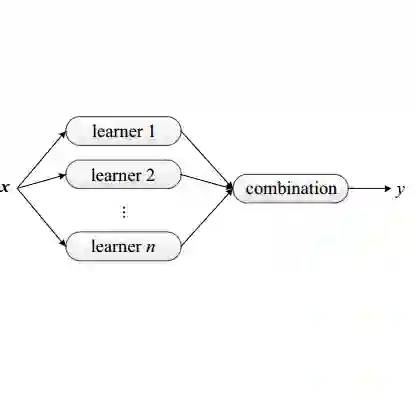
The rapid advancement of Internet of Things (IoT) necessitates the development of optimized Chemiresistive Sensor (CRS) arrays that are both energy-efficient and capable. This study introduces a novel optimization strategy that employs a rapid ensemble learning-based model committee approach to achieve these goals. Utilizing machine learning models such as Elastic Net Regression, Random Forests, and XGBoost, among others, the strategy identifies the most impactful sensors in a CRS array for accurate classification: A weighted voting mechanism is introduced to aggregate the models' opinions in sensor selection, thereby setting up wo distinct working modes, termed "Blue" and "Green". The Blue mode operates with all sensors for maximum detection capability, while the Green mode selectively activates only key sensors, significantly reducing energy consumption without compromising detection accuracy. The strategy is validated through theoretical calculations and Monte Carlo simulations, demonstrating its effectiveness and accuracy. The proposed optimization strategy not only elevates the detection capability of CRS arrays but also brings it closer to theoretical limits, promising significant implications for the development of low-cost, easily fabricable next-generation IoT sensor terminals.
翻译:物联网(IoT)的快速发展要求开发兼具高能效与高性能的优化型化学电阻传感器(CRS)阵列。本研究提出一种新型优化策略,通过基于快速集成学习的模型委员会方法实现上述目标。该策略采用弹性网络回归、随机森林及XGBoost等机器学习模型,识别CRS阵列中对准确分类最具影响力的传感器:同时引入加权投票机制聚合各模型在传感器选择中的意见,由此建立两种不同工作模式——"蓝"模式与"绿"模式。蓝模式启用全部传感器以实现最大检测能力,绿模式则仅选择性激活关键传感器,在确保检测精度不受影响的前提下大幅降低能耗。通过理论计算与蒙特卡洛仿真验证,该策略的有效性与准确性得到充分证实。所提出的优化方法不仅提升了CRS阵列的检测性能,更促使该性能逼近理论极限,对开发低成本、易制造的新一代物联网传感器终端具有重要应用前景。




相关内容




 微信扫码咨询专知VIP会员