

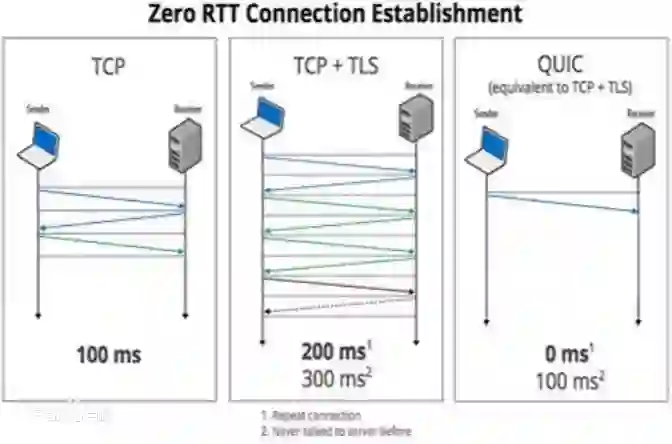
The Tactile Internet paradigm is set to revolutionize human society by enabling skill-set delivery and haptic communication over ultra-reliable, low-latency networks. The emerging sixth-generation (6G) mobile communication systems are envisioned to underpin this Tactile Internet ecosystem at the network edge by providing ubiquitous global connectivity. However, apart from a multitude of opportunities of the Tactile Internet, security and privacy challenges emerge at the forefront. We believe that the recently standardized QUIC protocol, characterized by end-to-end encryption and reduced round-trip delay would serve as the backbone of Tactile Internet. In this article, we envision a futuristic scenario where a QUIC-enabled network uses the underlying 6G communication infrastructure to achieve the requirements for Tactile Internet. Interestingly this requires a deeper investigation of a wide range of security and privacy challenges in QUIC, that need to be mitigated for its adoption in Tactile Internet. Henceforth, this article reviews the existing security and privacy attacks in QUIC and their implication on users. Followed by that, we discuss state-of-the-art attack mitigation strategies and investigate some of their drawbacks with possible directions for future work
翻译:触觉互联网范式将通过超可靠、低延迟网络实现技能传递与触觉通信,从而彻底改变人类社会。新兴的第六代(6G)移动通信系统被设想为在网络边缘通过提供泛在的全球连接来支撑这一触觉互联网生态。然而,触觉互联网在带来众多机遇的同时,安全与隐私挑战也凸显出来。我们认为,近期标准化的QUIC协议凭借端到端加密和减少往返时延的特性,将成为触觉互联网的骨干。在本文中,我们设想了一个未来场景:支持QUIC的网络利用底层6G通信基础设施,以满足触觉互联网的需求。有趣的是,这需要深入探究QUIC中一系列亟需缓解的安全与隐私挑战,以便将其应用于触觉互联网。因此,本文回顾了QUIC中现有的安全与隐私攻击及其对用户的影响。随后,我们讨论了最先进的攻击缓解策略,并研究了其中一些缺陷,同时指出了未来工作的可能方向。




相关内容



 微信扫码咨询专知VIP会员