

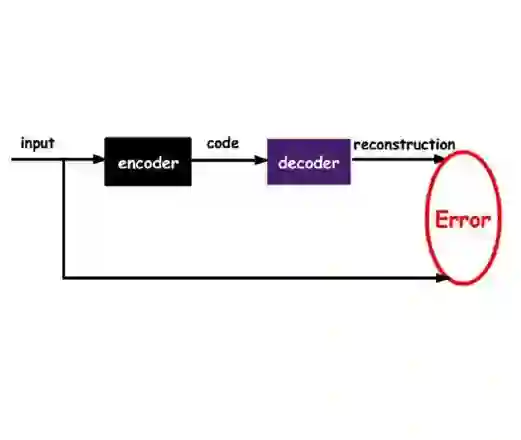
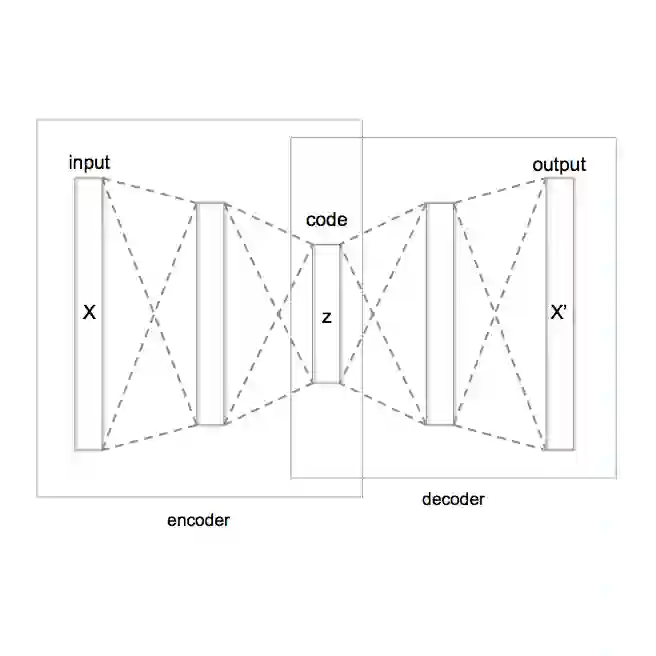
In this study, we focus on the training process and inference improvements of deep neural networks (DNNs), specifically Autoencoders (AEs) and Variational Autoencoders (VAEs), using Random Fourier Transformation (RFT). We further explore the role of RFT in model training behavior using Frequency Principle (F-Principle) analysis and show that models with RFT turn to learn low frequency and high frequency at the same time, whereas conventional DNNs start from low frequency and gradually learn (if successful) high-frequency features. We focus on reconstruction-based anomaly detection using autoencoder and variational autoencoder and investigate the RFT's role. We also introduced a trainable variant of RFT that uses the existing computation graph to train the expansion of RFT instead of it being random. We showcase our findings with two low-dimensional synthetic datasets for data representation, and an aviation safety dataset, called Dashlink, for high-dimensional reconstruction-based anomaly detection. The results indicate the superiority of models with Fourier transformation compared to the conventional counterpart and remain inconclusive regarding the benefits of using trainable Fourier transformation in contrast to the Random variant.
翻译:在本研究中,我们重点探讨利用随机傅里叶变换改进深度神经网络(特别是自编码器与变分自编码器)训练过程与推理性能的方法。通过频率原理分析,我们进一步探究了RFT在模型训练行为中的作用,并证明采用RFT的模型能够同时学习低频与高频特征,而传统DNN则从低频开始并逐步(若成功)学习高频特征。我们聚焦于基于自编码器与变分自编码器的重构式异常检测,并研究了RFT在其中发挥的作用。同时,我们提出了一种可训练的RFT变体,该变体利用现有计算图训练RFT的扩展参数而非随机生成。我们通过两个低维合成数据集进行数据表征展示,并采用名为Dashlink的航空安全数据集进行高维重构式异常检测验证。结果表明,采用傅里叶变换的模型性能优于传统模型,但关于可训练傅里叶变换相较于随机变体的优势,目前尚未得出明确结论。




相关内容


 微信扫码咨询专知VIP会员