

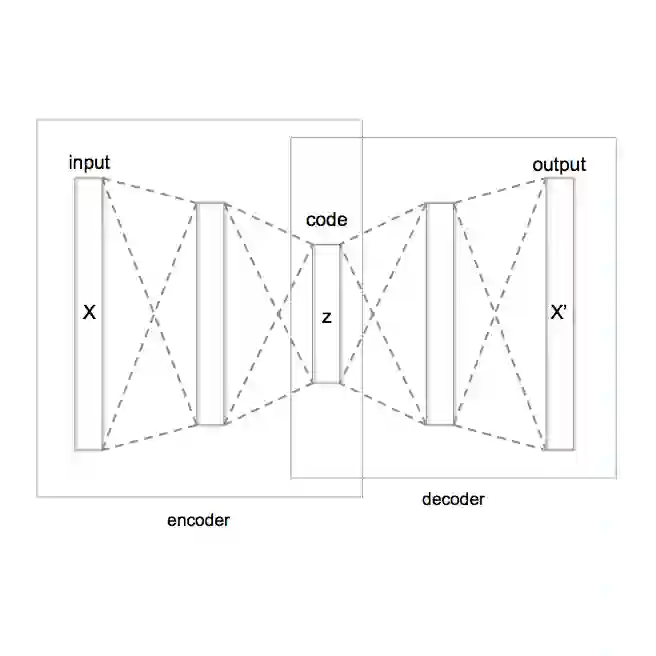
In this paper, we present a framework for multiscale topology optimization of fluid-flow devices. The objective is to minimize dissipated power, subject to a desired contact-area. The proposed strategy is to design optimal microstructures in individual finite element cells, while simultaneously optimizing the overall fluid flow. In particular, parameterized super-shape microstructures are chosen here to represent microstructures since they exhibit a wide range of permeability and contact area. To avoid repeated homogenization, a finite set of these super-shapes are analyzed a priori, and a variational autoencoder (VAE) is trained on their fluid constitutive properties (permeability), contact area and shape parameters. The resulting differentiable latent space is integrated with a coordinate neural network to carry out a global multi-scale fluid flow optimization. The latent space enables the use of new microstructures that were not present in the original data-set. The proposed method is illustrated using numerous examples in 2D.
翻译:本文提出了一种用于流体装置多尺度拓扑优化的框架,其目标是在满足所需接触面积的前提下最小化耗散功率。所提出的策略是在单个有限元单元中设计最优微结构,同时优化整体流体流动。具体而言,本文选择参数化超形状微结构来表示微结构,因为其具有广泛的渗透率和接触面积范围。为避免重复均质化,首先对一组有限的超形状进行先验分析,并基于其流体本构属性(渗透率)、接触面积和形状参数训练变分自编码器(VAE)。所得到的可微潜空间与坐标神经网络相结合,用于执行全局多尺度流体流动优化。该潜空间能够利用原始数据集中未出现的新微结构。通过多个二维算例验证了所提方法的有效性。




相关内容




 微信扫码咨询专知VIP会员