

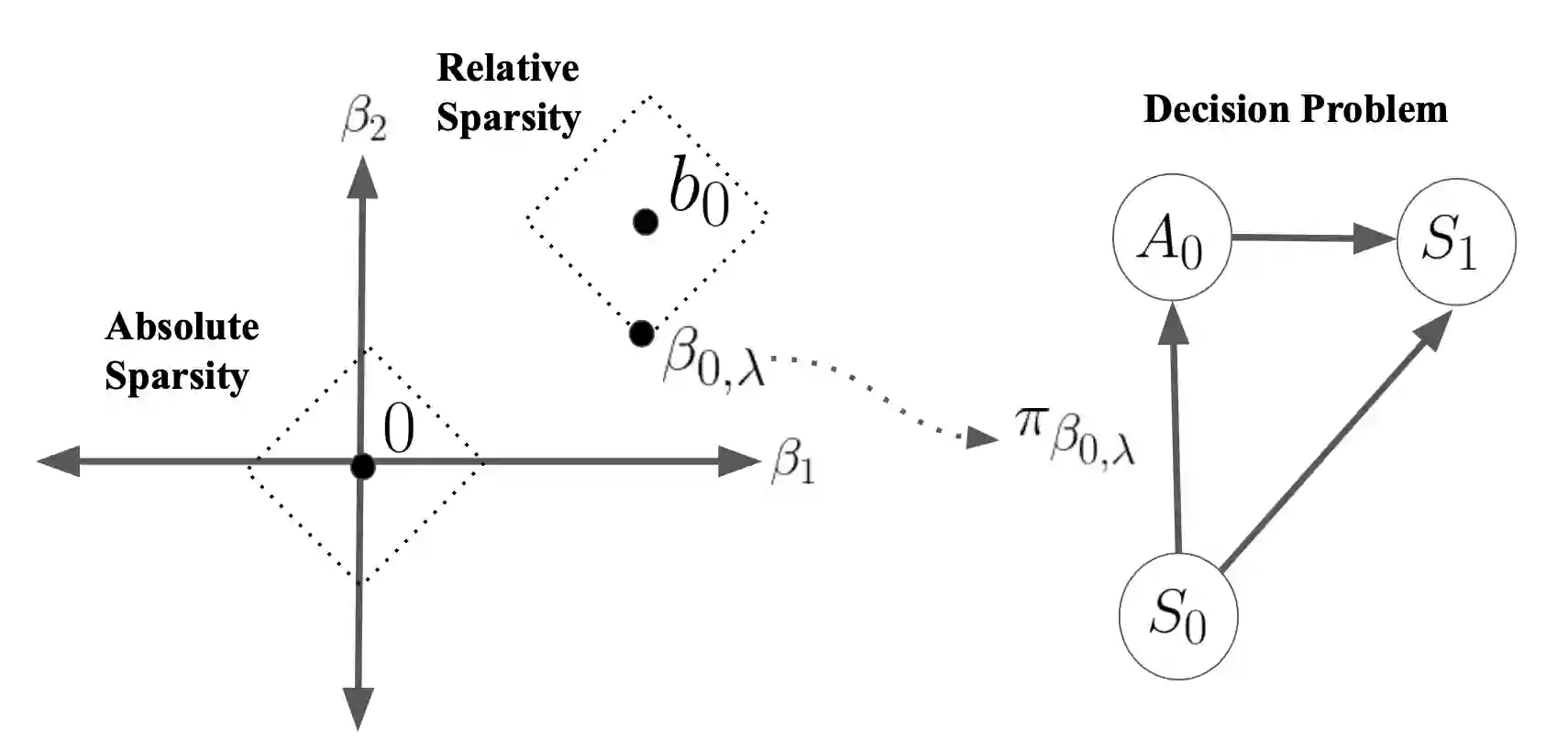
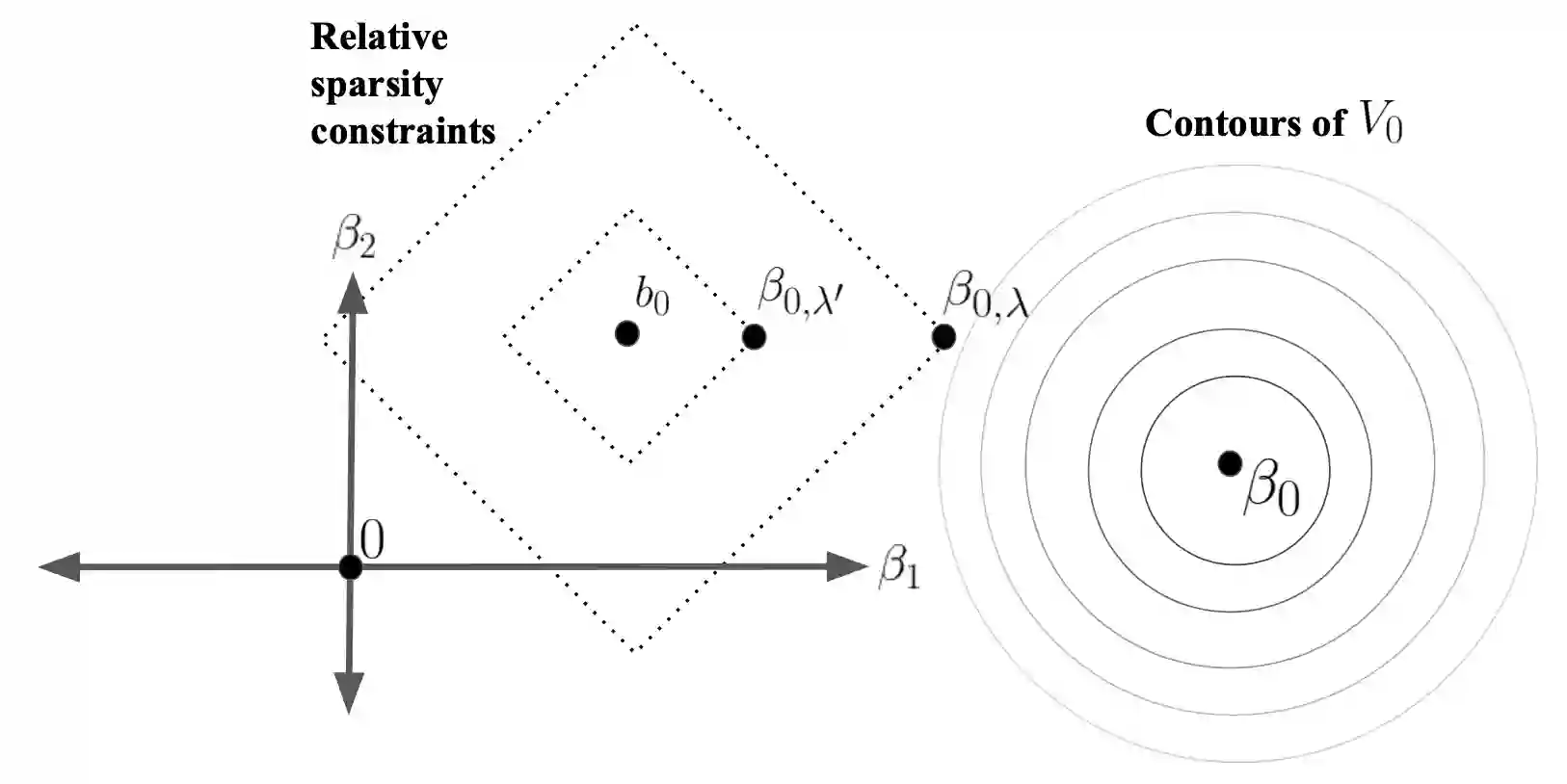
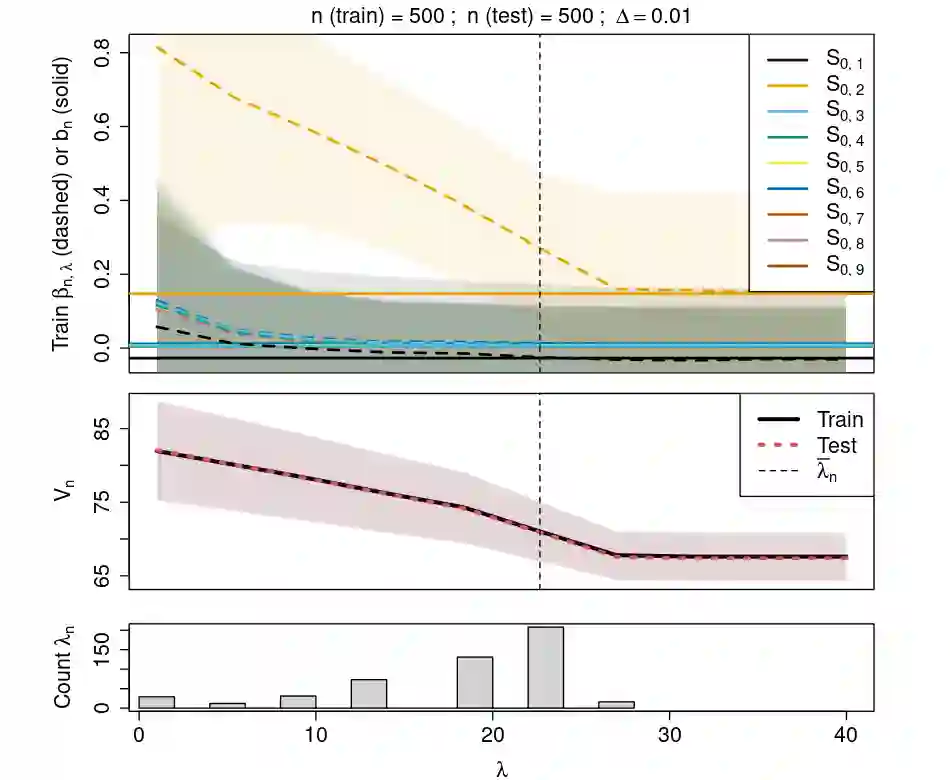
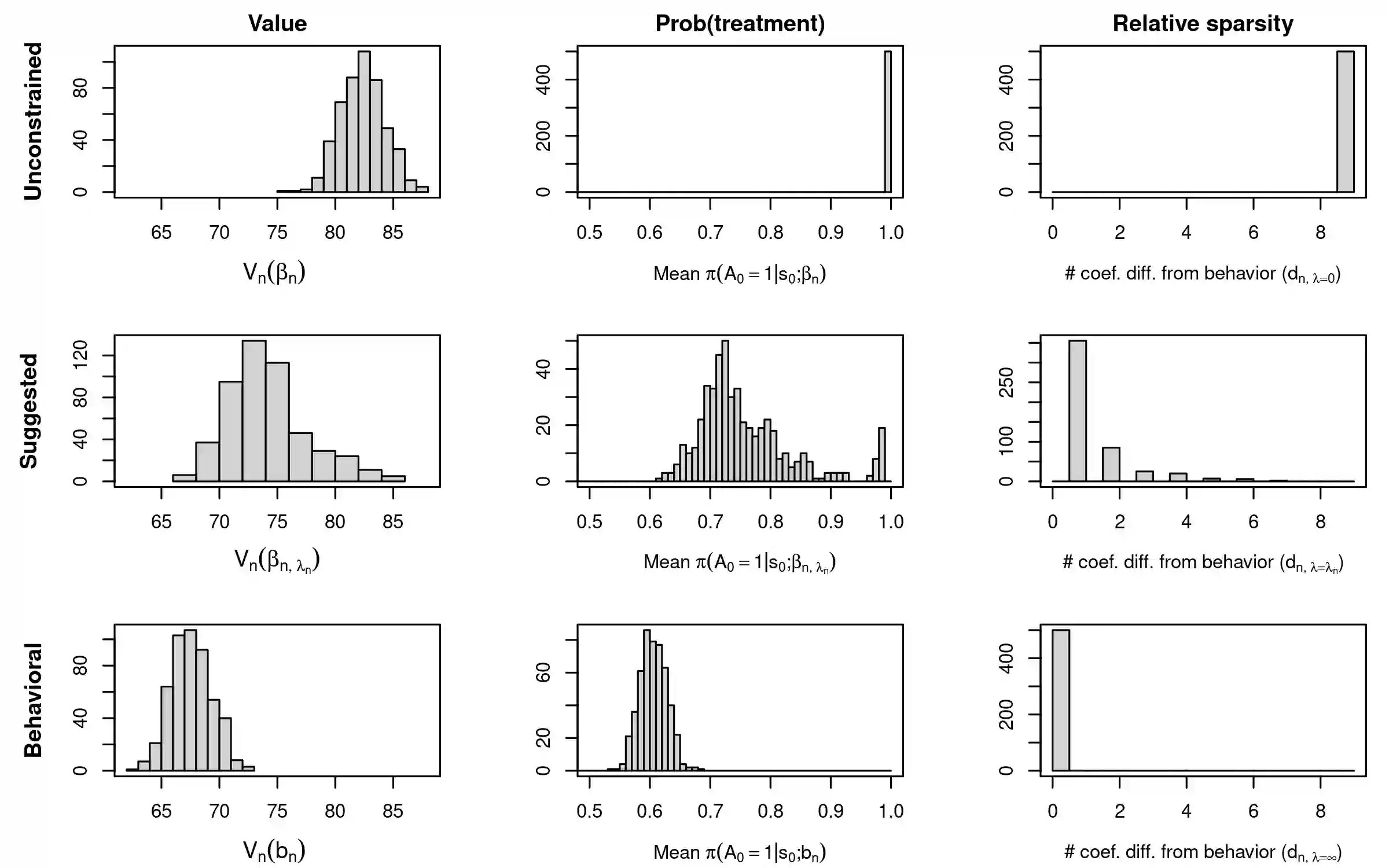
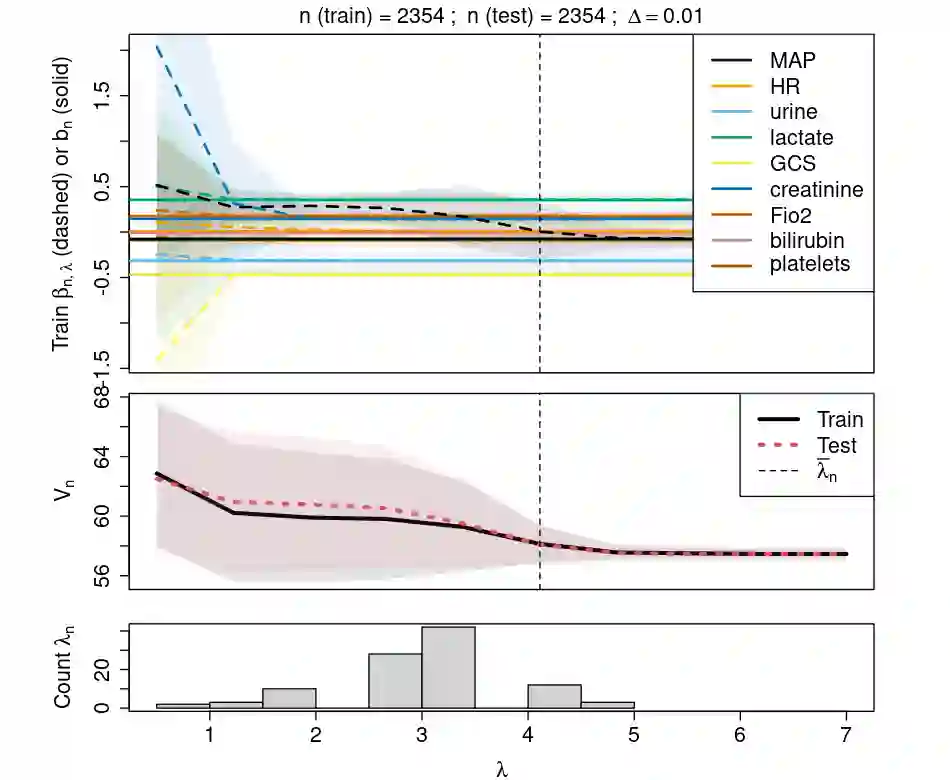
Existing statistical methods can estimate a policy, or a mapping from covariates to decisions, which can then instruct decision makers (e.g., whether to administer hypotension treatment based on covariates blood pressure and heart rate). There is great interest in using such data-driven policies in healthcare. However, it is often important to explain to the healthcare provider, and to the patient, how a new policy differs from the current standard of care. This end is facilitated if one can pinpoint the aspects of the policy (i.e., the parameters for blood pressure and heart rate) that change when moving from the standard of care to the new, suggested policy. To this end, we adapt ideas from Trust Region Policy Optimization (TRPO). In our work, however, unlike in TRPO, the difference between the suggested policy and standard of care is required to be sparse, aiding with interpretability. This yields ``relative sparsity," where, as a function of a tuning parameter, $\lambda$, we can approximately control the number of parameters in our suggested policy that differ from their counterparts in the standard of care (e.g., heart rate only). We propose a criterion for selecting $\lambda$, perform simulations, and illustrate our method with a real, observational healthcare dataset, deriving a policy that is easy to explain in the context of the current standard of care. Our work promotes the adoption of data-driven decision aids, which have great potential to improve health outcomes.
翻译:现有统计方法可以估计策略(即从协变量到决策的映射),从而指导决策者(例如,根据协变量血压和心率决定是否实施低血压治疗)。在医疗保健领域,人们对使用这种数据驱动策略抱有极大兴趣。然而,向医疗服务提供者和患者解释新策略与当前标准治疗方案之间的差异往往至关重要。如果能够准确定位从标准治疗方案过渡到新的建议策略时策略中发生变化的部分(即血压和心率参数),将有助于实现这一目标。为此,我们借鉴了信任区域策略优化(TRPO)的思想。但在本研究中,与TRPO不同,我们要求建议策略与标准治疗方案之间的差异具有稀疏性,以增强可解释性。这产生了"相对稀疏性"——作为调整参数λ的函数,我们可以近似控制建议策略中与标准治疗方案对应参数不同的参数数量(例如仅心率参数)。我们提出了选择λ的标准,进行了仿真实验,并使用真实的观测性医疗数据集验证了该方法,推导出一种易于在当前标准治疗方案背景下解释的策略。我们的工作促进了具有改善健康结果巨大潜力的数据驱动决策辅助工具的采用。




相关内容



 微信扫码咨询专知VIP会员