

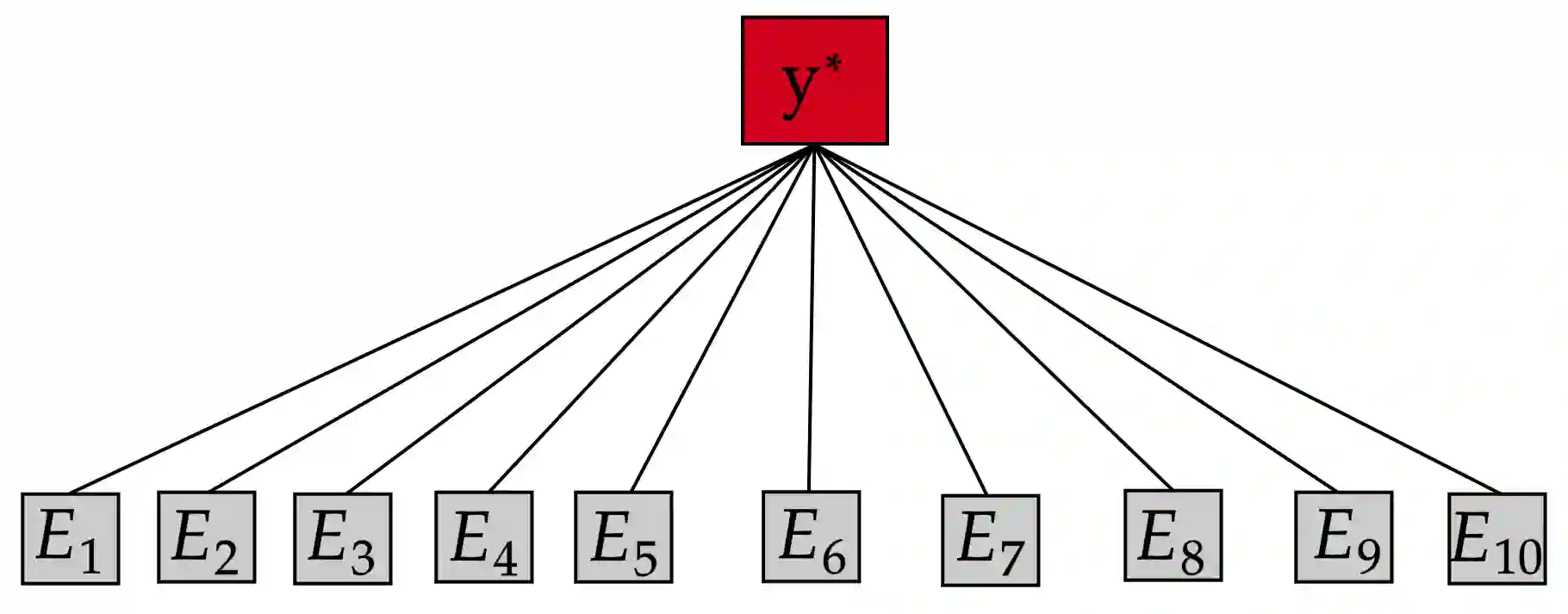
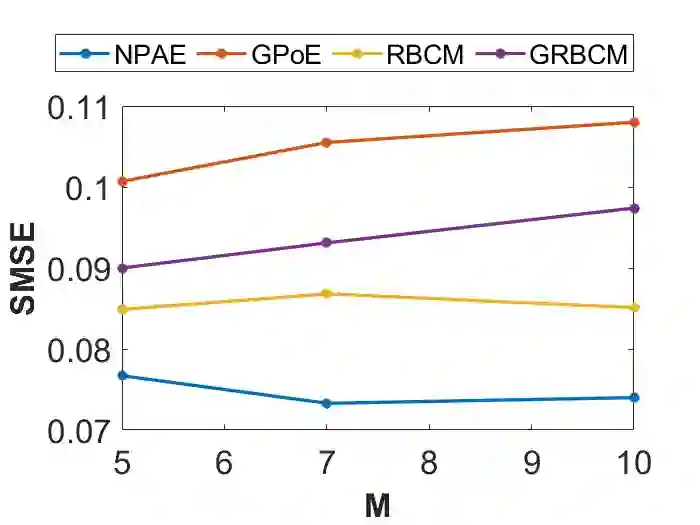
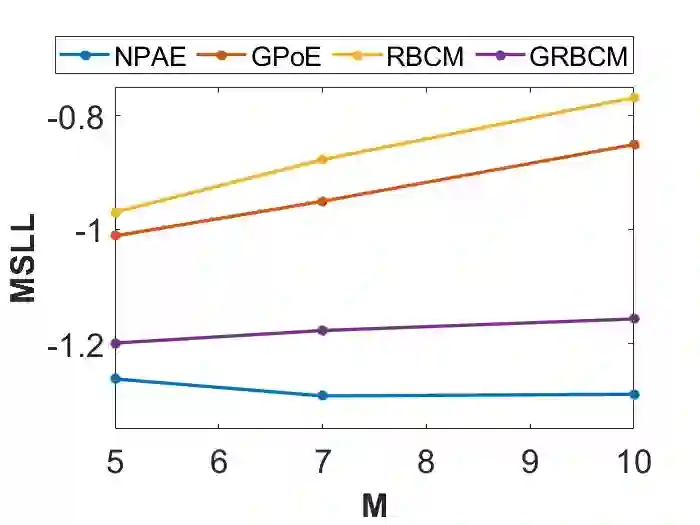
By distributing the training process, local approximation reduces the cost of the standard Gaussian Process. An ensemble technique combines local predictions from Gaussian experts trained on different partitions of the data. Ensemble methods aggregate models' predictions by assuming a perfect diversity of local predictors. Although it keeps the aggregation tractable, this assumption is often violated in practice. Even though ensemble methods provide consistent results by assuming dependencies between experts, they have a high computational cost, which is cubic in the number of experts involved. By implementing an expert selection strategy, the final aggregation step uses fewer experts and is more efficient. However, a selection approach that assigns a fixed set of experts to each new data point cannot encode the specific properties of each unique data point. This paper proposes a flexible expert selection approach based on the characteristics of entry data points. To this end, we investigate the selection task as a multi-label classification problem where the experts define labels, and each entry point is assigned to some experts. The proposed solution's prediction quality, efficiency, and asymptotic properties are discussed in detail. We demonstrate the efficacy of our method through extensive numerical experiments using synthetic and real-world data sets.
翻译:通过分布式训练过程,局部近似降低了标准高斯过程的计算成本。集成技术将数据划分为不同分区上训练的高斯专家模型的局部预测进行组合。集成方法假设局部预测器具有完美多样性,从而聚合模型预测。尽管这一假设保持了聚合的可操作性,但在实践中常被违背。即使集成方法通过假设专家之间存在依赖关系获得一致结果,其计算成本仍较高(与专家数量的立方成正比)。通过实施专家选择策略,最终聚合步骤可使用更少的专家,从而提升效率。然而,为每个新数据点分配固定专家集合的选择方法无法编码每个独特数据点的具体特性。本文提出一种基于输入数据点特征的灵活专家选择方法,将选择任务视为多标签分类问题——其中专家定义标签,每个输入点被分配到若干专家。详细讨论了所提方案的预测质量、效率及渐近性质。通过合成数据集和真实数据集的广泛数值实验,验证了该方法的有效性。




相关内容



 微信扫码咨询专知VIP会员