

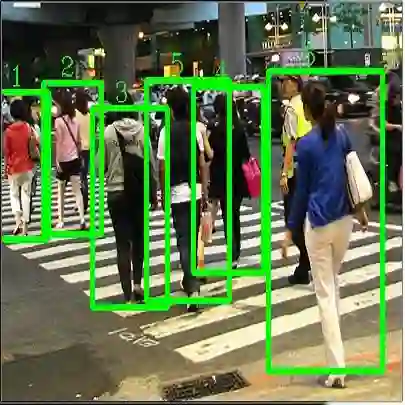
Bounding boxes are often used to communicate automatic object detection results to humans, aiding humans in a multitude of tasks. We investigate the relationship between bounding box localization errors and human task performance. We use observer performance studies on a visual multi-object counting task to measure both human trust and performance with different levels of bounding box accuracy. The results show that localization errors have no significant impact on human accuracy or trust in the system. Recall and precision errors impact both human performance and trust, suggesting that optimizing algorithms based on the F1 score is more beneficial in human-computer tasks. Lastly, the paper offers an improvement on bounding boxes in multi-object counting tasks with center dots, showing improved performance and better resilience to localization inaccuracy.
翻译:边界框常用于向人类传达自动目标检测结果,辅助人类完成多种任务。我们研究了边界框定位误差与人类任务表现之间的关系。通过视觉多目标计数任务的观察者表现研究,我们测量了不同边界框准确度水平下的人类信任度与表现。结果表明,定位误差对人类准确度或系统信任度无显著影响。召回率与精度误差则同时影响人类表现与信任度,表明在人机协同任务中,基于F1分数优化算法更具优势。最后,本文提出了一种针对多目标计数任务中边界框的改进方案——采用中心点标记,该方法不仅提升了表现,还能更好地应对定位不准确性。




相关内容




 微信扫码咨询专知VIP会员