

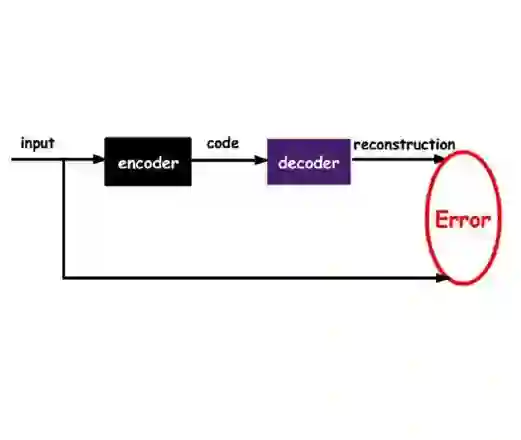
Autoencoders are popular neural networks that are able to compress high dimensional data to extract relevant latent information. TabNet is a state-of-the-art neural network model designed for tabular data that utilizes an autoencoder architecture for training. Vertical Federated Learning (VFL) is an emerging distributed machine learning paradigm that allows multiple parties to train a model collaboratively on vertically partitioned data while maintaining data privacy. The existing design of training autoencoders in VFL is to train a separate autoencoder in each participant and aggregate the latent representation later. This design could potentially break important correlations between feature data of participating parties, as each autoencoder is trained on locally available features while disregarding the features of others. In addition, traditional autoencoders are not specifically designed for tabular data, which is ubiquitous in VFL settings. Moreover, the impact of client failures during training on the model robustness is under-researched in the VFL scene. In this paper, we propose TabVFL, a distributed framework designed to improve latent representation learning using the joint features of participants. The framework (i) preserves privacy by mitigating potential data leakage with the addition of a fully-connected layer, (ii) conserves feature correlations by learning one latent representation vector, and (iii) provides enhanced robustness against client failures during training phase. Extensive experiments on five classification datasets show that TabVFL can outperform the prior work design, with 26.12% of improvement on f1-score.
翻译:自编码器是一种流行的神经网络,能够压缩高维数据以提取相关的潜在信息。TabNet是一种针对表格数据设计的最先进的神经网络模型,它利用自编码器架构进行训练。纵向联邦学习(VFL)是一种新兴的分布式机器学习范式,允许多个参与方在保持数据隐私的同时,基于纵向划分的数据协作训练模型。在VFL中训练自编码器的现有设计是,在每个参与方训练独立的自编码器,随后聚合潜在表示。这种设计可能破坏参与方特征数据之间的重要相关性,因为每个自编码器仅在本地可用特征上训练,而忽略其他方的特征。此外,传统自编码器并非专门针对表格数据设计,而表格数据在VFL场景中普遍存在。另外,训练过程中客户端故障对模型鲁棒性的影响在VFL领域尚未得到充分研究。本文提出TabVFL,这是一种分布式框架,旨在利用参与方的联合特征改进潜在表示学习。该框架能够:(i)通过添加全连接层减少潜在数据泄露,从而保护隐私;(ii)通过学习单一潜在表示向量,保持特征相关性;(iii)在训练阶段对客户端故障提供增强的鲁棒性。在五个分类数据集上的广泛实验表明,TabVFL在f1分数上比先前的工作设计提升了26.12%。




相关内容



 微信扫码咨询专知VIP会员