

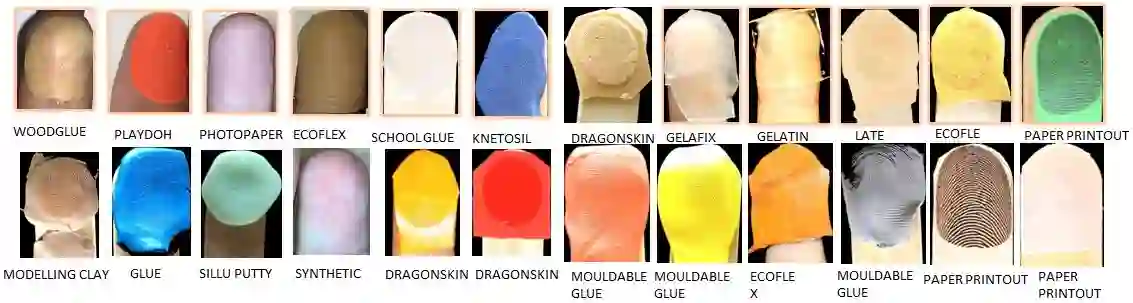
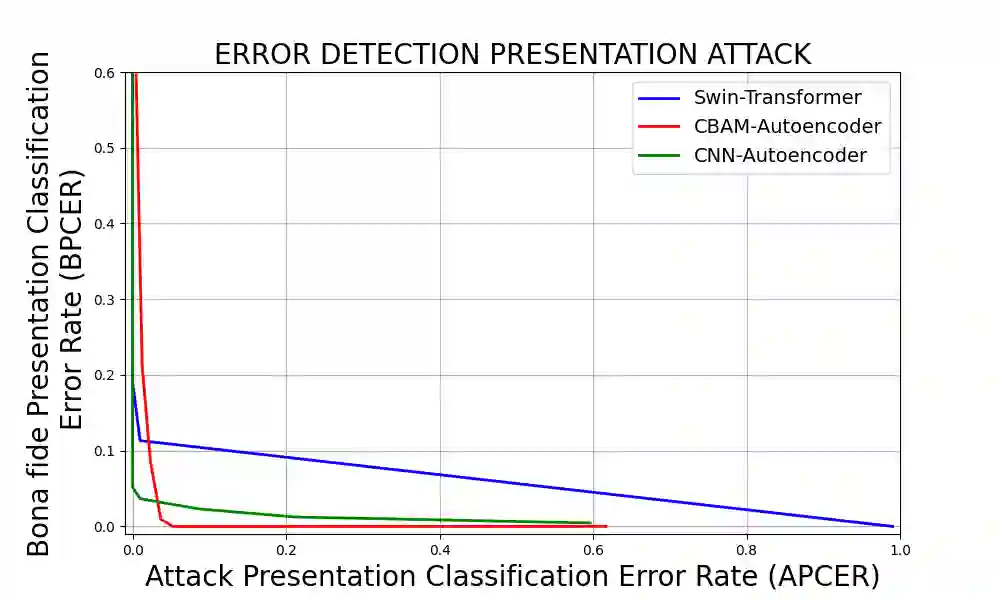
Contactless fingerprint recognition offers a higher level of user comfort and addresses hygiene concerns more effectively. However, it is also more vulnerable to presentation attacks such as photo paper, paper-printout, and various display attacks, which makes it more challenging to implement in biometric systems compared to contact-based modalities. Limited research has been conducted on presentation attacks in contactless fingerprint systems, and these studies have encountered challenges in terms of generalization and scalability since both bonafide samples and presentation attacks are utilized during training model. Although this approach appears promising, it lacks the ability to handle unseen attacks, which is a crucial factor for developing PAD methods that can generalize effectively. We introduced an innovative anti-spoofing approach that combines an unsupervised autoencoder with a convolutional block attention module to address the limitations of existing methods. Our model is exclusively trained on bonafide images without exposure to any spoofed samples during the training phase. It is then evaluated against various types of presentation attack images in the testing phase. The scheme we proposed has achieved an average BPCER of 0.96\% with an APCER of 1.6\% for presentation attacks involving various types of spoofed samples.
翻译:非接触式指纹识别在用户体验舒适度上更具优势,并能更有效地解决卫生问题。然而,它也更易受到展示攻击(如照片纸、纸质打印输出及各类显示攻击)的影响,这使得相较于接触式模态,其在生物特征系统中的实现更具挑战性。目前针对非接触式指纹系统中展示攻击的研究较为有限,且现有研究在泛化性和可扩展性方面面临困境,因为训练模型同时使用了真实样本和展示攻击样本。尽管这种方法看似有前景,但缺乏处理未知攻击的能力,而这一能力对开发能有效泛化的呈现攻击检测(PAD)方法至关重要。我们提出了一种创新的防欺骗方法,将无监督自编码器与卷积块注意力模块相结合,以解决现有方法的局限性。我们的模型仅在真实图像上进行训练,训练阶段未接触任何欺骗样本,然后在测试阶段针对多种展示攻击图像进行评估。针对各类欺骗样本的展示攻击,我们所提出的方案实现了平均BPCER为0.96%,APCER为1.6%。






相关内容



 微信扫码咨询专知VIP会员