

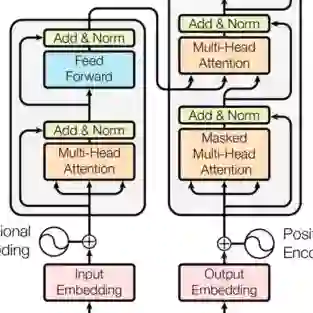
This position paper argues that the next generation of artificial intelligence in meteorological and climate sciences must transition from fragmented hybrid heuristics toward a unified paradigm of physics-guided multimodal transformers. While purely data-driven models have achieved significant gains in predictive accuracy, they often treat atmospheric processes as mere visual patterns, frequently producing results that lack scientific consistency or violate fundamental physical laws. We contend that current ``hybrid'' attempts to bridge this gap remain ad-hoc and struggle to scale across the heterogeneous nature of meteorological data ranging from satellite imagery to sparse sensor measurements. We argue that the transformer architecture, through its inherent capacity for cross-modal alignment, provides the only viable foundation for a systematic integration of domain knowledge via physical constraint embedding and physics-informed loss functions. By advocating for this unified architectural shift, we aim to steer the community away from ``black-box'' curve fitting and toward AI systems that are inherently falsifiable, scientifically grounded, and robust enough to address the existential challenges of extreme weather and climate change.
翻译:本立场论文主张,下一代气象与气候科学中的人工智能必须从碎片化的混合启发式方法转向物理引导的多模态Transformer的统一范式。尽管纯数据驱动模型在预测准确性方面取得了显著进展,但它们往往将大气过程视为单纯的视觉模式,其产生的结果常常缺乏科学一致性或违反基本物理定律。我们认为,当前旨在弥合这一差距的"混合"尝试仍然是临时性的,难以在从卫星图像到稀疏传感器测量等异质性气象数据中实现规模化。我们主张,Transformer架构凭借其固有的跨模态对齐能力,通过物理约束嵌入和物理信息损失函数,为实现领域知识的系统集成提供了唯一可行的基础。通过倡导这一统一的架构转变,我们旨在引导学界从"黑箱"曲线拟合转向本质上可证伪、科学基础坚实且足够稳健的人工智能系统,以应对极端天气和气候变化带来的生存性挑战。




相关内容


 微信扫码咨询专知VIP会员