

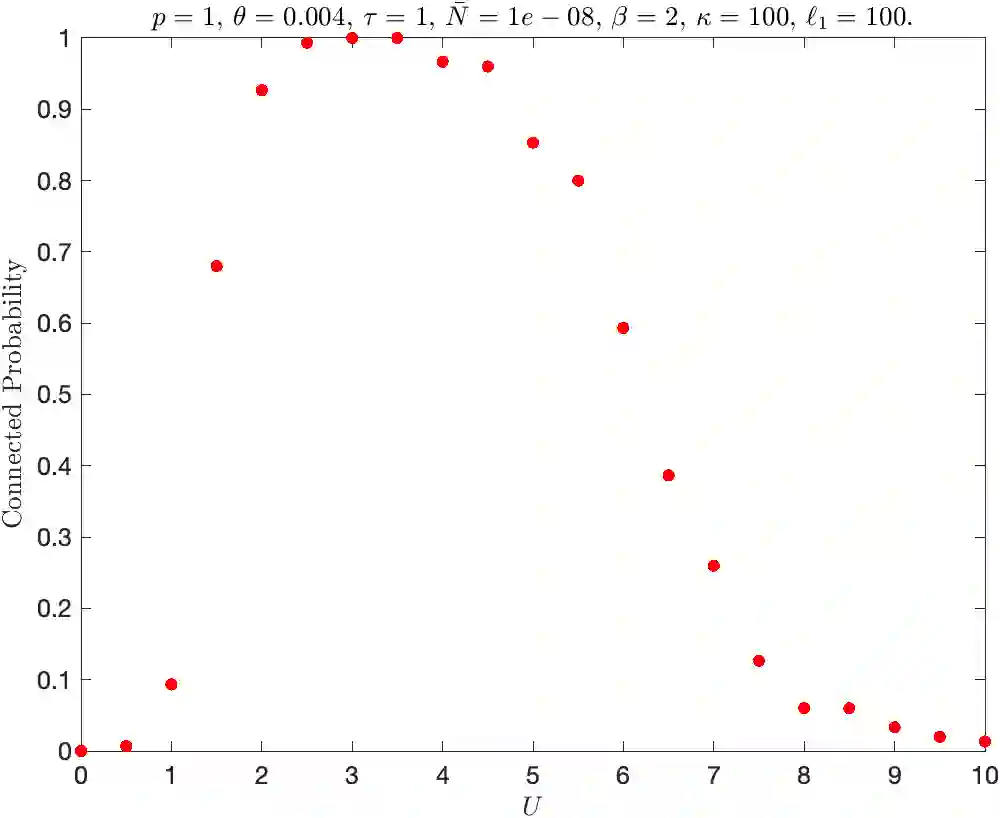
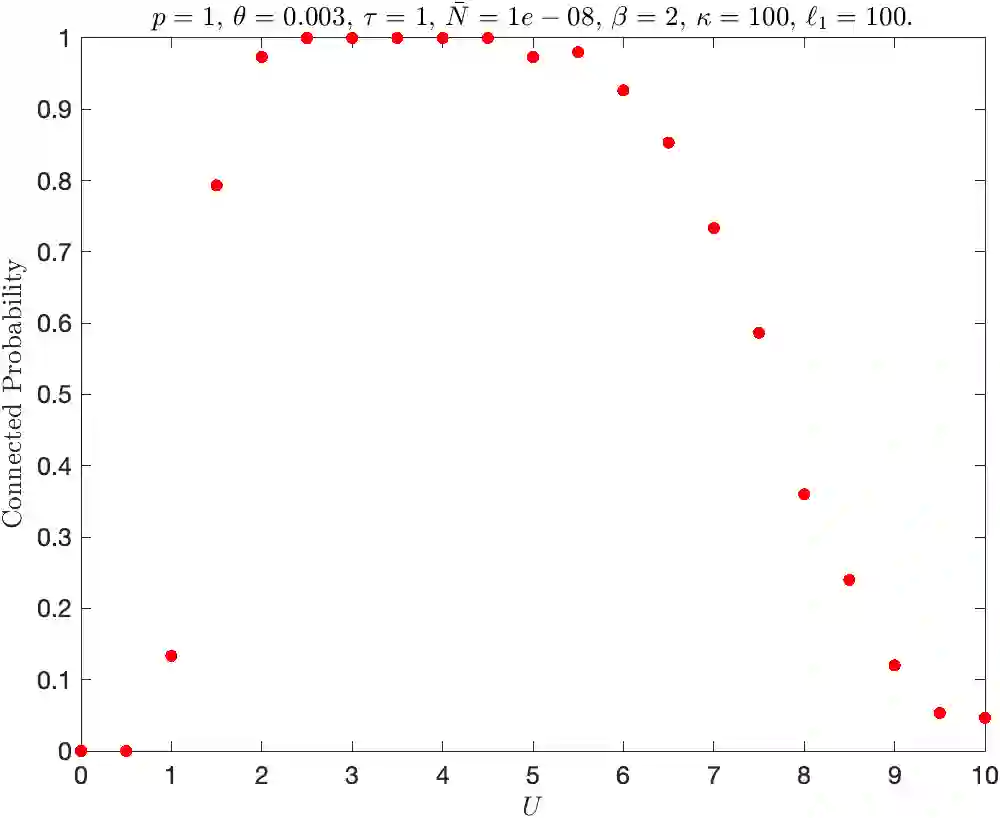
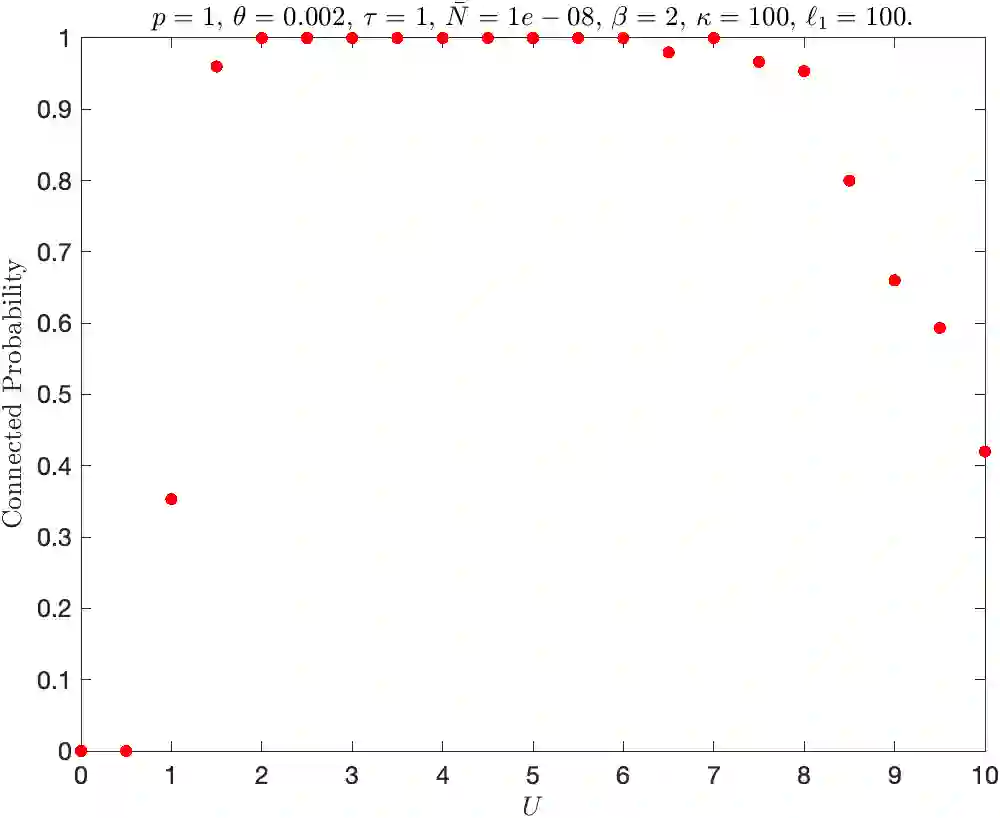
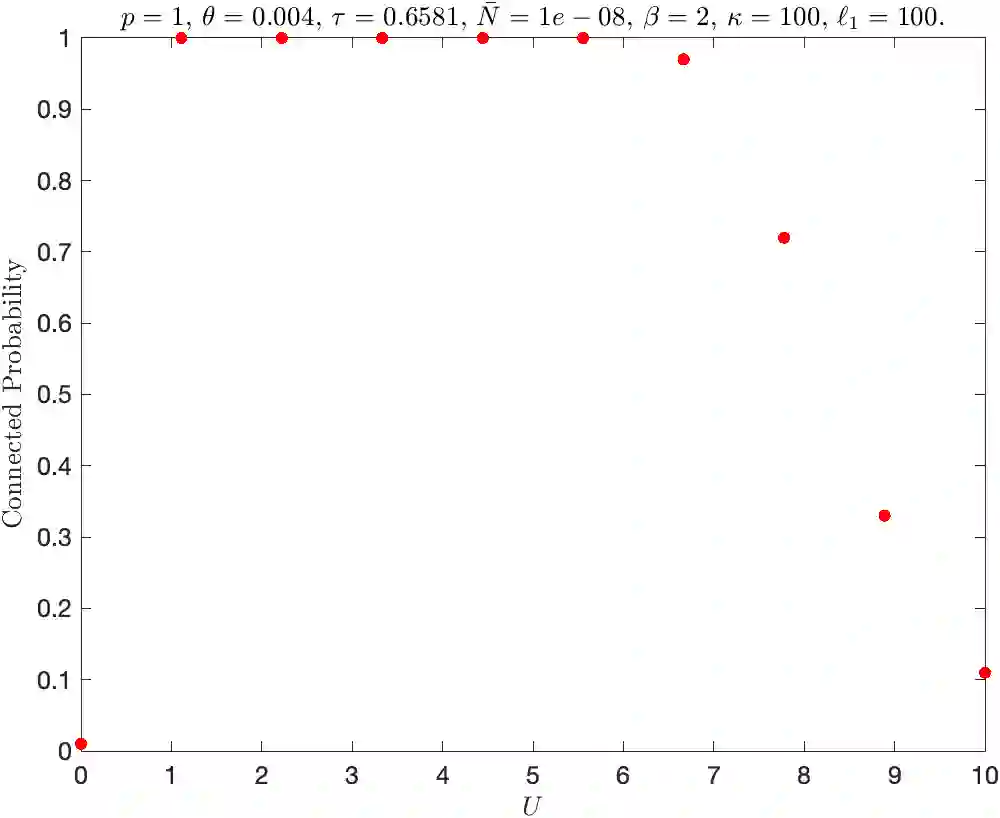
To study the overall connectivity in device-to-device networks in cities, we incorporate a signal-to-interference-plus-noise connectivity model into a Poisson-Voronoi tessellation model representing the streets of a city. Relays are located at crossroads (or street intersections), whereas (user) devices are scattered along streets. Between any two adjacent relays, we assume data can be transmitted either directly between the relays or through users, given they share a common street. Our simulation results reveal that the network connectivity is ensured when the density of users (on the streets) exceeds a certain critical value. But then the network connectivity disappears when the user density exceeds a second critical value. The intuition is that for longer streets, where direct relay-to-relay communication is not possible, users are needed to transmit data between relays, but with too many users the interference becomes too strong, eventually reducing the overall network connectivity. This observation on the user density evokes previous results based on another wireless network model, where transmitter-receivers were scattered across the plane. This effect disappears when interference is removed from the model, giving a variation of the classic Gilbert model and recalling the lesson that neglecting interference in such network models can give overly optimistic results. For physically reasonable model parameters, we show that crowded streets (with more than six users on a typical street) lead to a sudden drop in connectivity. We also give numerical results outlining a relationship between the user density and the strength of any interference reduction techniques.
翻译:为研究城市中设备到设备网络的整体连通性,我们将信号-干扰-噪声比连通模型融入表征城市街道的泊松-沃罗诺伊镶嵌模型。中继节点位于道路交叉口,而(用户)设备沿街道随机分布。我们假设任意两个相邻中继节点之间,可通过直接中继通信或借助共享同一条街道的用户进行数据传输。仿真结果表明:当街道上的用户密度超过某个临界值时网络连通性得以保证;然而当用户密度超过第二个临界值时,网络连通性反而消失。直观解释是:对于无法直接进行中继间通信的长街道,需要用户在中继节点间传输数据,但过多的用户会导致干扰过强,最终降低整体网络连通性。这一关于用户密度的观察结果与基于另一种无线网络模型(发射-接收对随机分布在平面上)的先前研究结论相呼应。当从模型中移除干扰时,该效应消失,形成经典吉尔伯特模型的一种变体,这警示我们在此类网络模型中忽略干扰可能得到过于乐观的结果。在物理合理的参数条件下,我们证明拥挤街道(典型街道上超过六名用户)会导致连通性骤降。同时给出数值结果,揭示用户密度与各类干扰抑制技术效果之间的关系。





相关内容





 微信扫码咨询专知VIP会员