

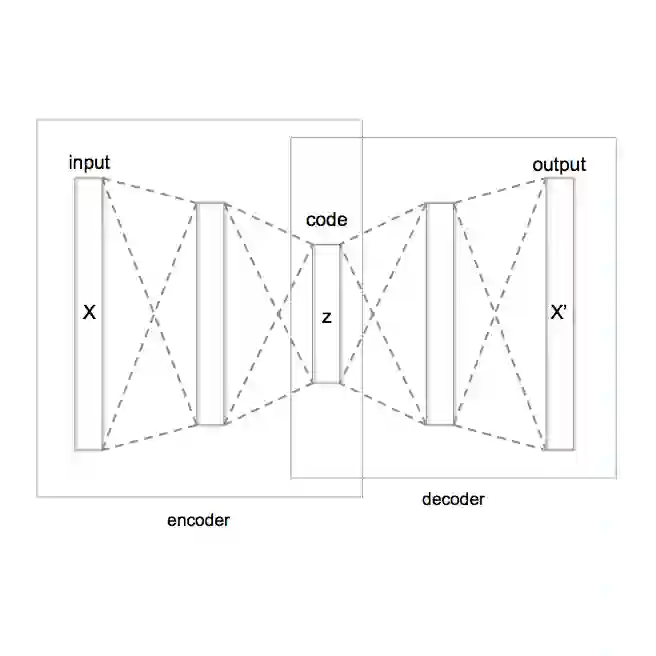
Accurate analysis of microscopy images is hindered by the presence of noise. This noise is usually signal-dependent and often additionally correlated along rows or columns of pixels. Current self- and unsupervised denoisers can address signal-dependent noise, but none can reliably remove noise that is also row- or column-correlated. Here, we present the first fully unsupervised deep learning-based denoiser capable of handling imaging noise that is row-correlated as well as signal-dependent. Our approach uses a Variational Autoencoder (VAE) with a specially designed autoregressive decoder. This decoder is capable of modeling row-correlated and signal-dependent noise but is incapable of independently modeling underlying clean signal. The VAE therefore produces latent variables containing only clean signal information, and these are mapped back into image space using a proposed second decoder network. Our method does not require a pre-trained noise model and can be trained from scratch using unpaired noisy data. We benchmark our approach on microscopy datatsets from a range of imaging modalities and sensor types, each with row- or column-correlated, signal-dependent noise, and show that it outperforms existing self- and unsupervised denoisers.
翻译:显微图像分析常受噪声干扰,其强度通常与信号相关,且常在像素行或列方向上存在相关性。现有自监督与无监督去噪方法虽能处理信号依赖型噪声,但均无法有效去除同时具有行列相关性的噪声。本文首次提出基于深度学习的全无监督去噪器,可同时处理行相关及信号依赖的成像噪声。该方法采用变分自编码器(VAE)配合特殊设计的自回归解码器:该解码器能够建模行相关且信号依赖的噪声,但无法独立建模底层洁净信号。因此VAE生成的潜变量仅包含洁净信号信息,并通过我们提出的第二解码器网络映射回图像空间。本方法无需预训练噪声模型,可直接使用非配对噪声数据进行训练。我们在多种成像模态与传感器类型的显微数据集上进行了基准测试,所有数据均包含行/列相关且信号依赖的噪声,实验表明本方法性能优于现有自监督与无监督去噪方法。




相关内容



 微信扫码咨询专知VIP会员