

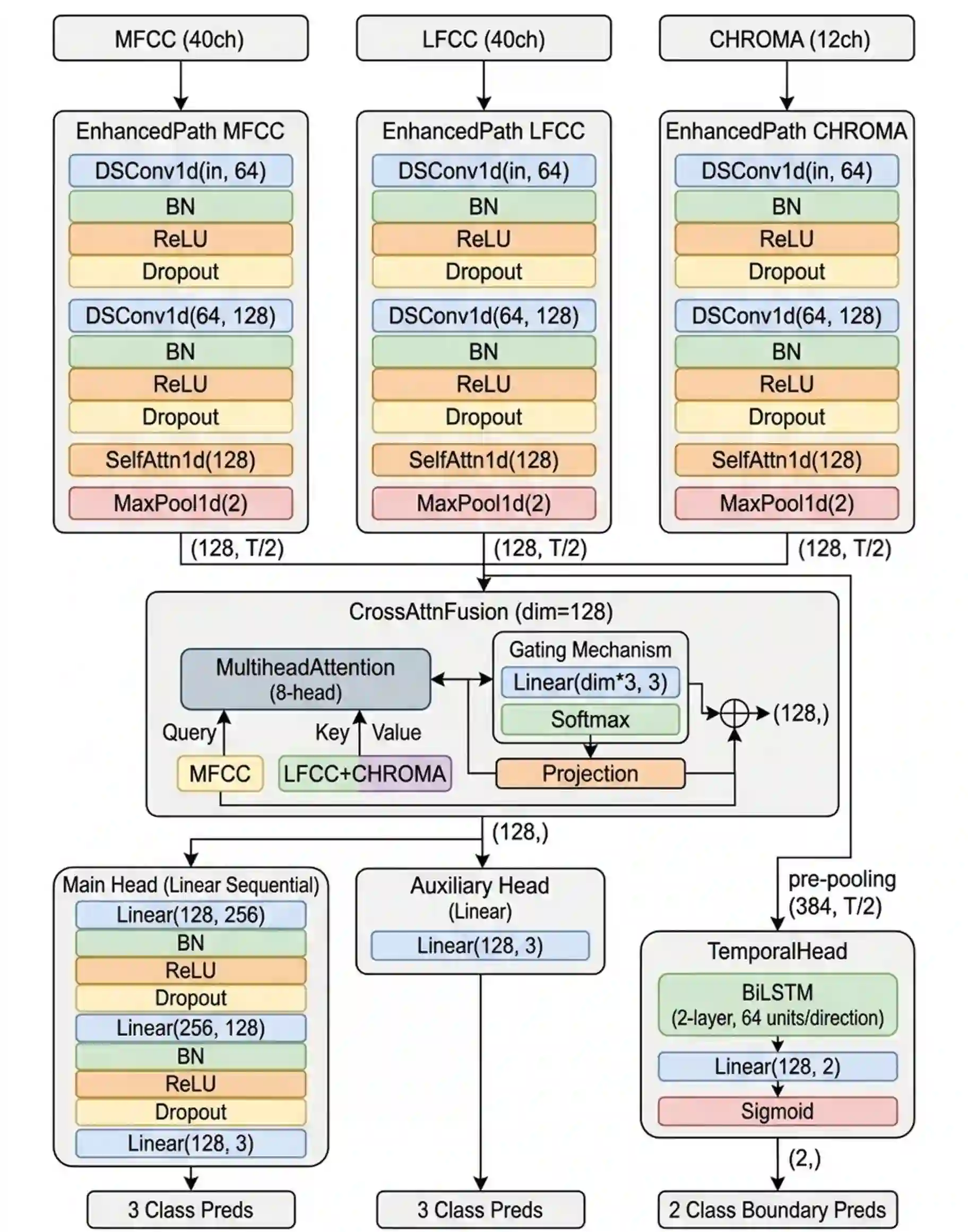
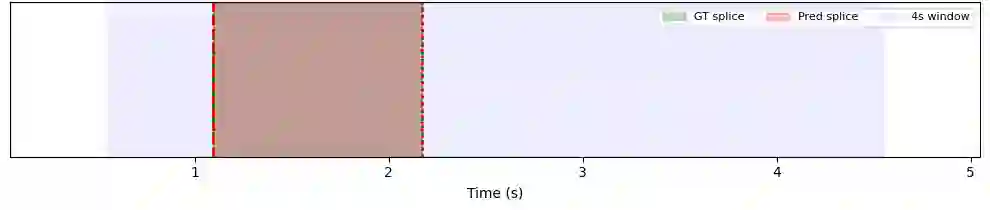
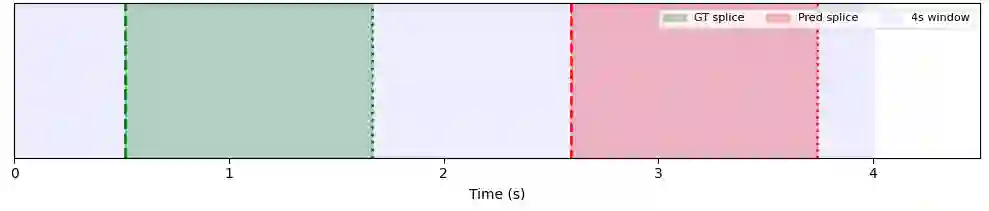
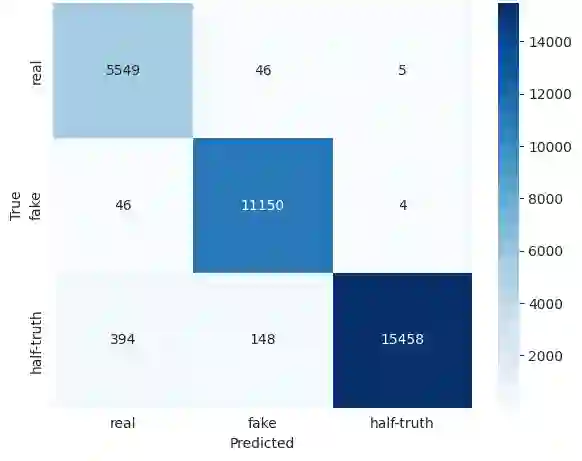
Partially manipulated (half-truth) speech, where a short synthesised segment is spliced into an otherwise genuine utterance, is a harder and more realistic forensic threat than the fully synthesised deepfakes that dominate the literature. We present CAFNet, a lightweight (576K-parameter, 2.24 MB) cross-attentive architecture that fuses MFCC, LFCC, and Chroma-STFT features to jointly classify audio as real, fully fake, or half-truth, and regress the temporal boundaries of the synthesised region, at approximately 14 ms CPU latency. A component ablation shows cross-attention fusion is CAFNet's most load-bearing component; a deeply supervised auxiliary classification head from earlier iterations is not, and removing it improves every in-domain metric under 3-seed replication with substantially lower variance. On MLADDC T2+T3 the model reaches 97.55%$\pm$0.69% ternary accuracy and 0.037 s boundary mean absolute error (MAE), to our knowledge, the first reported continuous splice- boundary localisation result on this benchmark. Zero-shot evaluation on two independent benchmarks shows transfer is capability- and corpus-dependent rather than uniform: on Half-Truth Audio Detection dataset (HAD), detection recall reaches 84.9% and ternary classification resolves half-truth correctly on half of true half-truth clips (50.4%), while on PartialSpoof, binary detection stays near chance (AUC 0.5544). We treat this asymmetry, not a single generalization verdict, as the finding. HAD localisation improves in absolute terms but degrades in relative terms, since in-domain localisation improved faster. An architectural change validated purely in-domain thus shifted the cross-corpus transfer profile, evidence that cross-corpus evaluation should accompany, not follow, in-domain architecture decisions.
翻译:暂无翻译




相关内容



 微信扫码咨询专知VIP会员