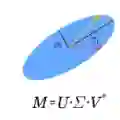
We study quantum speedups in quantum machine learning (QML) by analyzing the quantum singular value transformation (QSVT) framework. QSVT, introduced by [GSLW, STOC'19, arXiv:1806.01838], unifies all major types of quantum speedup; in particular, a wide variety of QML proposals are applications of QSVT on low-rank classical data. We challenge these proposals by providing a classical algorithm that matches the performance of QSVT in this regime up to a small polynomial overhead. We show that, given a matrix $A \in \mathbb{C}^{m\times n}$, a vector $b \in \mathbb{C}^{n}$, a bounded degree-$d$ polynomial $p$, and linear-time pre-processing, we can output a description of a vector $v$ such that $\|v - p(A) b\| \leq \varepsilon\|b\|$ in $\widetilde{\mathcal{O}}(d^{11} \|A\|_{\mathrm{F}}^4 / (\varepsilon^2 \|A\|^4 ))$ time. This improves upon the best known classical algorithm [CGLLTW, STOC'20, arXiv:1910.06151], which requires $\widetilde{\mathcal{O}}(d^{22} \|A\|_{\mathrm{F}}^6 /(\varepsilon^6 \|A\|^6 ) )$ time, and narrows the gap with QSVT, which, after linear-time pre-processing to load input into a quantum-accessible memory, can estimate the magnitude of an entry $p(A)b$ to $\varepsilon\|b\|$ error in $\widetilde{\mathcal{O}}(d\|A\|_{\mathrm{F}}/(\varepsilon \|A\|))$ time. Our key insight is to combine the Clenshaw recurrence, an iterative method for computing matrix polynomials, with sketching techniques to simulate QSVT classically. We introduce several new classical techniques in this work, including (a) a non-oblivious matrix sketch for approximately preserving bi-linear forms, (b) a new stability analysis for the Clenshaw recurrence, and (c) a new technique to bound arithmetic progressions of the coefficients appearing in the Chebyshev series expansion of bounded functions, each of which may be of independent interest.


翻译:我们通过分析量子奇异值变换(QSVT)框架研究量子机器学习中的量子加速机制。由[GSLW, STOC'19, arXiv:1806.01838]提出的QSVT统一了所有主要类型的量子加速方法;特别是,大量量子机器学习方案本质上是将QSVT应用于低秩经典数据。我们通过提出一种经典算法来挑战这些方案,该算法在此场景下与QSVT的性能匹配,仅存在较小的多项式开销。我们证明:给定矩阵$A \in \mathbb{C}^{m\times n}$、向量$b \in \mathbb{C}^{n}$、有界次数$d$的多项式$p$以及线性时间预处理,可以在$\widetilde{\mathcal{O}}(d^{11} \|A\|_{\mathrm{F}}^4 / (\varepsilon^2 \|A\|^4 ))$时间内输出向量$v$的描述,使得$\|v - p(A) b\| \leq \varepsilon\|b\|$。这改进了已知最优经典算法[CGLLTW, STOC'20, arXiv:1910.06151](需$\widetilde{\mathcal{O}}(d^{22} \|A\|_{\mathrm{F}}^6 /(\varepsilon^6 \|A\|^6 ) )$时间),并缩小了与QSVT的差距——后者在通过线性时间预处理将输入加载到量子可访问内存后,可在$\widetilde{\mathcal{O}}(d\|A\|_{\mathrm{F}}/(\varepsilon \|A\|))$时间内估算$p(A)b$的某个分量幅值至$\varepsilon\|b\|$误差。我们的核心洞察是将计算矩阵多项式的迭代方法Clenshaw递推与素描技术结合,以经典方式模拟QSVT。本文引入多项新型经典技术,包括:(a) 用于近似保持双线性形式的非 oblivious 矩阵素描,(b) Clenshaw递推的新稳定性分析,(c) 有界函数切比雪夫级数展开系数算术级数的新界定理,这些技术本身可能具有独立研究价值。


0
下载
关闭预览

相关内容

FlowQA: Grasping Flow in History for Conversational Machine Comprehension
专知会员服务
34+阅读 · 2019年10月18日
Stabilizing Transformers for Reinforcement Learning
专知会员服务
60+阅读 · 2019年10月17日
《DeepGCNs: Making GCNs Go as Deep as CNNs》
专知会员服务
32+阅读 · 2019年10月17日
Keras François Chollet 《Deep Learning with Python 》, 386页pdf
专知会员服务
164+阅读 · 2019年10月12日
【SIGGRAPH2019】TensorFlow 2.0深度学习计算机图形学应用
专知会员服务
41+阅读 · 2019年10月9日
Hierarchically Structured Meta-learning
CreateAMind
27+阅读 · 2019年5月22日
Transferring Knowledge across Learning Processes
CreateAMind
29+阅读 · 2019年5月18日
强化学习的Unsupervised Meta-Learning
CreateAMind
18+阅读 · 2019年1月7日
Unsupervised Learning via Meta-Learning
CreateAMind
44+阅读 · 2019年1月3日
A Technical Overview of AI & ML in 2018 & Trends for 2019
待字闺中
18+阅读 · 2018年12月24日
Single-Shot Object Detection with Enriched Semantics
统计学习与视觉计算组
14+阅读 · 2018年8月29日
STRCF for Visual Object Tracking
统计学习与视觉计算组
15+阅读 · 2018年5月29日
Hierarchical Imitation - Reinforcement Learning
CreateAMind
19+阅读 · 2018年5月25日
Focal Loss for Dense Object Detection
统计学习与视觉计算组
12+阅读 · 2018年3月15日
IJCAI | Cascade Dynamics Modeling with Attention-based RNN
KingsGarden
13+阅读 · 2017年7月16日
国家自然科学基金
2+阅读 · 2017年12月31日
国家自然科学基金
13+阅读 · 2017年12月31日
国家自然科学基金
2+阅读 · 2015年12月31日
国家自然科学基金
0+阅读 · 2015年12月31日
国家自然科学基金
0+阅读 · 2015年12月31日
国家自然科学基金
2+阅读 · 2015年12月31日
国家自然科学基金
1+阅读 · 2014年12月31日
国家自然科学基金
0+阅读 · 2014年12月31日
国家自然科学基金
0+阅读 · 2014年12月31日
国家自然科学基金
2+阅读 · 2014年12月31日
Arxiv
0+阅读 · 2023年9月20日
Arxiv
0+阅读 · 2023年9月20日
Arxiv
12+阅读 · 2021年7月26日
Learning Implicit Fields for Generative Shape Modeling
Arxiv
11+阅读 · 2018年12月6日
VIP会员
最新内容
网状网络及其在军事领域的运用
专知会员服务
1+阅读 · 今天6:18
无美国参与的欧洲战争方式(万字长文)
专知会员服务
2+阅读 · 今天5:54
《国防领域敏感性分析白皮书》
专知会员服务
2+阅读 · 今天3:42
综述 | 从问答到任务完成:Agent系统与Harness设计
Agentic RL:框架、实践与长程智能体训练
专知会员服务
3+阅读 · 6月24日
重新思考无人机时代的生存能力
专知会员服务
7+阅读 · 6月24日
装甲突击旅:现代战争思考、战斗与组织
专知会员服务
5+阅读 · 6月24日
在人工智能加速决策环境中拓展OODA循环
专知会员服务
7+阅读 · 6月24日
军事欺骗:供作战战术指挥官使用的工具
专知会员服务
6+阅读 · 6月24日
相关资讯
Hierarchically Structured Meta-learning
CreateAMind
27+阅读 · 2019年5月22日
Transferring Knowledge across Learning Processes
CreateAMind
29+阅读 · 2019年5月18日
强化学习的Unsupervised Meta-Learning
CreateAMind
18+阅读 · 2019年1月7日
Unsupervised Learning via Meta-Learning
CreateAMind
44+阅读 · 2019年1月3日
A Technical Overview of AI & ML in 2018 & Trends for 2019
待字闺中
18+阅读 · 2018年12月24日
Single-Shot Object Detection with Enriched Semantics
统计学习与视觉计算组
14+阅读 · 2018年8月29日
STRCF for Visual Object Tracking
统计学习与视觉计算组
15+阅读 · 2018年5月29日
Hierarchical Imitation - Reinforcement Learning
CreateAMind
19+阅读 · 2018年5月25日
Focal Loss for Dense Object Detection
统计学习与视觉计算组
12+阅读 · 2018年3月15日
IJCAI | Cascade Dynamics Modeling with Attention-based RNN
KingsGarden
13+阅读 · 2017年7月16日
相关基金
国家自然科学基金
2+阅读 · 2017年12月31日
国家自然科学基金
13+阅读 · 2017年12月31日
国家自然科学基金
2+阅读 · 2015年12月31日
国家自然科学基金
0+阅读 · 2015年12月31日
国家自然科学基金
0+阅读 · 2015年12月31日
国家自然科学基金
2+阅读 · 2015年12月31日
国家自然科学基金
1+阅读 · 2014年12月31日
国家自然科学基金
0+阅读 · 2014年12月31日
国家自然科学基金
0+阅读 · 2014年12月31日
国家自然科学基金
2+阅读 · 2014年12月31日
Top
微信扫码咨询专知VIP会员