

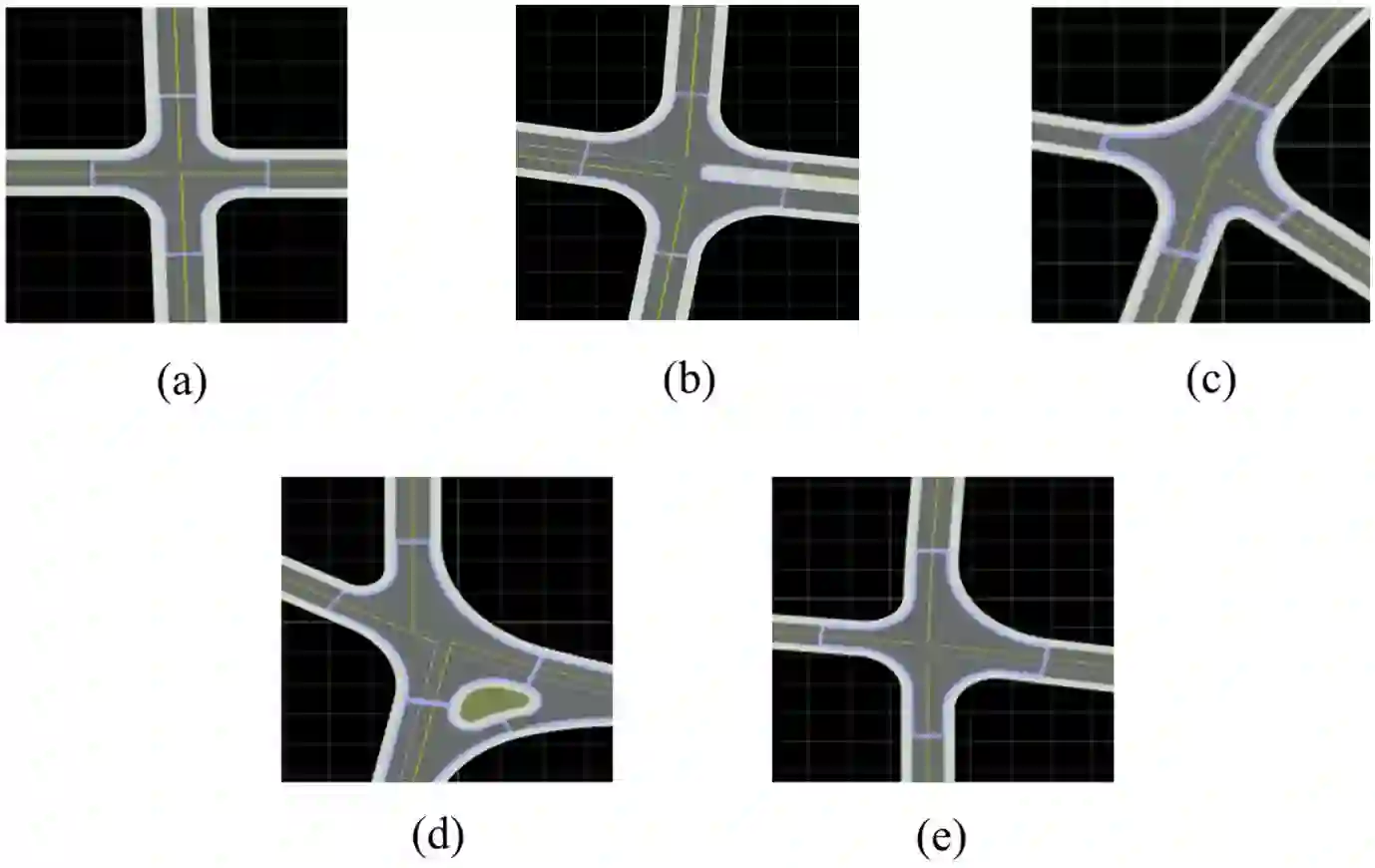
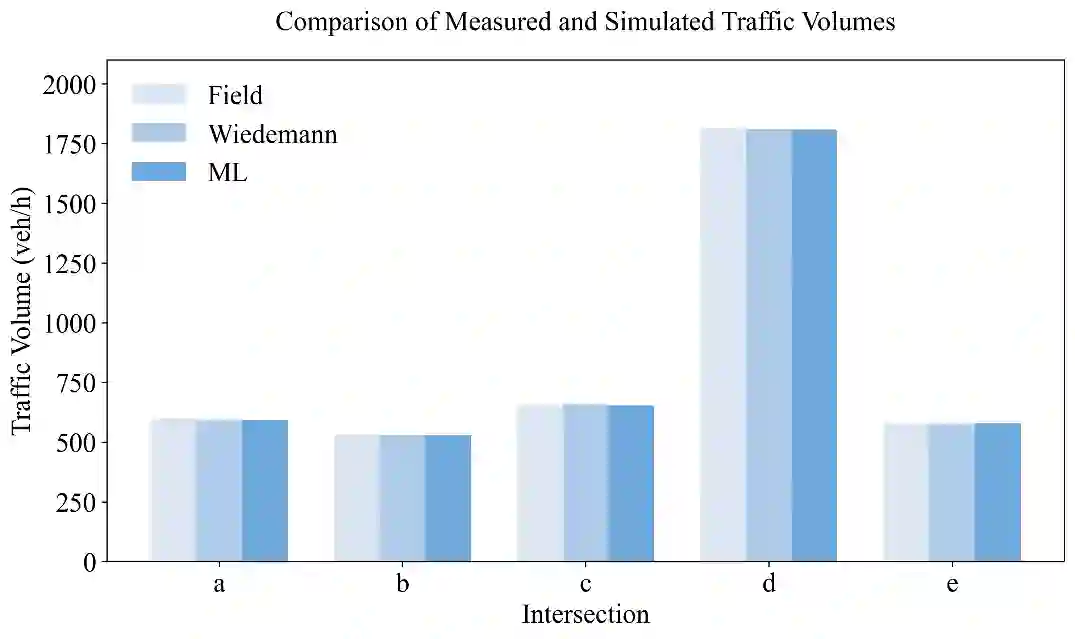
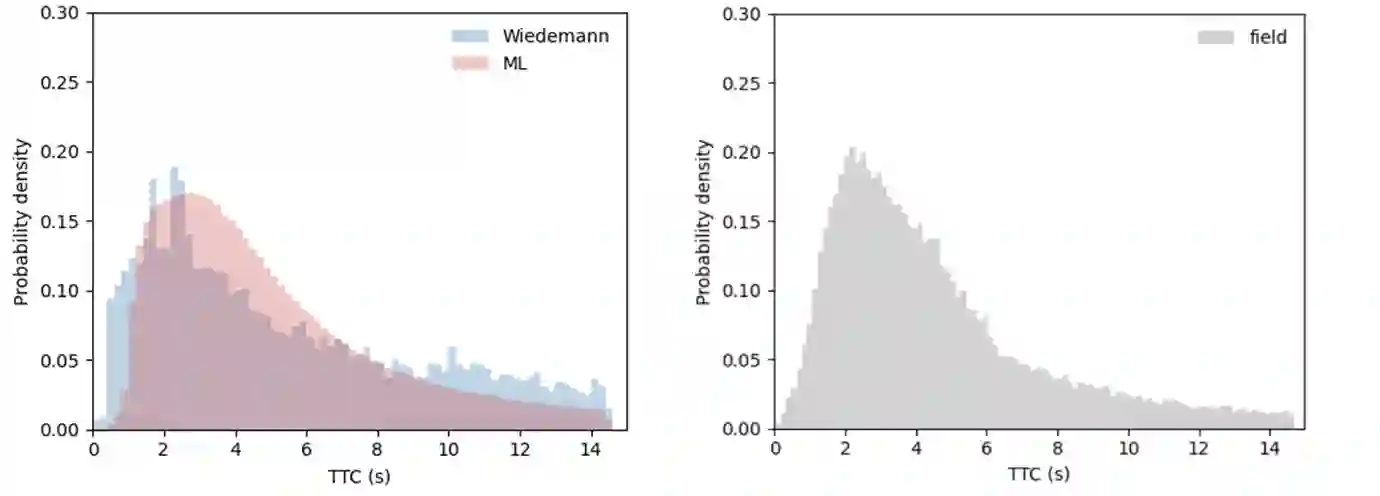
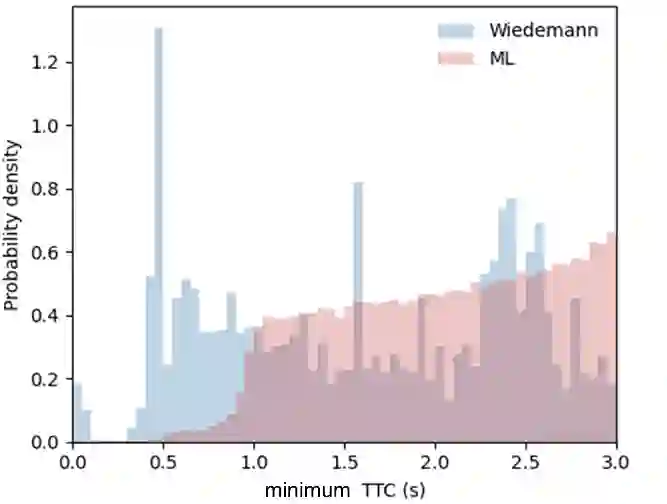
Traffic microsimulation combined with surrogate safety measures has increasingly been used as a proactive alternative to historical crash data for predicting crash frequency for current or planned road infrastructure designs. However, existing microsimulation-based safety studies have adopted simplified rule-based behaviour models, which reproduce traffic flow reasonably well but often fail to generate realistic conflict dynamics, limiting crash prediction accuracy. Recent advances in machine learning (ML)-based behaviour models offer a promising opportunity to potentially improve microsimulation realism and crash frequency predictions by learning human driving behaviour directly from large-scale trajectory datasets. To investigate this possibility, traffic microsimulation was conducted for five real-world signalised intersections in Leeds, UK, using both a standard rule-based model and a state-of-the-art ML model. Simulated vehicle trajectories were analysed using a two-dimensional Time-to-Collision metric to identify simulated conflicts, which were then modelled using Extreme Value Theory to predict crash frequency. Results show that conflicts from the ML model yielded crash predictions in line with the real-world crash data, whereas the rule-based model did not permit meaningful predictions, presumably due to a lack of model calibration to the specific simulated intersections. Directly using ML-generated simulated crashes to predict real-world crash frequency also yielded poor results, suggesting that while current ML models can realistically reproduce conflicts, they are not yet able to generate realistic crashes. Overall, the findings demonstrate that ML-based behaviour models are promising for improving crash prediction from simulated conflicts, without a need for location-specific model calibration, and suggest clear future directions for ML-based traffic microsimulation.
翻译:暂无翻译





相关内容




 微信扫码咨询专知VIP会员