

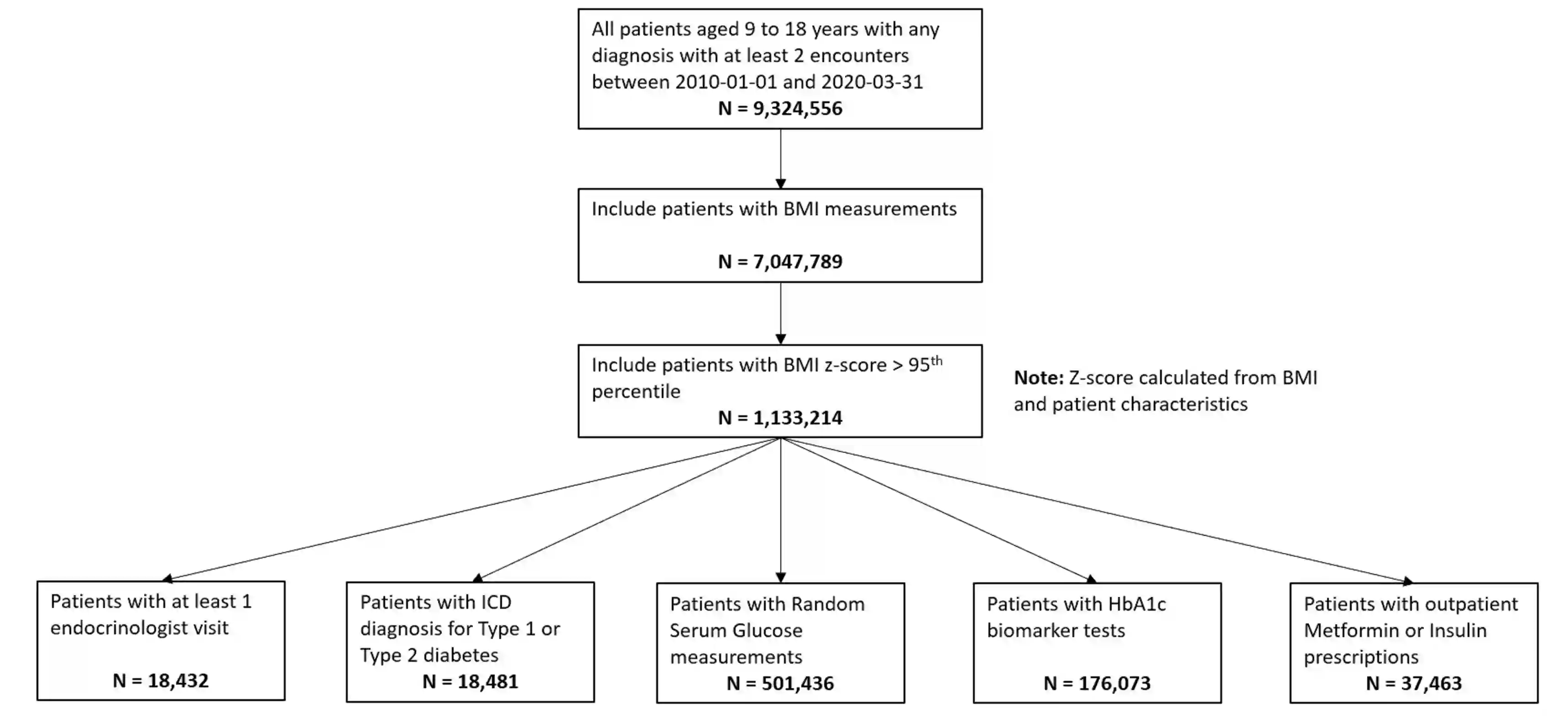
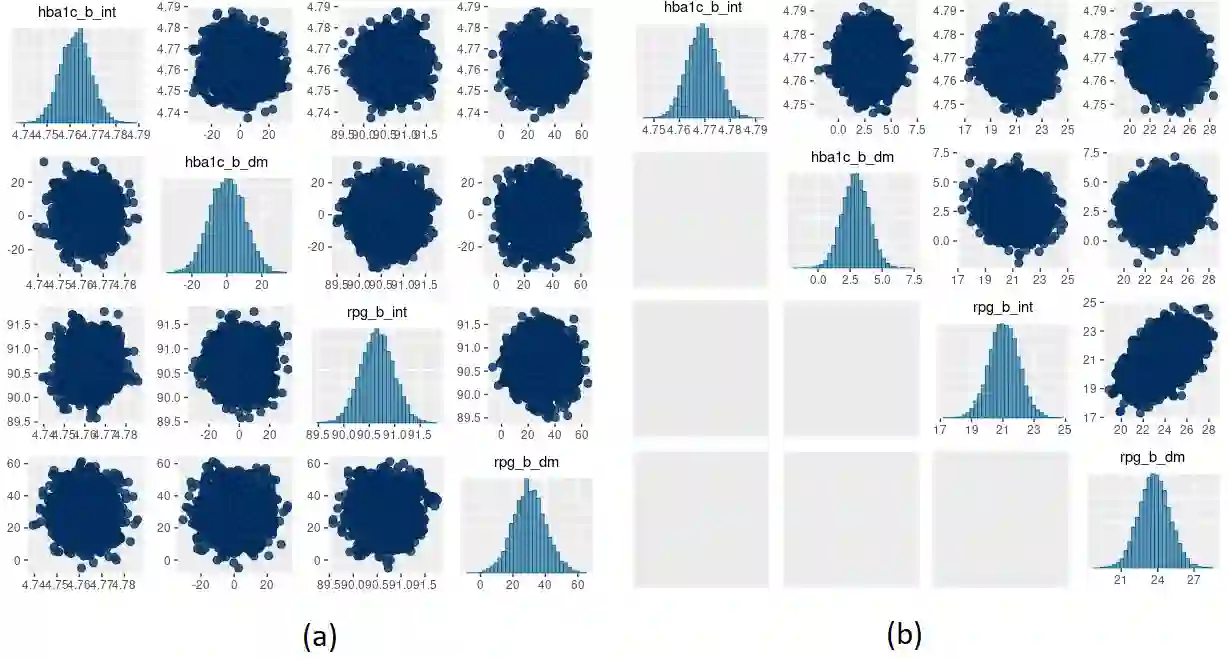
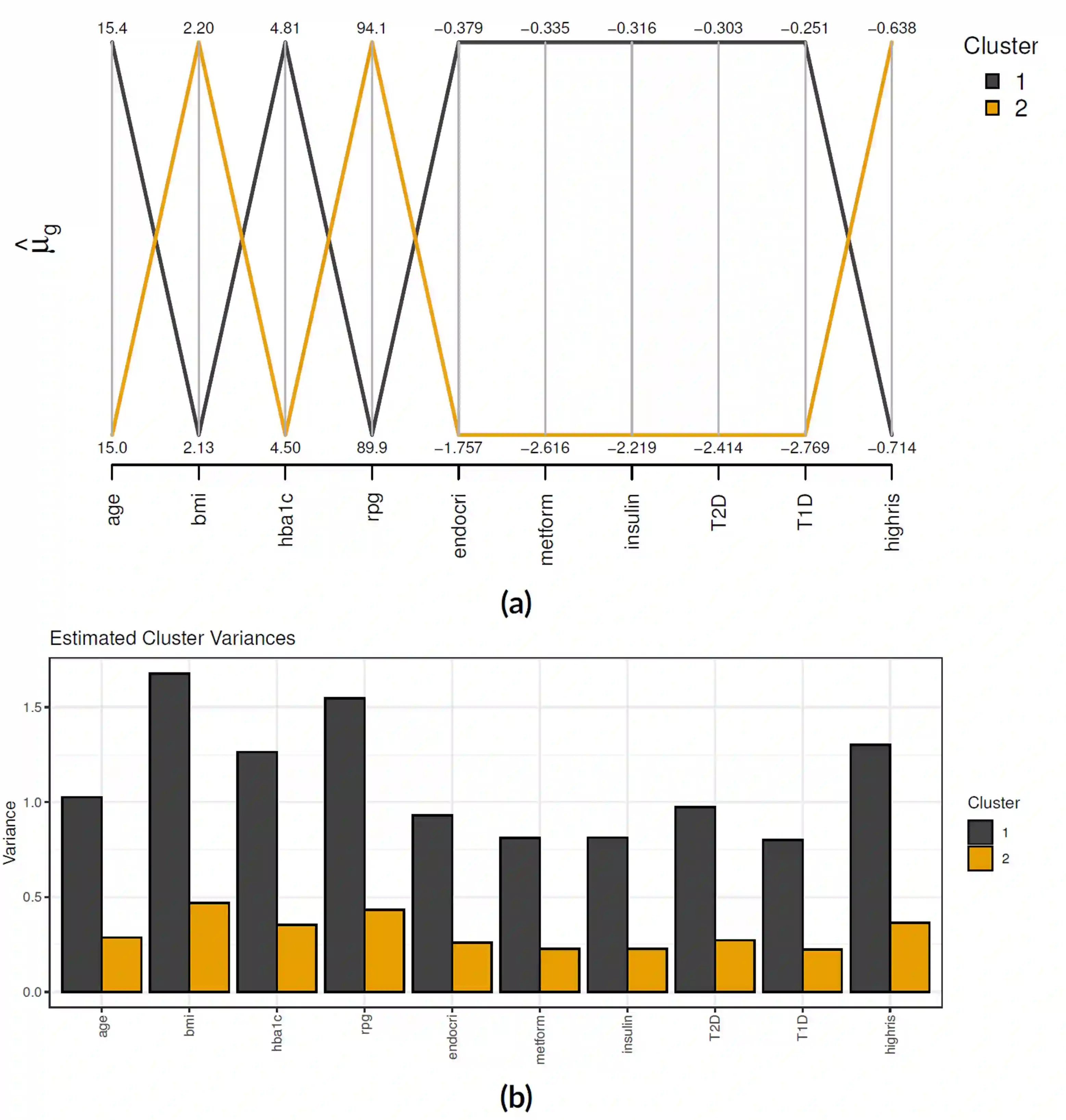
Bayesian approaches to clinical analyses for the purposes of patient phenotyping have been limited by the computational challenges associated with applying the Markov-Chain Monte-Carlo (MCMC) approach to large real-world data. Approximate Bayesian inference via optimization of the variational evidence lower bound, often called Variational Bayes (VB), has been successfully demonstrated for other applications. We investigate the performance and characteristics of currently available R and Python VB software for variational Bayesian Latent Class Analysis (LCA) of realistically large real-world observational data. We used a real-world data set, OptumTM electronic health records (EHR), containing pediatric patients with risk indicators for type 2 diabetes mellitus that is a rare form in pediatric patients. The aim of this work is to validate a Bayesian patient phenotyping model for generality and extensibility and crucially that it can be applied to a realistically large real-world clinical data set. We find currently available automatic VB methods are very sensitive to initial starting conditions, model definition, algorithm hyperparameters and choice of gradient optimiser. The Bayesian LCA model was challenging to implement using VB but we achieved reasonable results with very good computational performance compared to MCMC.
翻译:以患者表型分析为目标的临床贝叶斯方法一直受到应用马尔可夫链蒙特卡洛(MCMC)方法处理大规模真实世界数据时计算挑战的限制。通过优化变分证据下界实现的近似贝叶斯推断(通常称为变分贝叶斯方法,VB)已在其他应用中成功展示。本研究探究了当前可用的R和Python VB软件在真实大规模观察性数据中进行变分贝叶斯隐类分析(LCA)的性能与特性。我们采用包含儿科患者的真实世界数据集OptumTM电子健康记录(EHR),这些患者存在2型糖尿病风险指标——该疾病在儿科中属于罕见类型。本工作旨在验证一种具有通用性和可扩展性的贝叶斯患者表型模型,并确保其关键优势:可应用于真实规模的大规模临床数据集。我们发现现有自动VB方法对初始条件、模型定义、算法超参数及梯度优化器选择极为敏感。尽管使用VB实现贝叶斯LCA模型具有挑战性,但相比MCMC方法,我们以极佳的计算性能获得了合理结果。




相关内容

 微信扫码咨询专知VIP会员