

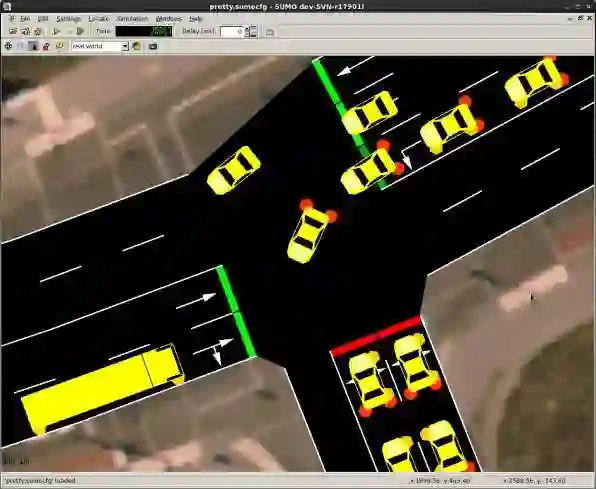
The quest for safer and more efficient transportation through cooperative, connected and automated mobility (CCAM) calls for realistic performance analysis tools, especially with respect to wireless communications. While the simulation of existing and emerging communication technologies is an option, the most realistic results can be obtained by employing real hardware, as done for example in field operational tests (FOTs). For CCAM, however, performing FOTs requires vehicles, which are generally expensive. and performing such tests can be very demanding in terms of manpower, let alone considering safety issues. Mobility simulation with hardware-in-the-loop (HIL) serves as a middle ground, but current solutions lack flexibility and reconfigurability. This work thus proposes ColosSUMO as a way to couple Colosseum, the world's largest wireless network emulator, with the SUMO mobility simulator, showing its design concept, how it can be exploited to simulate realistic vehicular environments, and its flexibility in terms of communication technologies.
翻译:通过协作式、网联化与自动化出行(CCAM)实现更安全、更高效交通的探索,亟需真实的性能分析工具,尤其是在无线通信方面。虽然仿真现有及新兴通信技术是一种方案,但最真实的结果可通过使用真实硬件获得,例如现场运行测试(FOT)。然而,对于CCAM而言,开展FOT需要车辆(通常成本高昂),且此类测试在人力方面要求极高,更不必考虑安全问题。基于硬件在环(HIL)的移动性仿真可作为一种折中方案,但现有方案缺乏灵活性与可重构性。为此,本文提出ColosSUMO,以将全球最大的无线网络仿真器Colosseum与SUMO移动性仿真器相结合。本文展示了其设计概念、如何利用其模拟真实车载环境,以及其在通信技术方面的灵活性。




相关内容




 微信扫码咨询专知VIP会员