

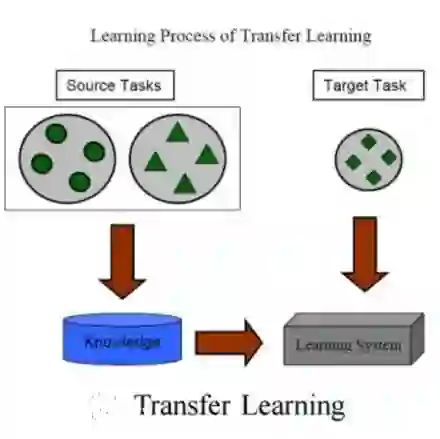
Many incurable diseases prevalent across global societies stem from various influences, including lifestyle choices, economic conditions, social factors, and genetics. Research predominantly focuses on these diseases due to their widespread nature, aiming to decrease mortality, enhance treatment options, and improve healthcare standards. Among these, kidney disease stands out as a particularly severe condition affecting men and women worldwide. Nonetheless, there is a pressing need for continued research into innovative, early diagnostic methods to develop more effective treatments for such diseases. Recently, automatic diagnosis of Kidney Cancer has become an important challenge especially when using deep learning (DL) due to the importance of training medical datasets, which in most cases are difficult and expensive to obtain. Furthermore, in most cases, algorithms require data from the same domain and a powerful computer with efficient storage capacity. To overcome this issue, a new type of learning known as transfer learning (TL) has been proposed that can produce impressive results based on other different pre-trained data. This paper presents, to the best of the authors' knowledge, the first comprehensive survey of DL-based TL frameworks for kidney cancer diagnosis. This is a strong contribution to help researchers understand the current challenges and perspectives of this topic. Hence, the main limitations and advantages of each framework are identified and detailed critical analyses are provided. Looking ahead, the article identifies promising directions for future research. Moving on, the discussion is concluded by reflecting on the pivotal role of TL in the development of precision medicine and its effects on clinical practice and research in oncology.
翻译:全球社会中许多无法治愈的疾病源于多种影响因素,包括生活方式选择、经济条件、社会因素和遗传因素。由于这些疾病的广泛性,研究主要聚焦于此,旨在降低死亡率、增加治疗选择并提升医疗标准。其中,肾脏疾病是影响全球男性和女性的一种尤为严重的疾病。然而,迫切需要持续研究创新的早期诊断方法,以开发对此类疾病更有效的治疗方案。近年来,肾癌的自动诊断已成为一项重要挑战,尤其是在使用深度学习(DL)时,因为训练医学数据集至关重要,而这些数据在多数情况下难以获取且成本高昂。此外,在大多数情况下,算法需要来自同一领域的数据以及具有高效存储能力的强大计算机。为克服这一问题,一种称为迁移学习(TL)的新型学习方法被提出,它能够基于其他不同的预训练数据产生令人印象深刻的结果。据作者所知,本文首次对基于深度学习的迁移学习框架在肾癌诊断中的应用进行了全面综述。这有助于研究人员理解该主题当前的挑战与前景,是一项重要贡献。因此,本文识别了每个框架的主要局限性和优势,并提供了详细的批判性分析。展望未来,文章指出了未来研究的有前景方向。最后,通过反思迁移学习在精准医学发展中的关键作用及其对肿瘤学临床实践和研究的影响,结束了讨论。




相关内容



 微信扫码咨询专知VIP会员