

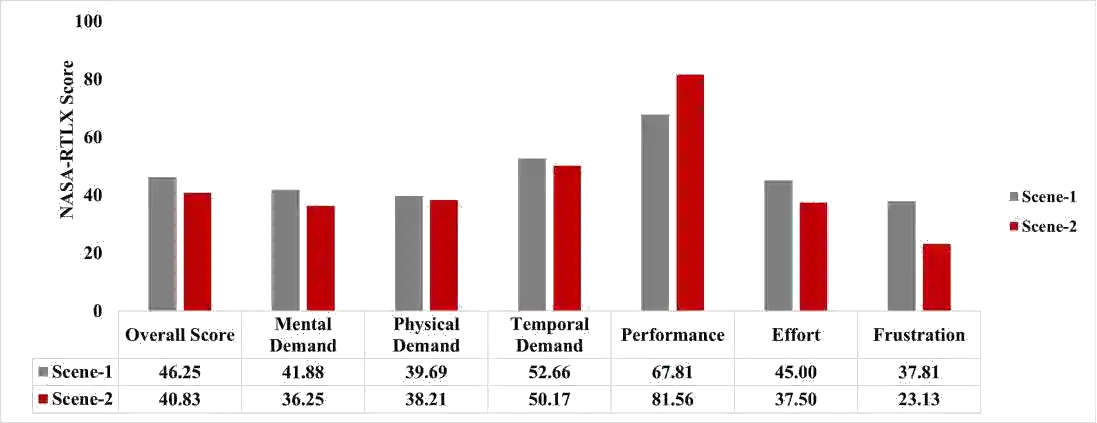
Metaverse learning environments allow for a seamless and intuitive transition between activities compared to Virtual Reality (VR) learning environments, due to their interconnected design. The design of VR scenes is important for creating effective learning experiences in the Metaverse. However, there is limited research on the impact of different design elements on user's learning experiences in VR scenes. To address this, a study was conducted with 16 participants who interacted with two VR scenes, each with varying design elements such as style, color, texture, object, and background, while watching a short tutorial. Participant rankings of the scenes for learning were obtained using a seven-point Likert scale, and the Mann-Whitney U test was used to validate differences in preference between the scenes. The results showed a significant difference in preference between the scenes. Further analysis using the NASA TLX questionnaire was conducted to examine the impact of this difference on cognitive load, and participant feedback was also considered. The study emphasizes the importance of careful VR scene design to improve the user's learning experience.
翻译:元宇宙学习环境因其互联设计,相较于虚拟现实学习环境,能够实现活动之间的无缝直观切换。虚拟现实场景的设计对于在元宇宙中创造有效学习体验至关重要。然而,关于不同设计元素对用户在虚拟现实场景中学习体验影响的研究较为有限。为解决这一问题,本研究以16名参与者为对象,他们在一段简短教程的引导下体验了两个设计元素(如风格、色彩、纹理、物体和背景)存在差异的虚拟现实场景。参与者采用七点李克特量表对场景的学习效果进行排序,并运用曼-惠特尼U检验验证场景间的偏好差异。结果显示,参与者在不同场景间的偏好存在显著差异。进一步采用NASA TLX问卷分析这一差异对认知负荷的影响,同时收集了参与者的反馈意见。本研究强调了精心设计虚拟现实场景以优化用户学习体验的重要性。





相关内容




 微信扫码咨询专知VIP会员