

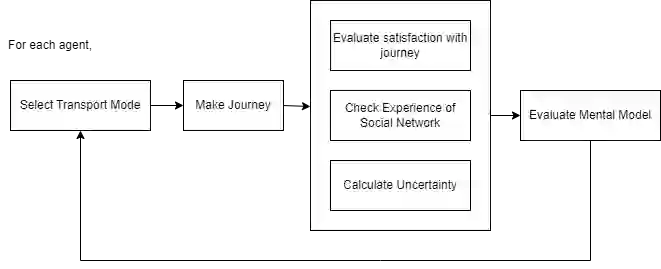
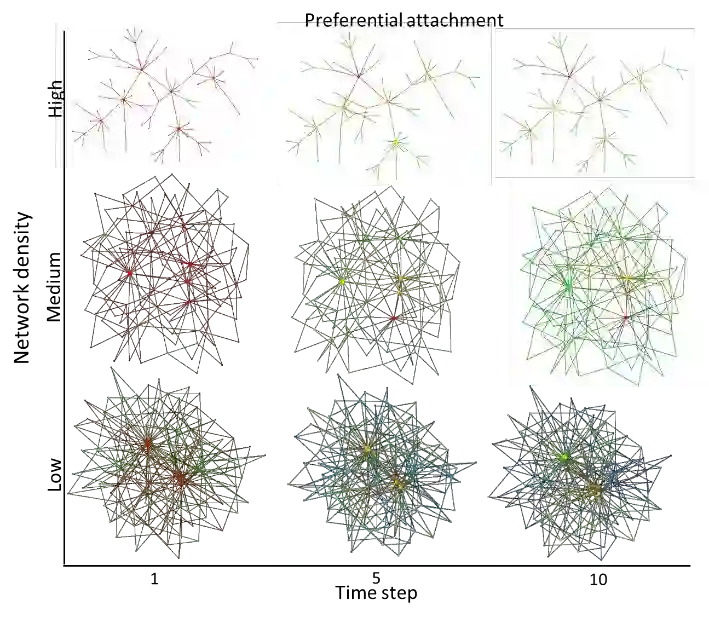
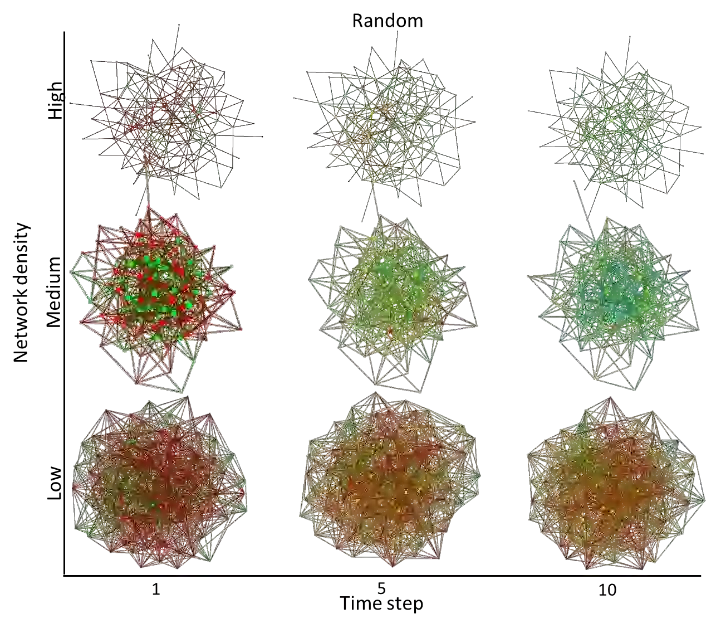
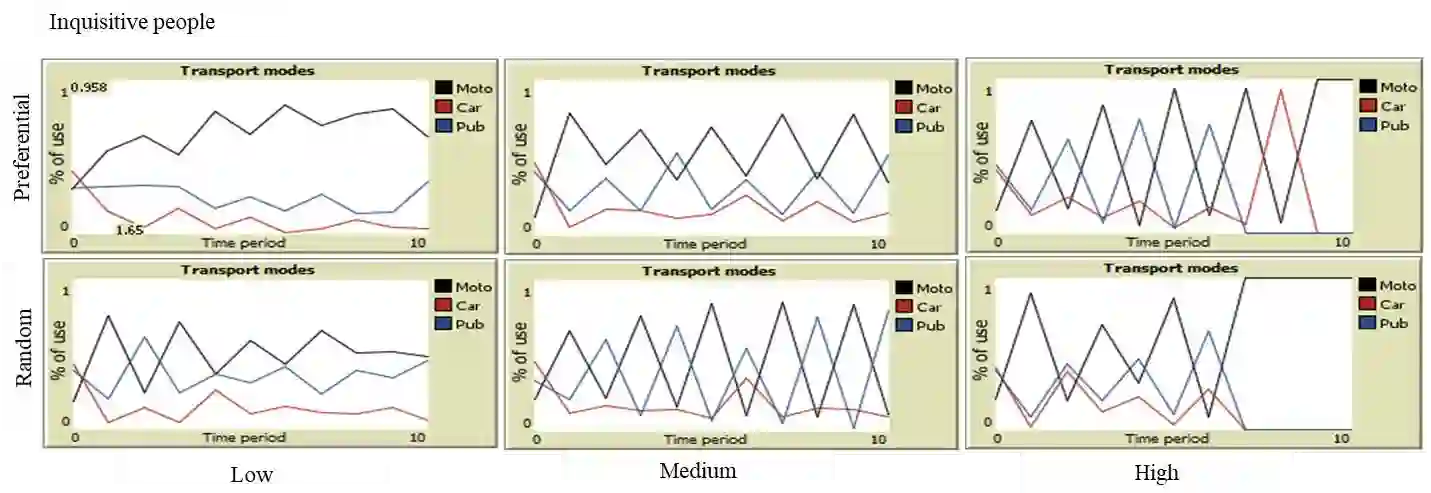
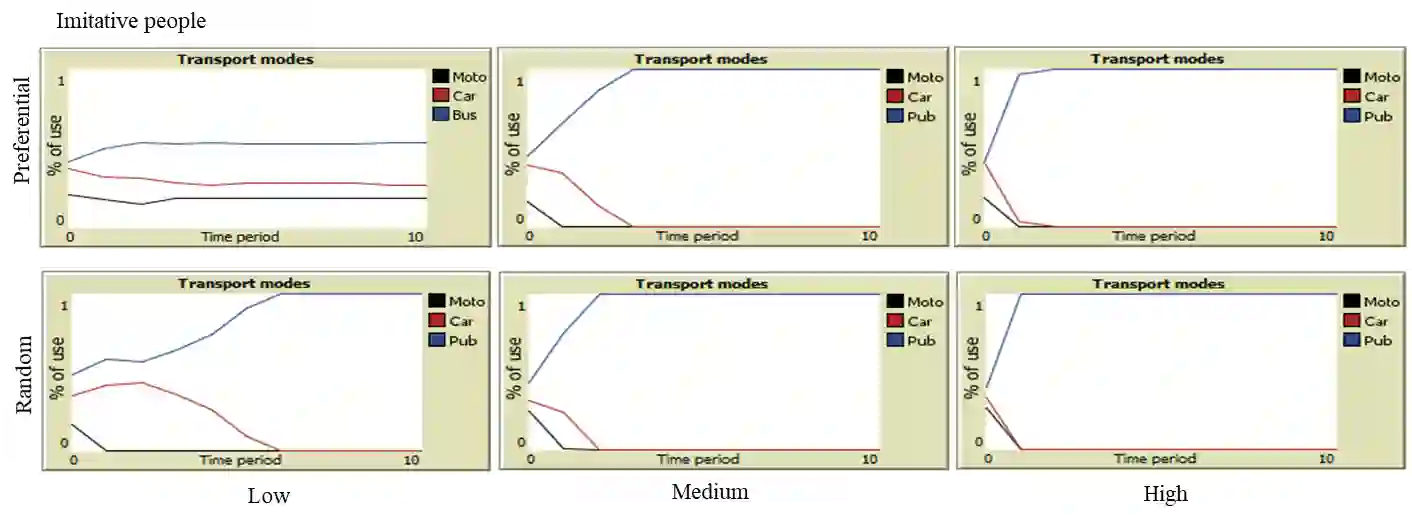
Agent-based simulations have been used in modeling transportation systems for traffic management and passenger flows. In this work, we hope to shed light on the complex factors that influence transportation mode decisions within developing countries, using Colombia as a case study. We model an ecosystem of human agents that decide at each time step on the mode of transportation they would take to work. Their decision is based on a combination of their personal satisfaction with the journey they had just taken, which is evaluated across a personal vector of needs, the information they crowdsource from their prevailing social network, and their personal uncertainty about the experience of trying a new transport solution. We simulate different network structures to analyze the social influence for different decision-makers. We find that in low/medium connected groups inquisitive people actively change modes cyclically over the years while imitators cluster rapidly and change less frequently.
翻译:基于智能体的仿真已用于建模交通系统,以进行交通管理和客流分析。本研究以哥伦比亚为案例,旨在揭示影响发展中国家交通方式决策的复杂因素。我们构建了一个人类智能体生态系统,其中每个智能体在每个时间步决定其通勤所采用的交通方式。其决策基于以下因素的组合:对刚刚完成的旅程的个人满意度(根据个人需求向量进行评估)、从主流社交网络中众包获取的信息,以及尝试新交通方案时的个人不确定性体验。我们模拟了不同的网络结构,以分析不同决策者所受的社会影响。研究发现,在低/中等连通性的群体中,好奇型个体会在多年内周期性主动改变出行方式,而模仿型个体则迅速形成聚类且改变频率较低。




相关内容




 微信扫码咨询专知VIP会员