

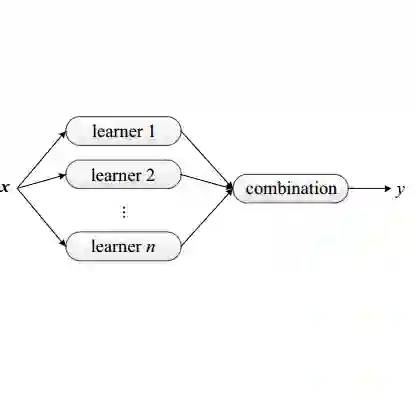
Fibre optic communication system is expected to increase exponentially in terms of application due to the numerous advantages over copper wires. The optical network evolution presents several advantages such as over long-distance, low-power requirement, higher carrying capacity and high bandwidth among others Such network bandwidth surpasses methods of transmission that include copper cables and microwaves. Despite these benefits, free-space optical communications are severely impacted by harsh weather situations like mist, precipitation, blizzard, fume, soil, and drizzle debris in the atmosphere, all of which have an impact on the Quality of Service (QoS) rendered by the systems. The primary goal of this article is to optimize the QoS using the ensemble learning models Random Forest, ADaBoost Regression, Stacking Regression, Gradient Boost Regression, and Multilayer Neural Network. To accomplish the stated goal, meteorological data, visibility, wind speed, and altitude were obtained from the South Africa Weather Services archive during a ten-year period (2010 to 2019) at four different locations: Polokwane, Kimberley, Bloemfontein, and George. We estimated the data rate, power received, fog-induced attenuation, bit error rate and power penalty using the collected and processed data. The RMSE and R-squared values of the model across all the study locations, Polokwane, Kimberley, Bloemfontein, and George, are 0.0073 and 0.9951, 0.0065 and 0.9998, 0.0060 and 0.9941, and 0.0032 and 0.9906, respectively. The result showed that using ensemble learning techniques in transmission modeling can significantly enhance service quality and meet customer service level agreements and ensemble method was successful in efficiently optimizing the signal to noise ratio, which in turn enhanced the QoS at the point of reception.
翻译:光纤通信系统因其相较于铜缆的诸多优势,其应用预计将呈指数级增长。光网络演进呈现出远距离传输、低功耗要求、更高承载容量和高带宽等多项优势。此类网络带宽超越了包括铜缆和微波在内的传输方式。尽管存在这些优势,自由空间光通信仍会受到恶劣天气状况的严重影响,如大气中的薄雾、降水、暴风雪、烟雾、沙尘和细雨等,所有这些都会影响系统所提供的服务质量(QoS)。本文的主要目标是利用集成学习模型——随机森林、ADaBoost回归、堆叠回归、梯度提升回归和多层神经网络——来优化QoS。为实现既定目标,我们从南非气象服务档案中获取了四个不同地点(波罗克瓦尼、金伯利、布隆方丹和乔治)在十年期间(2010年至2019年)的气象数据、能见度、风速和海拔高度。利用收集和处理后的数据,我们估算了数据速率、接收功率、雾致衰减、误码率和功率代价。该模型在所有研究地点(波罗克瓦尼、金伯利、布隆方丹和乔治)的RMSE和R平方值分别为0.0073和0.9951、0.0065和0.9998、0.0060和0.9941以及0.0032和0.9906。结果表明,在传输建模中使用集成学习技术可以显著提升服务质量并满足客户服务水平协议,且集成方法成功有效地优化了信噪比,从而提升了接收端的QoS。




相关内容



 微信扫码咨询专知VIP会员