

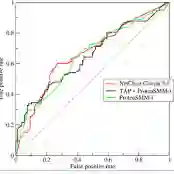
The detection of heterogeneous mental disorders based on brain readouts remains challenging due to the complexity of symptoms and the absence of reliable biomarkers. This paper introduces CAM (Cortical Anomaly Detection through Masked Image Modeling), a novel self-supervised framework designed for the unsupervised detection of complex brain disorders using cortical surface features. We employ this framework for the detection of individuals on the psychotic spectrum and demonstrate its capabilities compared to state-ofthe-art methods, achieving an AUC of 0.696 for Schizoaffective and 0.769 for Schizophreniform, without the need for any labels. Furthermore, the analysis of atypical cortical regions includes Pars Triangularis and several frontal areas, often implicated in schizophrenia, provide further confidence in our approach. Altogether, we demonstrate a scalable approach for anomaly detection of complex brain disorders based on cortical abnormalities.
翻译:基于脑功能读出的异质性精神障碍检测因症状复杂且缺乏可靠生物标志物而仍然具有挑战性。本文提出CAM(通过掩码图像建模进行皮质异常检测)——一种新型自监督框架,旨在利用皮质表面特征对复杂脑疾病进行无监督检测。我们采用该框架检测精神谱系个体,并与现有最优方法对比展示其能力:在无需任何标注的情况下,对分裂情感性障碍的AUC达0.696,对精神分裂样障碍的AUC达0.769。此外,对非典型皮质区域(包括三角部及多个常与精神分裂症相关的额叶区域)的分析进一步增强了方法的可信度。综上,我们展示了一种基于皮质异常检测复杂脑疾病的可扩展方法。




相关内容



 微信扫码咨询专知VIP会员