

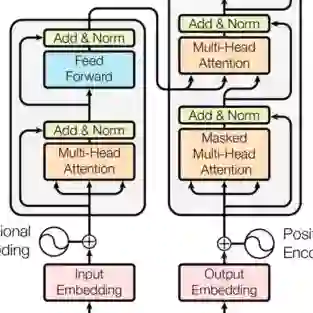
The language in online platforms, influence operations, and political rhetoric frequently directs a mix of pro-social sentiment (e.g., advocacy, helpfulness, compassion) and anti-social sentiment (e.g., threats, opposition, blame) at different topics, all in the same message. While many natural language processing (NLP) tools classify or score a text's overall sentiment as positive, neutral, or negative, these tools cannot report that positive and negative sentiments coexist, and they cannot report the target of those sentiments. This paper presents the Directed Social Regard (DSR) approach to multi-dimensional, multi-valence sentiment analysis, comprised of a pair of transformer-based models that (1) detects span-level targets of sentiment in a message and then (2) scores all spans within the message context along three (-1, 1) axes of regard that are motivated by social science theories of moral disengagement and moral framing. We present a data collection and annotation strategy for DSR dataset construction, a transformer-based architecture for span-level scoring, and a validation study with promising results. We apply the validated DSR model on six third-party datasets of online media and report meaningful correlations between DSR outputs and the labels and topics in these pre-existing social science datasets.
翻译:网络平台的语言、影响力操作及政治言论常在同一信息中针对不同议题混合呈现亲社会情感(如倡导、帮助、同情)与反社会情感(如威胁、反对、指责)。尽管许多自然语言处理(NLP)工具能将文本整体情感分类为积极、中性或消极,但这些工具无法报告积极与消极情感的共存现象,也无法识别这些情感的目标对象。本文提出定向社会关注(DSR)方法,用于多维度、多极性情感分析。该方法包含一对基于Transformer的模型:(1)检测信息中情感跨度的目标对象,(2)在社会道德脱离与道德框架理论驱动下,沿三条(-1,1)关注轴对信息上下文中的所有跨度进行评分。我们提出DSR数据集构建的数据收集与标注策略、一种基于Transformer的跨度级评分架构,以及一项结果可靠的验证研究。将验证后的DSR模型应用于六个第三方网络媒体数据集,并报告DSR输出与这些现有社会科学数据集中的标签及主题之间存在显著相关性。




相关内容




 微信扫码咨询专知VIP会员