

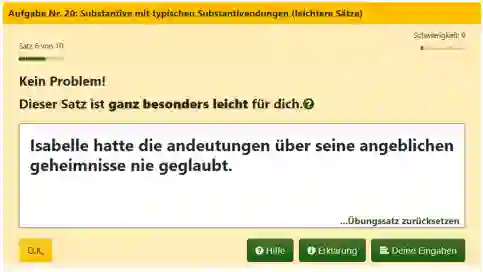
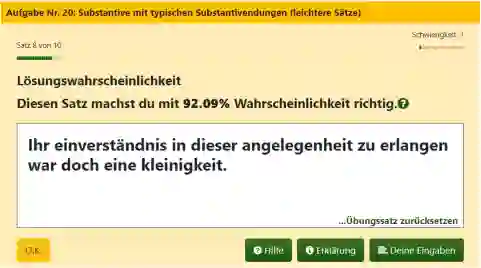
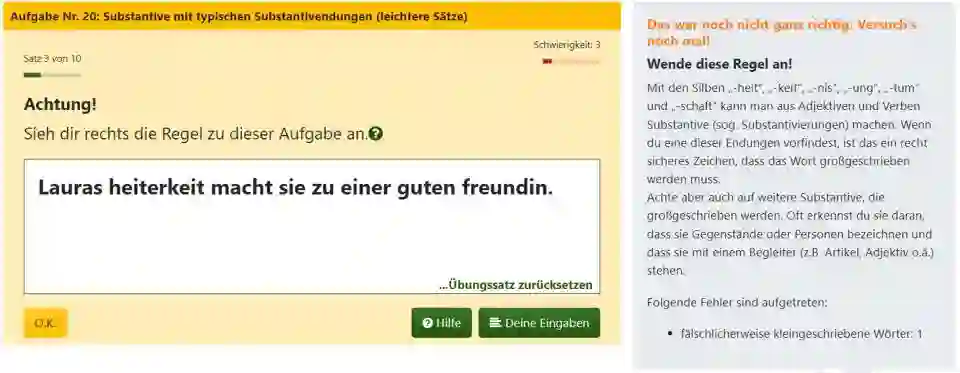
Since adaptive learning comes in many shapes and sizes, it is crucial to find out which adaptations can be meaningful for which areas of learning. Our work presents the result of an experiment conducted on an online platform for the acquisition of German spelling skills. We compared the traditional online learning platform to three different adaptive versions of the platform that implement machine learning-based student-facing interventions that show the personalized solution probability. We evaluate the different interventions with regard to the error rate, the number of early dropouts, and the users competency. Our results show that the number of mistakes decreased in comparison to the control group. Additionally, an increasing number of dropouts was found. We did not find any significant effects on the users competency. We conclude that student-facing adaptive learning environments are effective in improving a persons error rate and should be chosen wisely to have a motivating impact.
翻译:摘要:由于自适应学习具有多种形式和规模,关键在于探究哪些自适应措施对哪些学习领域有意义。我们的工作展示了一项在德语拼写技能习得在线平台上进行的实验结果。我们比较了传统在线学习平台与三种不同的自适应版本——这些版本实现了基于机器学习、面向学生的干预措施,能够显示个性化的解题概率。我们根据错误率、早期退出人数以及用户能力对这些干预措施进行了评估。结果表明,与对照组相比,错误数量有所下降。同时,我们发现退出人数有所增加,但未发现对用户能力产生显著影响。我们得出结论:面向学生的自适应学习环境能有效改善个体的错误率,且应谨慎选择以产生激励效果。




相关内容




 微信扫码咨询专知VIP会员