

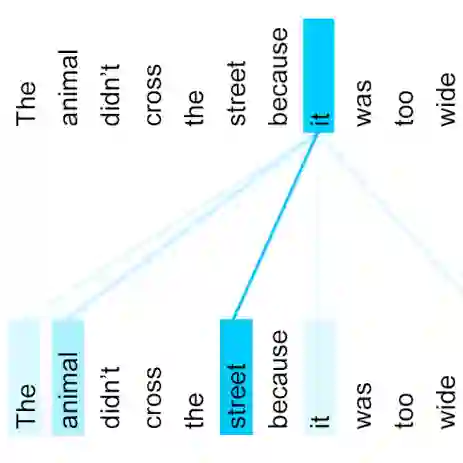
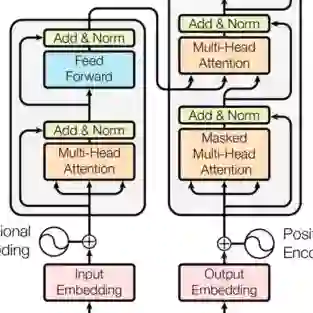
We propose a deep neural network-based solution to the problem of allocating indivisible goods under additive subjective valuations without monetary transfers, trading off economic efficiency with envy-based fairness. We introduce FairFormer, an amortized, permutation-equivariant two-tower transformer that encodes items and agents as unordered token sets, applies self-attention within each set, and uses item-to-agent cross-attention to produce per-item assignment distributions in a single forward pass. FairFormer is trained end-to-end to maximize expected log-Nash welfare on sampled instances, requiring no solver supervision, unrolled allocation procedures, or fairness labels. At test time, we discretize by row-wise $\arg\max$ and apply a lightweight post-processing routine that transfers items to eliminate violations of envy-freeness up to one item while prioritizing improvements in Nash welfare. Our approach generalizes beyond its training regime and achieves near-optimal welfare (e.g., for uniformly sampled valuations, $96$--$97\%$ for Nash welfare; $95$--$96\%$ for utilitarian welfare), outperforming strong baselines in solution quality and/or runtime.
翻译:我们提出了一种基于深度神经网络的解决方案,用于在无货币转移、附加主观估值条件下分配不可分割物品,并在经济效率与基于嫉妒的公平性之间进行权衡。我们引入了FairFormer,一种摊销的、置换等变的双塔Transformer架构,它将物品和智能体编码为无序的令牌集合,在每个集合内应用自注意力机制,并利用物品到智能体的交叉注意力机制,在单次前向传播中生成每个物品的分配分布。FairFormer通过端到端训练以最大化采样实例上的期望对数纳什福利,无需求解器监督、展开的分配过程或公平性标签。在测试阶段,我们通过行向$\arg\max$进行离散化,并应用一种轻量级后处理程序,通过转移物品来消除违反“至多一件物品嫉妒”的公平性约束,同时优先提升纳什福利。我们的方法能够泛化至训练范围之外,并实现了接近最优的福利性能(例如,对于均匀采样的估值,纳什福利达到$96$--$97\%$;功利福利达到$95$--$96\%$),在求解质量和/或运行时间上均优于现有强基线方法。




相关内容


 微信扫码咨询专知VIP会员