

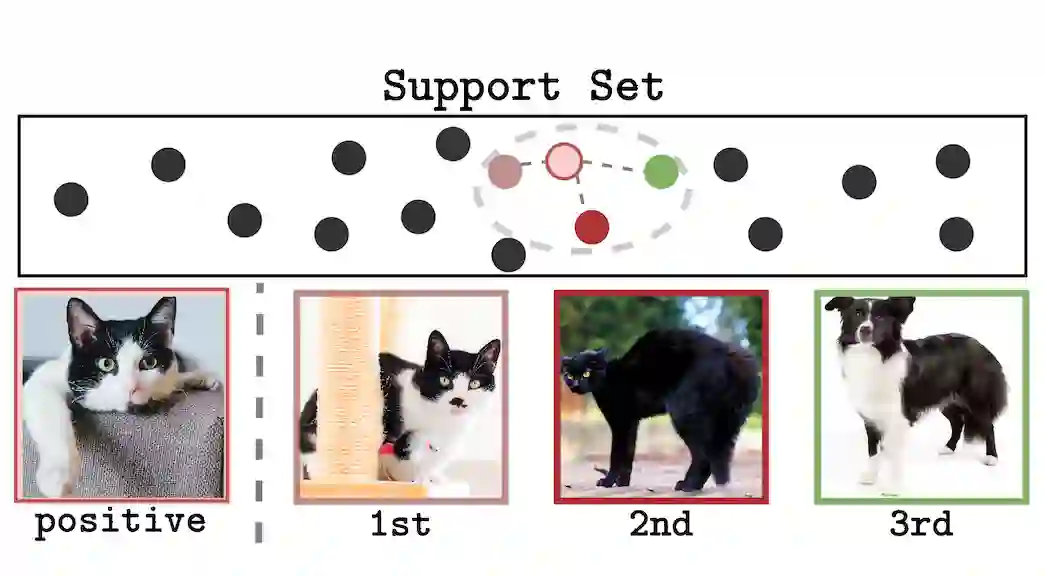
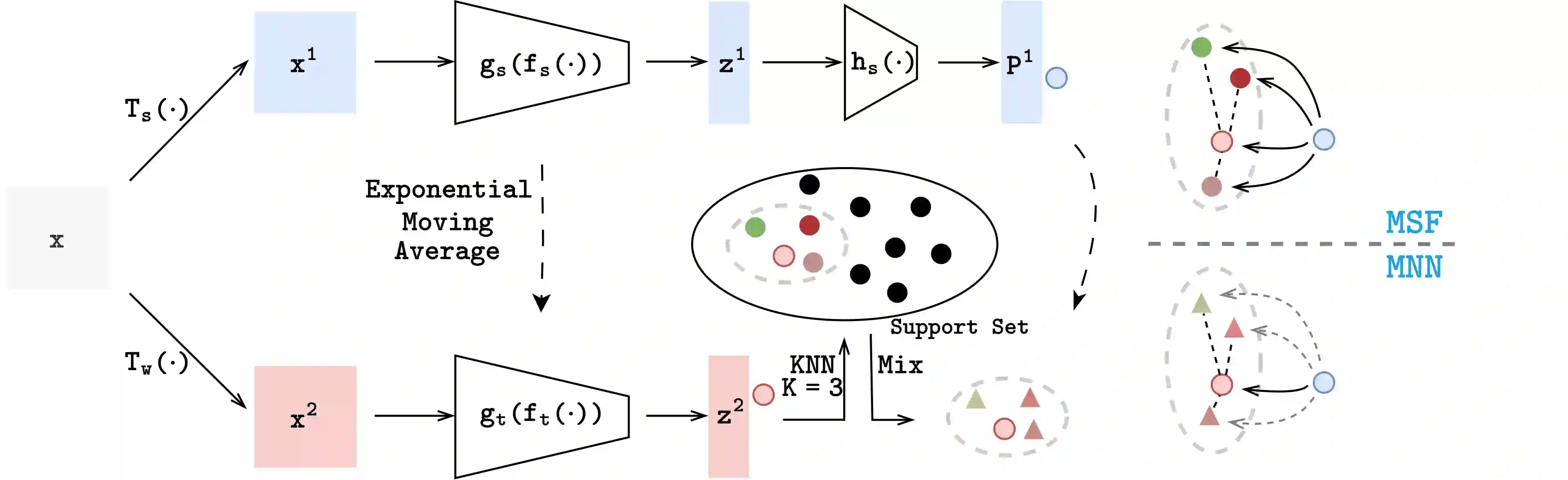
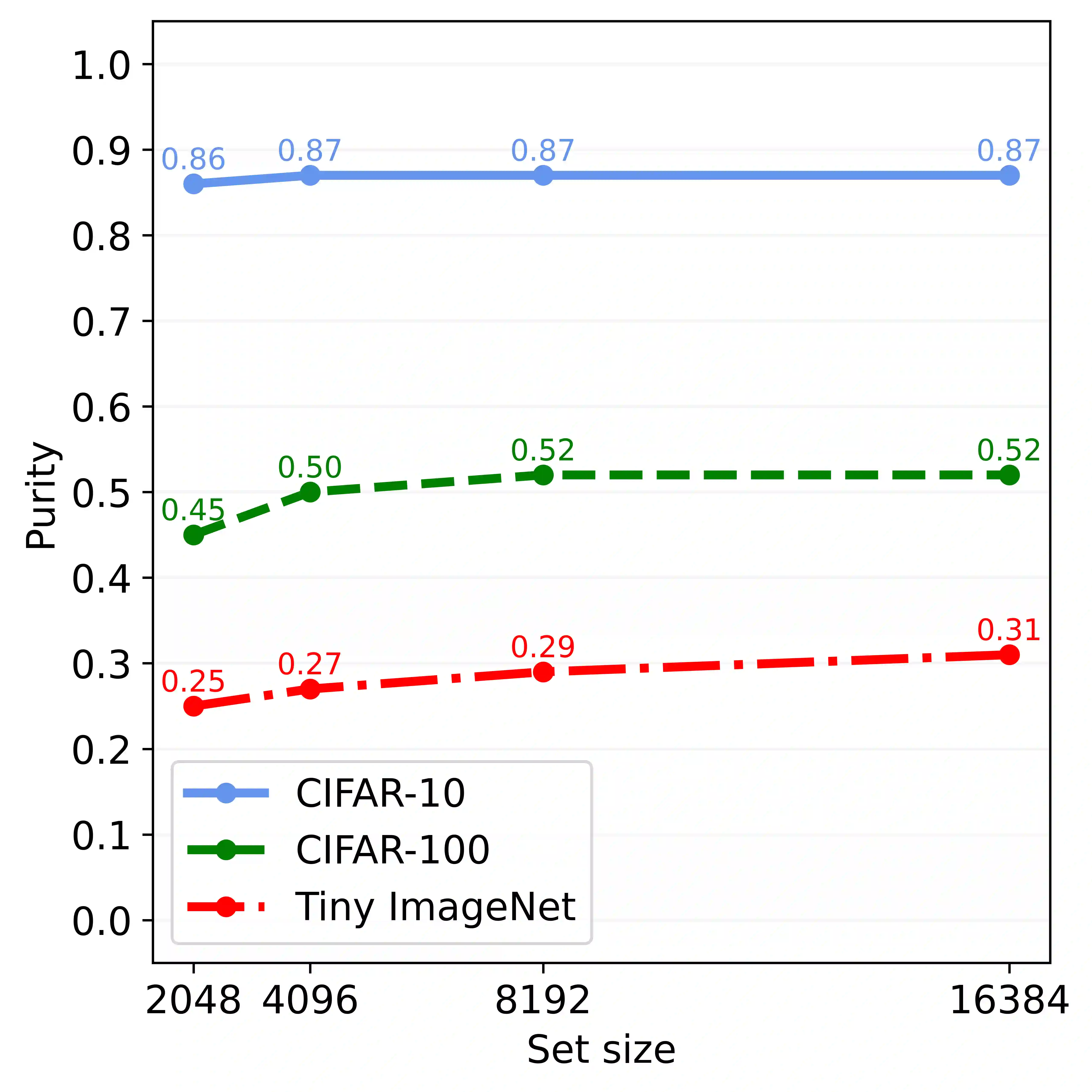
In contrastive self-supervised learning, positive samples are typically drawn from the same image but in different augmented views, resulting in a relatively limited source of positive samples. An effective way to alleviate this problem is to incorporate the relationship between samples, which involves including the top-k nearest neighbors of positive samples in the framework. However, the problem of false neighbors (i.e., neighbors that do not belong to the same category as the positive sample) is an objective but often overlooked challenge due to the query of neighbor samples without human supervision. In this paper, we present a simple Self-supervised learning framework called Mixed Nearest-Neighbors for Self-Supervised Learning (MNN). MNN optimizes the influence of neighbor samples on the semantics of positive samples through an intuitive weighting approach and image mixture operations. The results of our study demonstrate that MNN exhibits exceptional generalization performance and training efficiency on four benchmark datasets.
翻译:在对比自监督学习中,正样本通常从同一图像的不同增强视图中提取,导致正样本来源相对有限。缓解该问题的有效方式是引入样本间关系,即在框架中纳入正样本的top-k近邻。然而,由于无人工监督的邻域样本查询,伪近邻(即与正样本不属于同一类别的邻域)成为客观存在却常被忽视的挑战。本文提出一种简洁的自监督学习框架——混合近邻自监督学习(MNN)。MNN通过直观的加权方式和图像混合操作,优化邻域样本对正样本语义的影响。实验结果表明,MNN在四个基准数据集上展现出卓越的泛化性能与训练效率。




相关内容


 微信扫码咨询专知VIP会员