

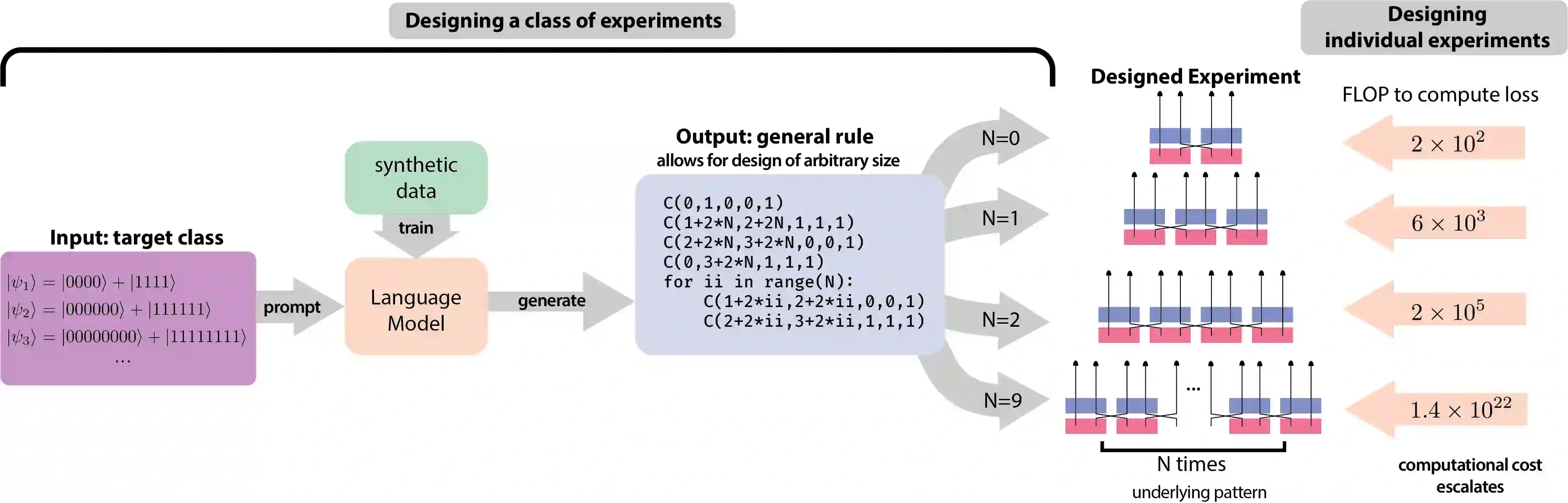
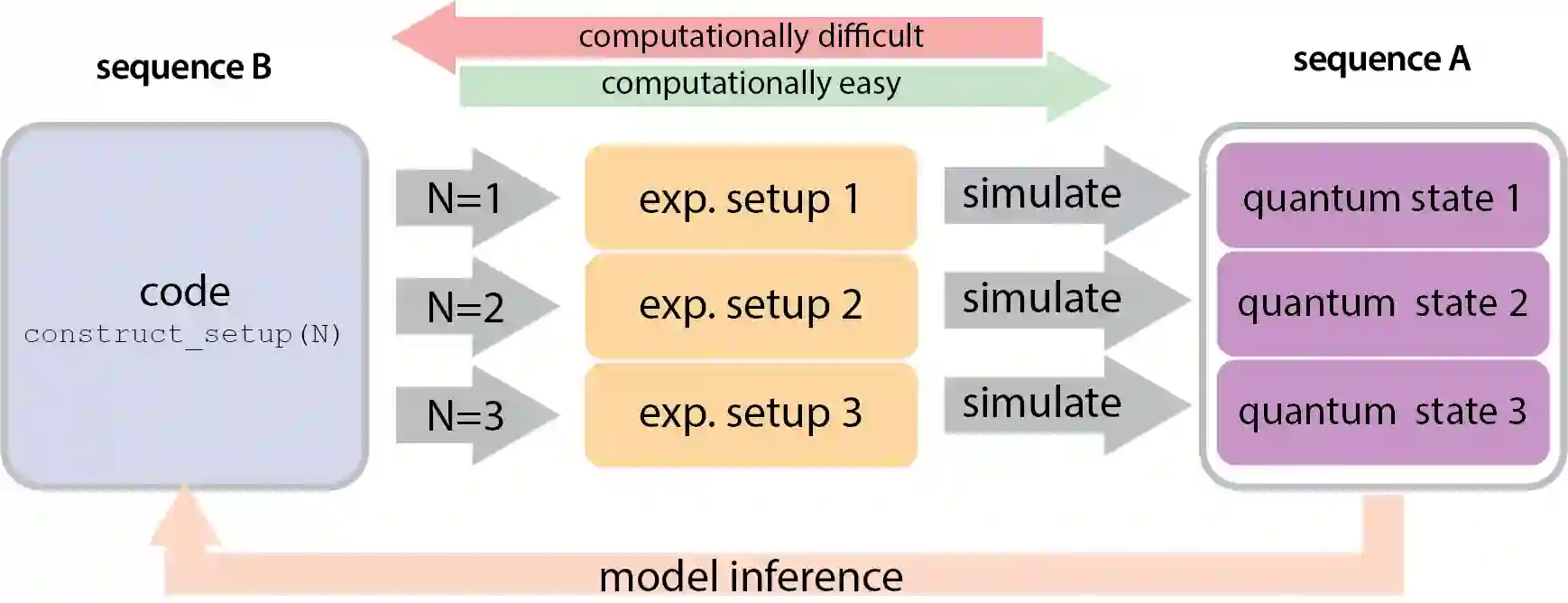
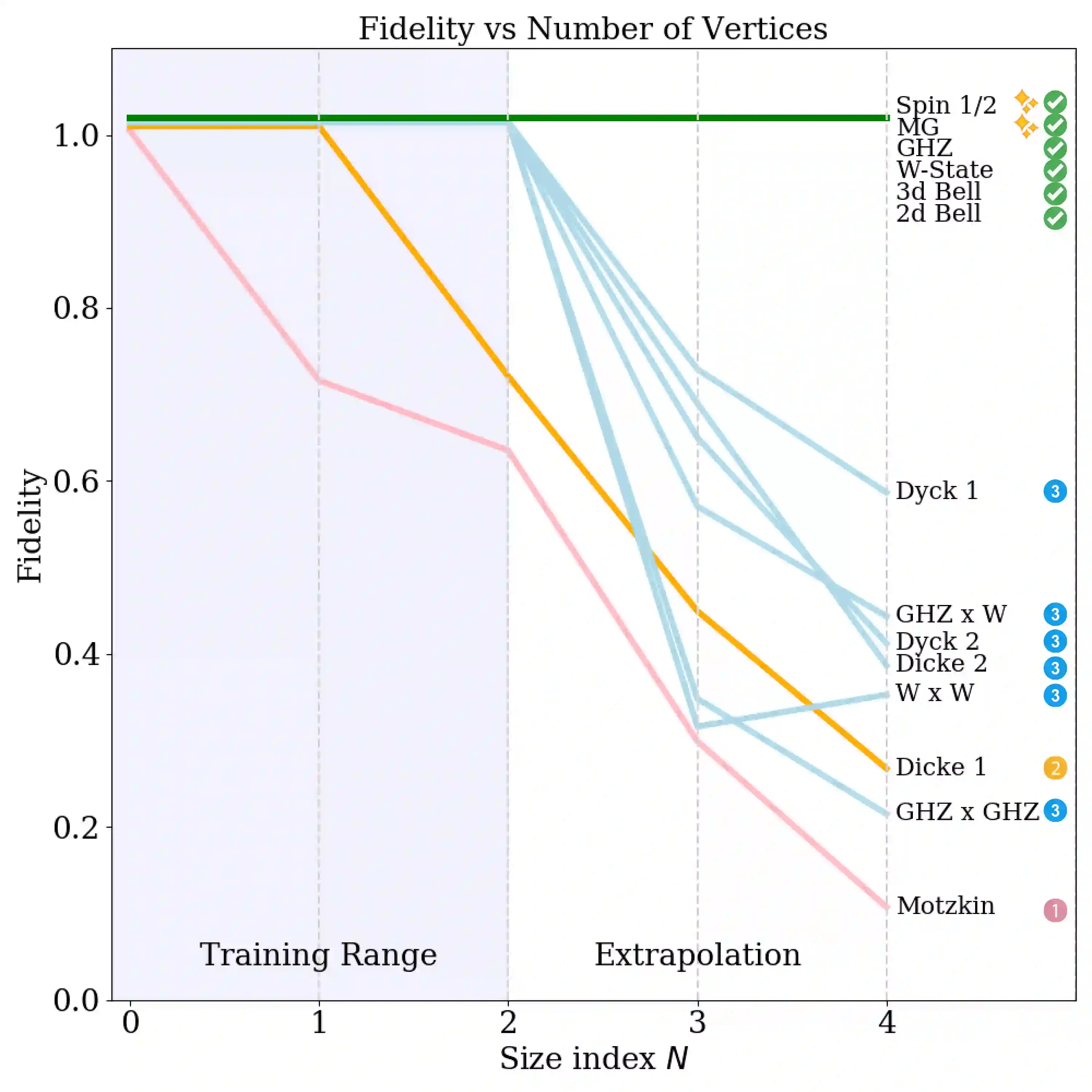
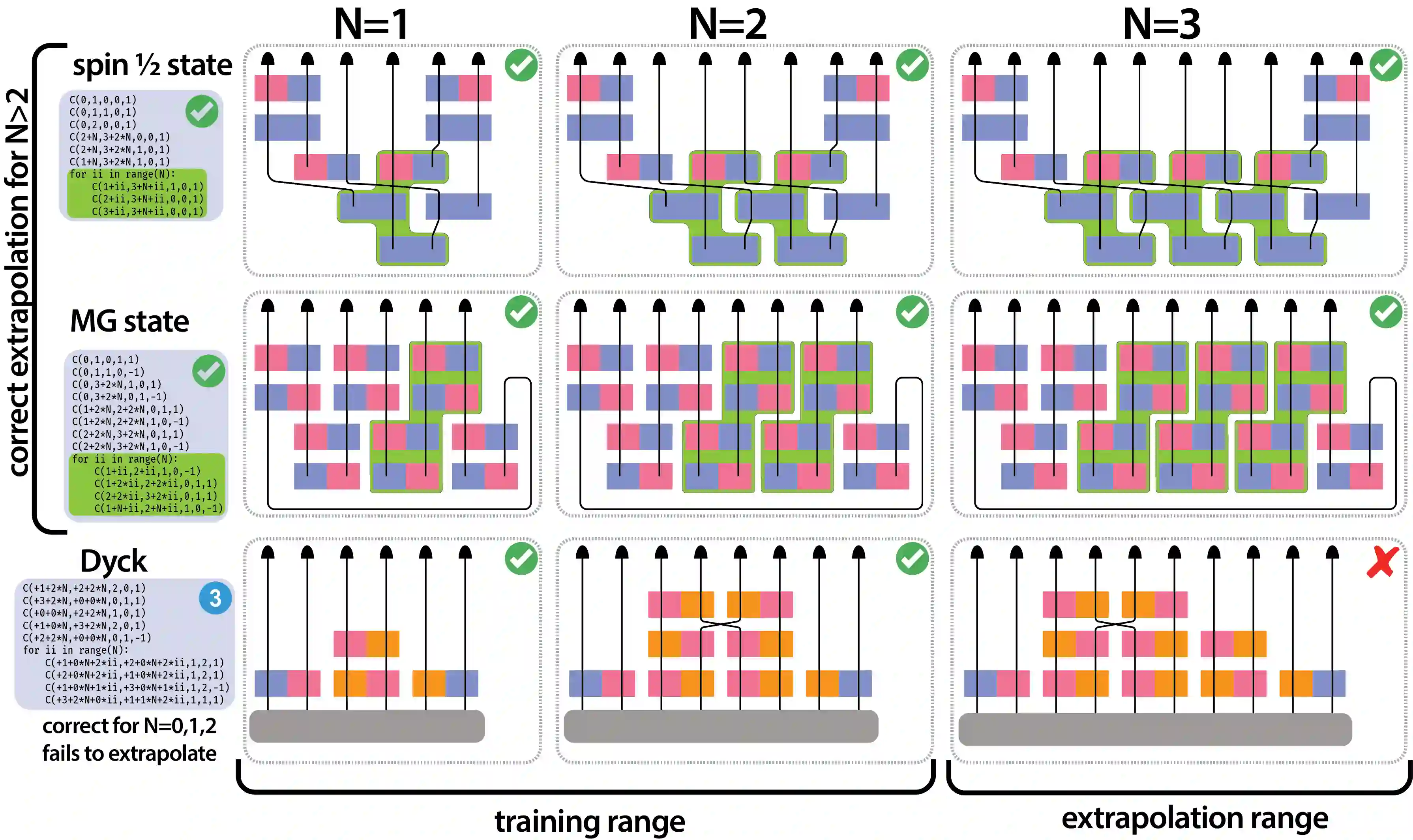
Artificial Intelligence (AI) has the potential to significantly advance scientific discovery by finding solutions beyond human capabilities. However, these super-human solutions are often unintuitive and require considerable effort to uncover underlying principles, if possible at all. Here, we show how a code-generating language model trained on synthetic data can not only find solutions to specific problems but can create meta-solutions, which solve an entire class of problems in one shot and simultaneously offer insight into the underlying design principles. Specifically, for the design of new quantum physics experiments, our sequence-to-sequence transformer architecture generates interpretable Python code that describes experimental blueprints for a whole class of quantum systems. We discover general and previously unknown design rules for infinitely large classes of quantum states. The ability to automatically generate generalized patterns in readable computer code is a crucial step toward machines that help discover new scientific understanding -- one of the central aims of physics.
翻译:人工智能(AI)有潜力通过发现超越人类能力的解决方案,显著推动科学发现。然而,这些超人类的解决方案通常违反直觉,且即便可能,也需要付出巨大努力才能揭示其背后的原理。本文展示了基于合成数据训练的代码生成语言模型不仅能找到特定问题的解决方案,还能创建元解决方案——一次性解决整个类别的问题,同时揭示其背后的设计原理。具体而言,在量子物理实验设计中,我们的序列到序列Transformer架构生成了可解释的Python代码,这些代码描述了整个量子系统类别的实验蓝图。我们发现了无限大类量子态的通用且先前未知的设计规则。自动生成可读计算机代码中的通用模式,是实现机器辅助发现新科学理解的关键一步——这也是物理学的核心目标之一。




相关内容




 微信扫码咨询专知VIP会员