

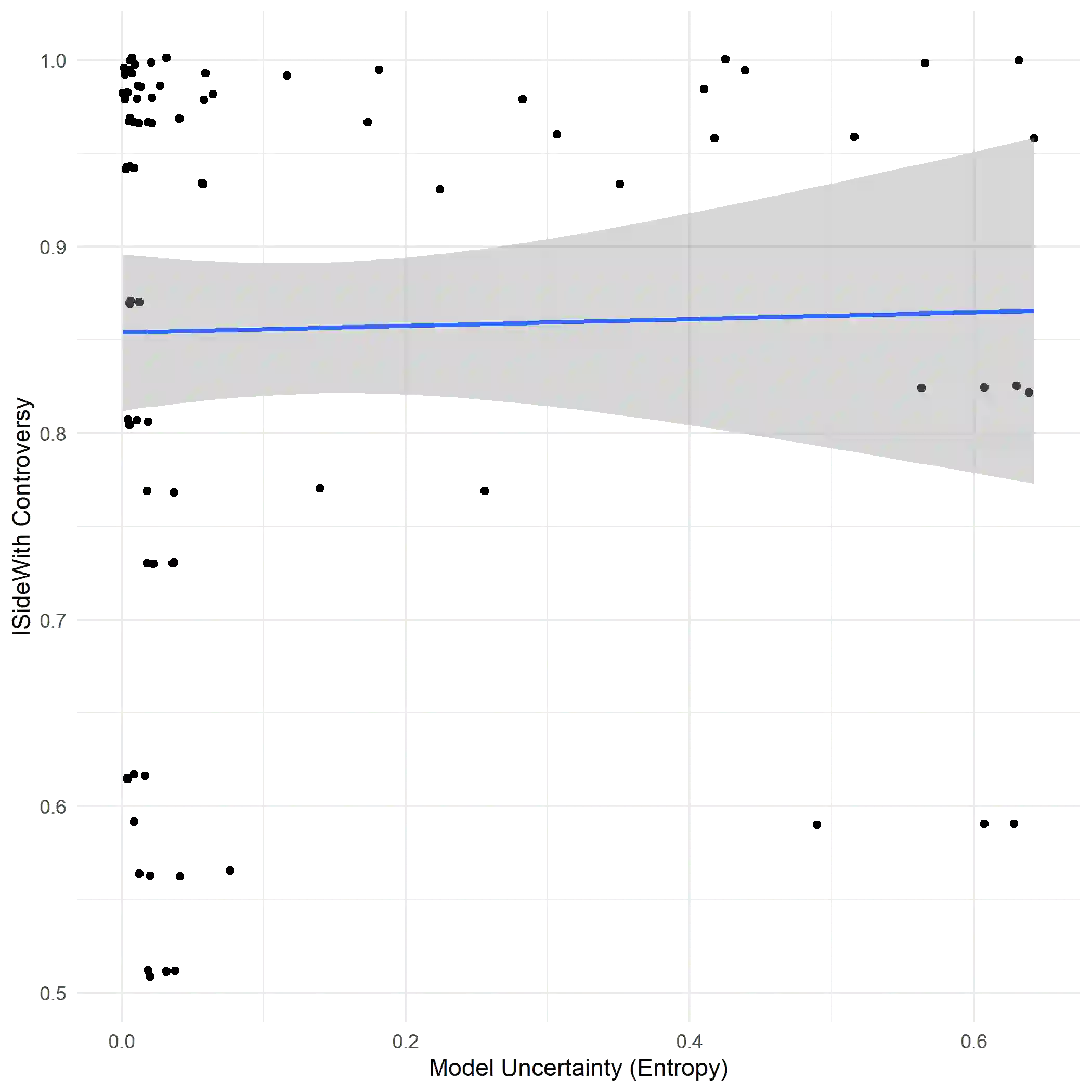
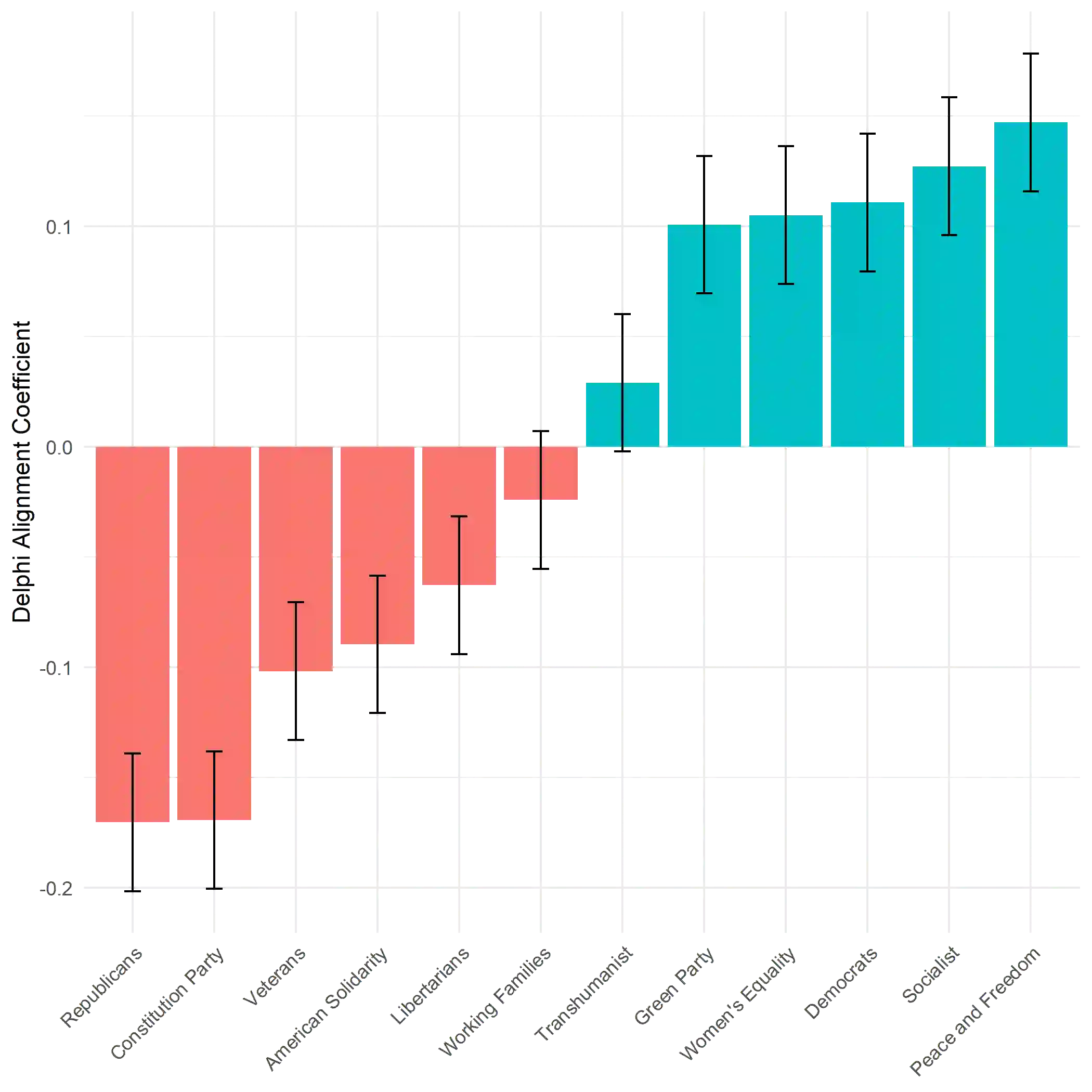
As generative language models are deployed in ever-wider contexts, concerns about their political values have come to the forefront with critique from all parts of the political spectrum that the models are biased and lack neutrality. However, the question of what neutrality is and whether it is desirable remains underexplored. In this paper, I examine neutrality through an audit of Delphi [arXiv:2110.07574], a large language model designed for crowdsourced ethics. I analyse how Delphi responds to politically controversial questions compared to different US political subgroups. I find that Delphi is poorly calibrated with respect to confidence and exhibits a significant political skew. Based on these results, I examine the question of neutrality from a data-feminist lens, in terms of how notions of neutrality shift power and further marginalise unheard voices. These findings can hopefully contribute to a more reflexive debate about the normative questions of alignment and what role we want generative models to play in society.
翻译:随着生成式语言模型在越来越广泛的场景中部署,其政治价值观问题已引发各政治光谱的批评,指责模型存在偏见且缺乏中立性。然而,关于何为中立性及其理想性的问题仍未得到充分探讨。本文通过对德尔菲模型(arXiv:2110.07574)——一个专为众包伦理设计的大语言模型——进行审核,考察其在中立性问题上的表现。我分析了德尔菲模型在与不同美国政治亚群体相关的政治争议性问题上所作出的回应。研究发现,德尔菲模型在置信度方面校准不足,并呈现出显著的政治倾向性。基于这些结果,我从数据女性主义的视角审视中立性问题,探讨中立性概念如何转移权力并进一步边缘化未被听见的声音。这些发现有望推动关于对齐的规范性问题及生成式模型在社会中应扮演何种角色的更反思性讨论。




相关内容



 微信扫码咨询专知VIP会员