

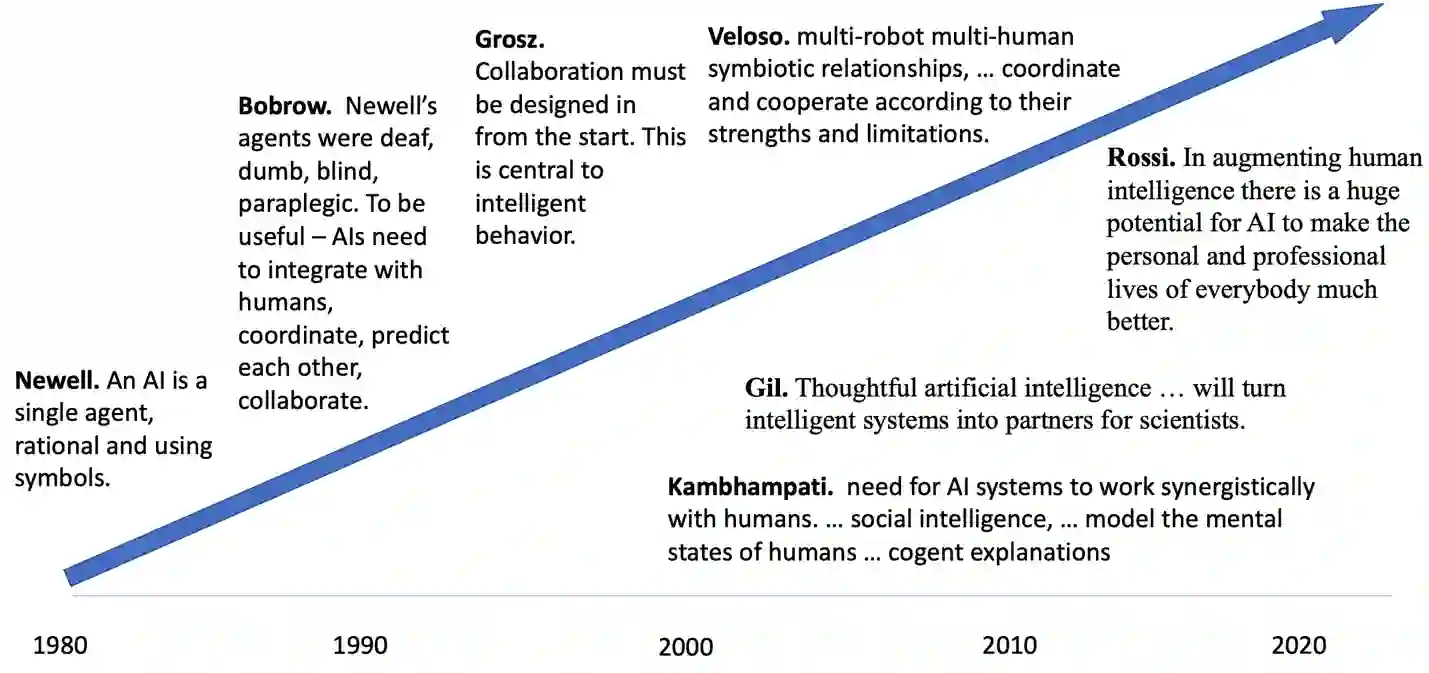
The vision of AI collaborators is a staple of mythology and science fiction, where artificial agents with special talents assist human partners and teams. In this dream, sophisticated AIs understand nuances of collaboration and human communication. The AI as collaborator dream is different from computer tools that augment human intelligence (IA) or intermediate human collaboration. Such tools have their roots in the 1960s and helped to drive an information technology revolution. They can be useful but they are not intelligent and do not collaborate as effectively as skilled people. With the increase of hybrid and remote work since the COVID pandemic, the benefits and requirements for better coordination, collaboration, and communication are becoming a hot topic in the workplace. Employers and workers face choices and trade-offs as they negotiate the options for working from home versus working at the office. Many factors such as the high costs of homes near employers are impeding a mass return to the office. Government advisory groups and leaders in AI have advocated for years that AIs should be transparent and effective collaborators. Nonetheless, robust AIs that collaborate like talented people remain out of reach. Are AI teammates part of a solution? How artificially intelligent (AI) could and should they be? This position paper reviews the arc of technology and public calls for human-machine teaming. It draws on earlier research in psychology and the social sciences about what human-like collaboration requires. This paper sets a context for a second science-driven paper that advocates a radical shift in technology and methodology for creating resilient, intelligent, and human-compatible AIs (Stefik & Price, 2023). The aspirational goal is that such AIs would learn, share what they learn, and collaborate to achieve high capabilities.
翻译:协作型人工智能的愿景是神话与科幻小说的常见主题,即具有特殊才能的人工智能体协助人类伙伴与团队。在这一构想中,高级人工智能需理解协作与人类沟通的细微差异。协作型人工智能的愿景不同于增强人类智能或中介人类协作的计算机工具——这类工具源于20世纪60年代,推动了信息技术革命,虽具实用性但缺乏智能,无法像熟练人类那样有效协作。自新冠疫情以来,随着混合办公与远程工作的增加,对更优协调、协作与沟通的需求与益处正成为职场热点议题。雇主与员工在居家办公与办公室工作之间面临选择与权衡,而住房成本等多项因素阻碍大规模回归办公室。多年来,政府咨询机构与人工智能领域领袖一直倡导开发透明且高效的协作型人工智能。然而,像有才能人类那样协作的强人工智能仍遥不可及。人工智能队友能否成为解决方案的一部分?它们应具备何种程度的人工智能?本立场论文回顾了人机协作的技术发展脉络与公众呼声,借鉴早期心理学与社会科学关于类人协作所需条件的研究,为第二篇倡导创建韧性、智能且与人类兼容的人工智能的技术与方法论革命性变革的科学研究论文(Stefik & Price, 2023)奠定基础。其核心目标是让此类人工智能能够学习、共享知识并协作达成高能力水平。




相关内容





 微信扫码咨询专知VIP会员