

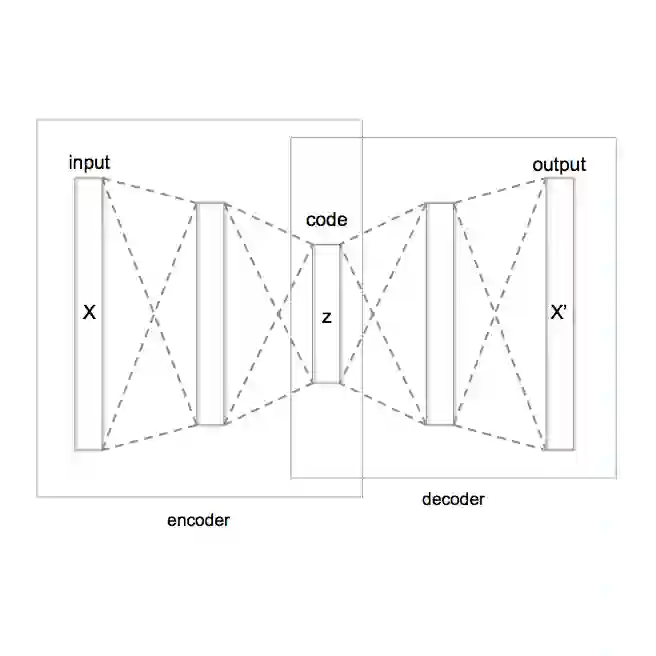
Machine learning (ML) models trained to detect physical-layer threats on one optical fiber system often fail catastrophically when applied to a different system, due to variations in operating wavelength, fiber properties, and network architecture. To overcome this, we propose a Domain Adaptation (DA) framework based on a Variational Autoencoder (VAE) that learns a shared representation capturing event signatures common to both systems while suppressing system-specific differences. The shared encoder is first trained on the combined data from two distinct optical systems: a 21 km O-band dark-fiber testbed (System 1) and a 63.4 km C-band live metro ring (System 2). The encoder is then frozen, and a classifier is trained using labels from an individual system. The proposed approach achieves 95.3% and 73.5% cross-system accuracy when moving from System 1 to System 2 and vice versa, respectively. This corresponds to gains of 83.4% and 51% over a fully supervised Deep Neural Network (DNN) baseline trained on a single system, while preserving intra-system performance.
翻译:在单一光纤系统上训练的机器学习模型,用于检测物理层威胁时,往往在应用于不同系统时因工作波长、光纤特性及网络架构的差异而完全失效。为克服这一挑战,我们提出了一种基于变分自编码器的域自适应框架,该框架通过学习共享表征来捕获两个系统共有的事件特征,同时抑制系统特异性差异。共享编码器首先在两个不同光纤系统的联合数据上训练:一个21公里O波段暗光纤实验平台(系统1)和一个63.4公里C波段实时城域环网(系统2)。随后固定编码器参数,并利用单个系统的标签训练分类器。所提方法在从系统1迁移至系统2及反向迁移时,分别实现了95.3%和73.5%的跨系统准确率,相较于仅在单一系统上训练的完全监督深度神经网络基线,分别提升了83.4%和51%,同时保持了系统内性能。




相关内容

 微信扫码咨询专知VIP会员