

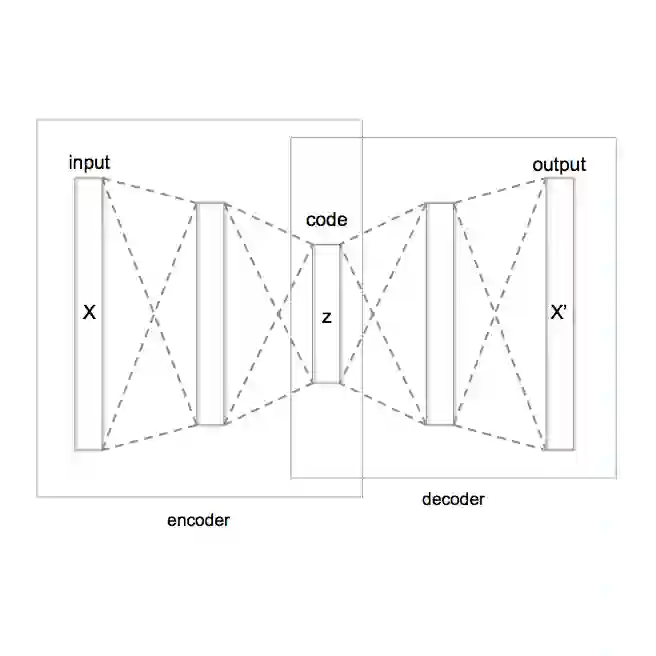
This paper introduces a Bayesian framework that combines Markov chain Monte Carlo (MCMC) sampling, dimensionality reduction, and neural density estimation to efficiently handle inverse problems that (i) must be solved multiple times, and (ii) are characterized by intractable or unavailable likelihood functions. The posterior probability distribution over quantities of interest is estimated via differential evolution Metropolis sampling, empowered by learnable mappings. First, a variational autoencoder performs probabilistic feature extraction from observational data. The resulting latent structure inherently quantifies uncertainty, capturing deviations between the actual data-generating process and the training data distribution. At each step of the MCMC random walk, the algorithm jointly samples from the data-informed latent distribution and the space of parameters to be inferred. These samples are fed into a neural likelihood estimator based on normalizing flows, specifically real-valued non-volume preserving transformations. The scaling and translation functions of the affine coupling layers are modeled by neural networks conditioned on the unknown parameters, allowing the representation of arbitrary observation likelihoods. The proposed methodology is validated on two case studies: (i) structural health monitoring of a railway bridge for damage detection, localization, and quantification, and (ii) estimation of the conductivity field in a steady-state Darcy's groundwater flow problem. The results demonstrate the efficiency of the inference strategy, while ensuring that model-reality mismatches do not yield overconfident, yet inaccurate, estimates.
翻译:本文提出了一种贝叶斯框架,该框架结合了马尔可夫链蒙特卡洛采样、降维与神经密度估计,以高效处理需多次求解且具有难以处理或不可得似然函数的反问题。通过可学习映射增强的差分进化Metropolis采样,估计目标量的后验概率分布。首先,变分自编码器对观测数据进行概率特征提取。所得潜在结构固有地量化了不确定性,捕获了实际数据生成过程与训练数据分布之间的偏差。在MCMC随机游走的每一步,算法联合采样数据驱动的潜在分布与待推断参数空间。这些样本被输入基于标准化流(具体为实值非体积保持变换)的神经似然估计器。仿射耦合层的缩放与平移函数由以未知参数为条件的神经网络建模,从而能够表示任意观测似然。所提方法在两个案例研究中得到验证:(i)铁路桥梁结构健康监测中的损伤检测、定位与量化;(ii)稳态达西地下水流问题中的导率场估计。结果表明该推断策略具有高效性,同时确保模型-现实失配不会产生过度自信却不准确的估计。




相关内容


 微信扫码咨询专知VIP会员