

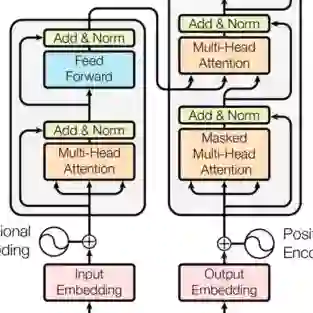
In this study, we introduce an innovative deep learning framework that employs a transformer model to address the challenges of mixed-integer programs, specifically focusing on the Capacitated Lot Sizing Problem (CLSP). Our approach, to our knowledge, is the first to utilize transformers to predict the binary variables of a mixed-integer programming (MIP) problem. Specifically, our approach harnesses the encoder decoder transformer's ability to process sequential data, making it well-suited for predicting binary variables indicating production setup decisions in each period of the CLSP. This problem is inherently dynamic, and we need to handle sequential decision making under constraints. We present an efficient algorithm in which CLSP solutions are learned through a transformer neural network. The proposed post-processed transformer algorithm surpasses the state-of-the-art solver, CPLEX and Long Short-Term Memory (LSTM) in solution time, optimal gap, and percent infeasibility over 240K benchmark CLSP instances tested. After the ML model is trained, conducting inference on the model, reduces the MIP into a linear program (LP). This transforms the ML-based algorithm, combined with an LP solver, into a polynomial-time approximation algorithm to solve a well-known NP-Hard problem, with almost perfect solution quality.
翻译:本研究提出了一种创新的深度学习框架,采用Transformer模型应对混合整数规划的挑战,特别聚焦于产能约束批量规划问题。据我们所知,该方法首次利用Transformer预测混合整数规划问题的二元变量。具体而言,我们的方法利用编码器-解码器Transformer处理序列数据的能力,使其非常适合预测CLSP各周期中表示生产准备决策的二元变量。该问题本质上是动态的,我们需要在约束条件下处理序列决策。我们提出了一种高效算法,通过Transformer神经网络学习CLSP的解决方案。在24万个基准CLSP实例测试中,所提出的后处理Transformer算法在求解时间、最优间隙和不可行百分比方面均超越了当前最先进的求解器CPLEX和长短期记忆网络。当机器学习模型训练完成后,通过模型推理可将混合整数规划转化为线性规划。这使得基于机器学习的算法与线性规划求解器结合,转化为具有多项式时间复杂度的近似算法,能够以近乎完美的求解质量解决这一著名的NP难问题。




相关内容



 微信扫码咨询专知VIP会员