

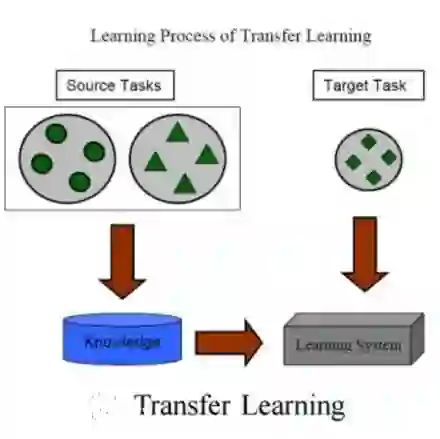
A physics-informed machine learning framework based on holomorphic neural networks is introduced for detecting cracks in two-dimensional solids from strain or displacement data. Crack detection is formulated as an inverse problem in which the crack size, orientation, and location are treated as unknowns. The problem is solved using genetic optimization, where the fitness function is evaluated by expressing the solution of the corresponding plane elasticity problem in terms of holomorphic potentials, which are then determined through the training of two holomorphic neural networks. As the potentials satisfy equilibrium and traction-free conditions along the crack faces a priori, the training proceeds quickly based solely on boundary information. Training efficiency is further improved by splitting the genetic search into long-range and short-range stages, enabling the use of transfer learning in the latter. The new strategy is tested on three benchmark problems, showing that an optimal number of training epochs exists that provides the best overall performance. A comparison is also made with a popular crack detection approach that uses XFEM to compute the model response. Under the assumption of identical stress-field representation accuracy, the proposed method is found to be between 7 and 23 times faster than the XFEM-based approach. Furthermore, the proposed method appears to be less sensitive to noise in the input data. Overall, the present findings demonstrate that combining genetic optimization with holomorphic neural networks and transfer learning offers a promising avenue for developing crack detection strategies with higher efficiency than those currently available.
翻译:本文提出了一种基于全纯神经网络的物理信息机器学习框架,用于根据应变或位移数据检测二维固体中的裂纹。裂纹检测被表述为一个反问题,其中裂纹尺寸、方向和位置被视为未知量。该问题通过遗传优化求解,其适应度函数通过将对应平面弹性问题的解表示为全纯势函数进行评估,这些势函数随后通过训练两个全纯神经网络确定。由于势函数先验地满足平衡条件及裂纹表面的无牵引力条件,训练仅需边界信息即可快速进行。通过将遗传搜索分为长程和短程两个阶段,并在后者中应用迁移学习,进一步提升了训练效率。新策略在三个基准问题上进行了测试,结果表明存在一个能提供最佳整体性能的最优训练周期数。本文还与使用XFEM计算模型响应的主流裂纹检测方法进行了比较。在应力场表示精度相同的假设下,所提方法比基于XFEM的方法快7至23倍。此外,所提方法对输入数据中的噪声表现出较低的敏感性。总体而言,本研究表明,将遗传优化与全纯神经网络及迁移学习相结合,为开发比现有方法更高效的裂纹检测策略提供了有前景的途径。




相关内容



 微信扫码咨询专知VIP会员