

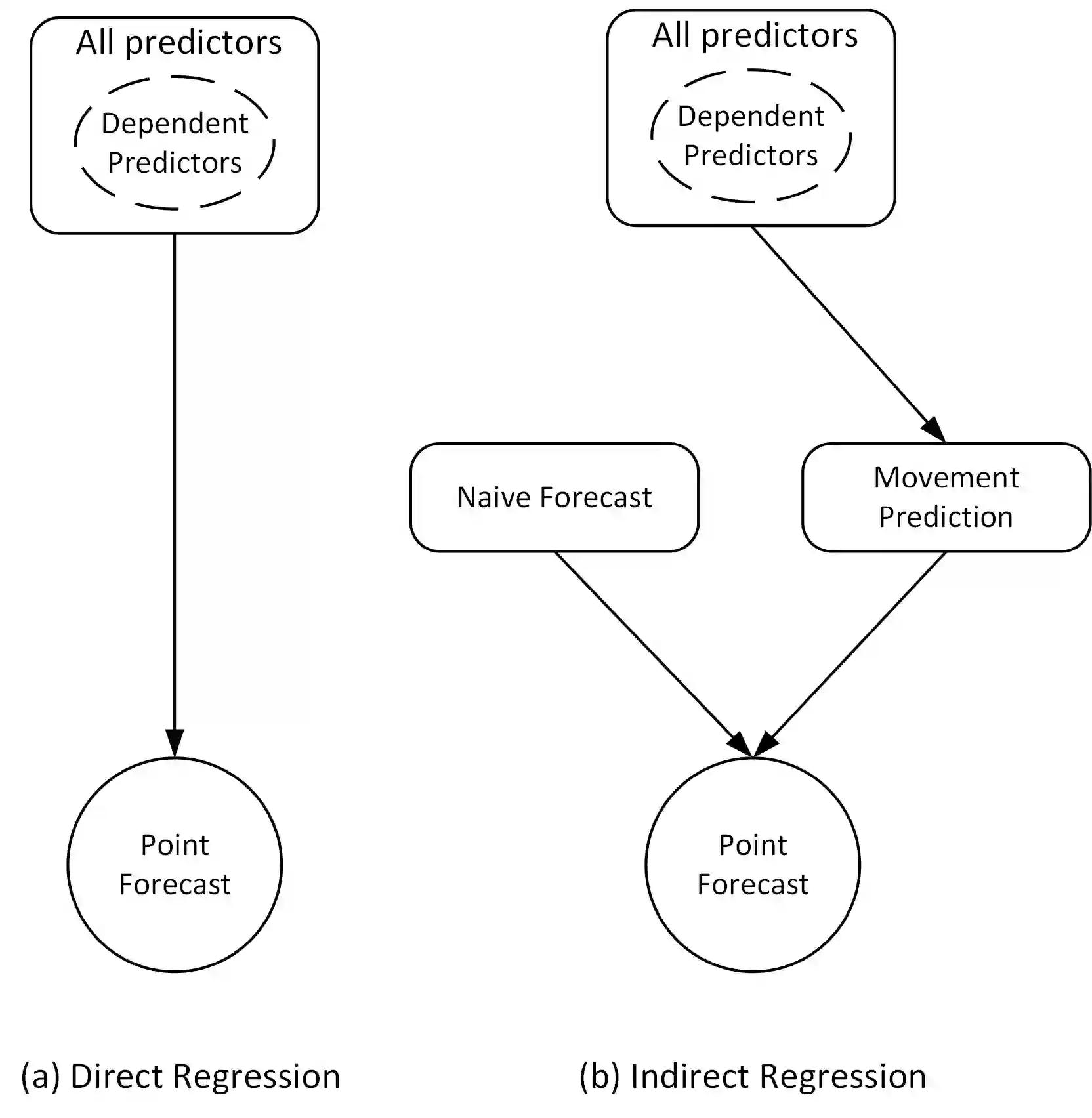
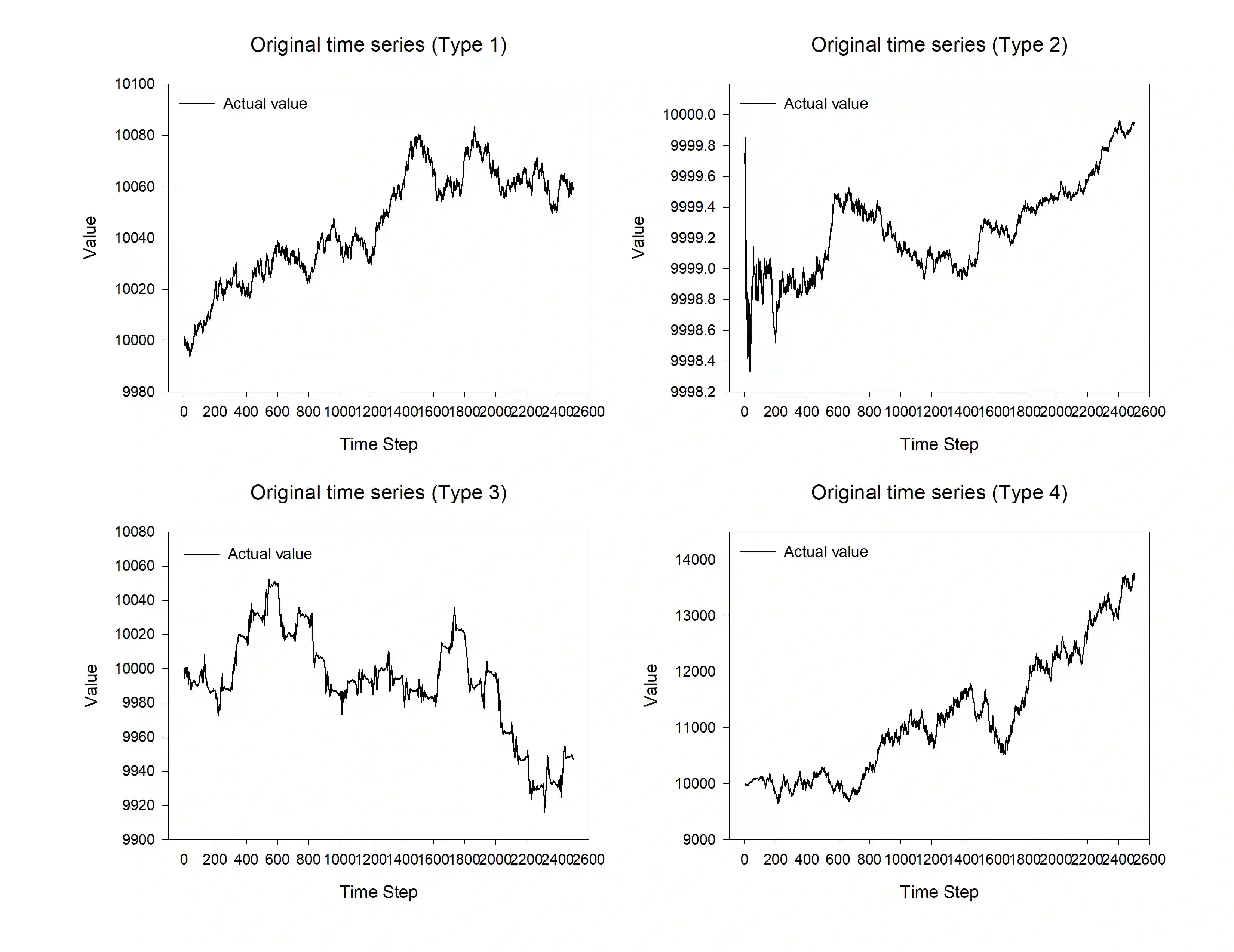
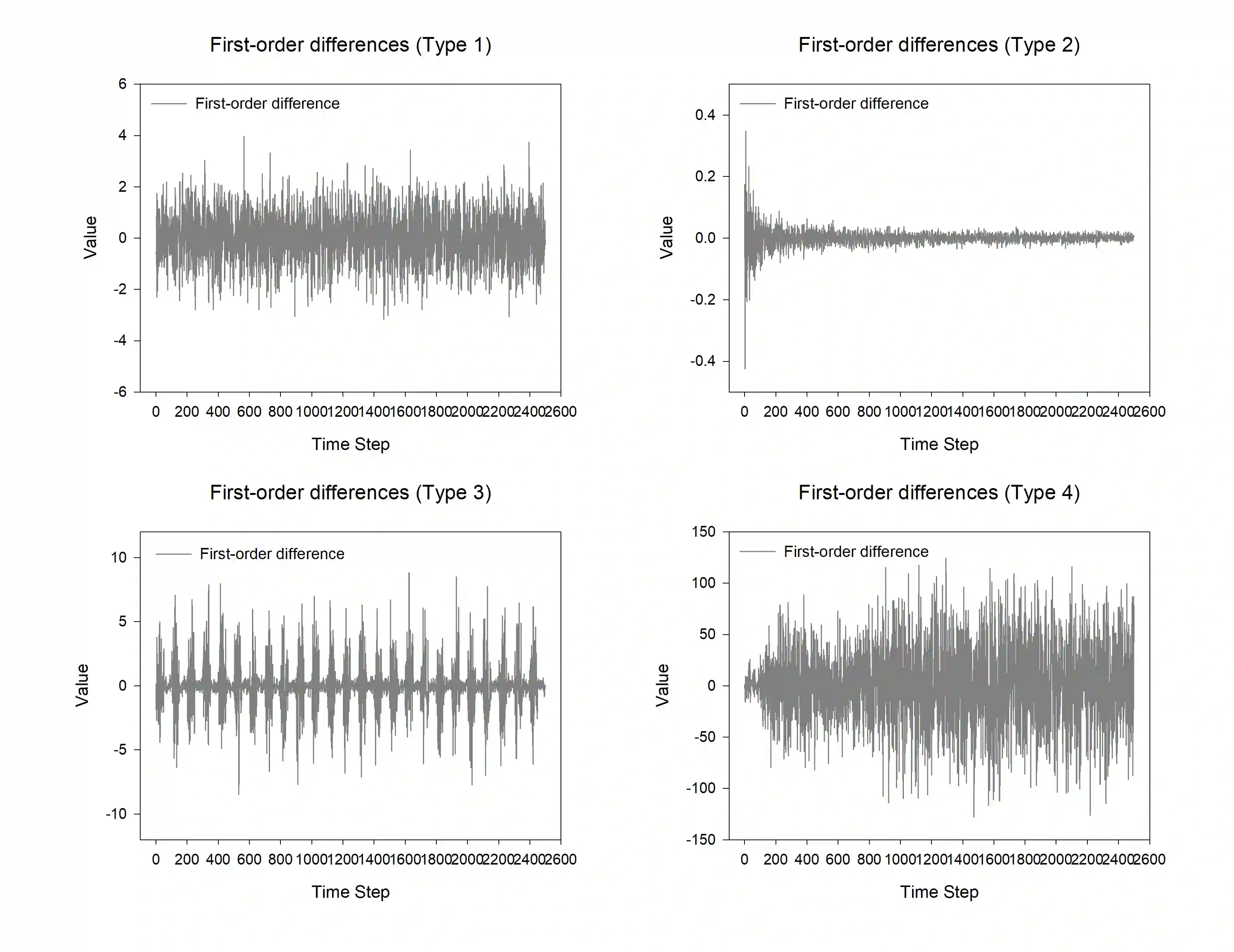
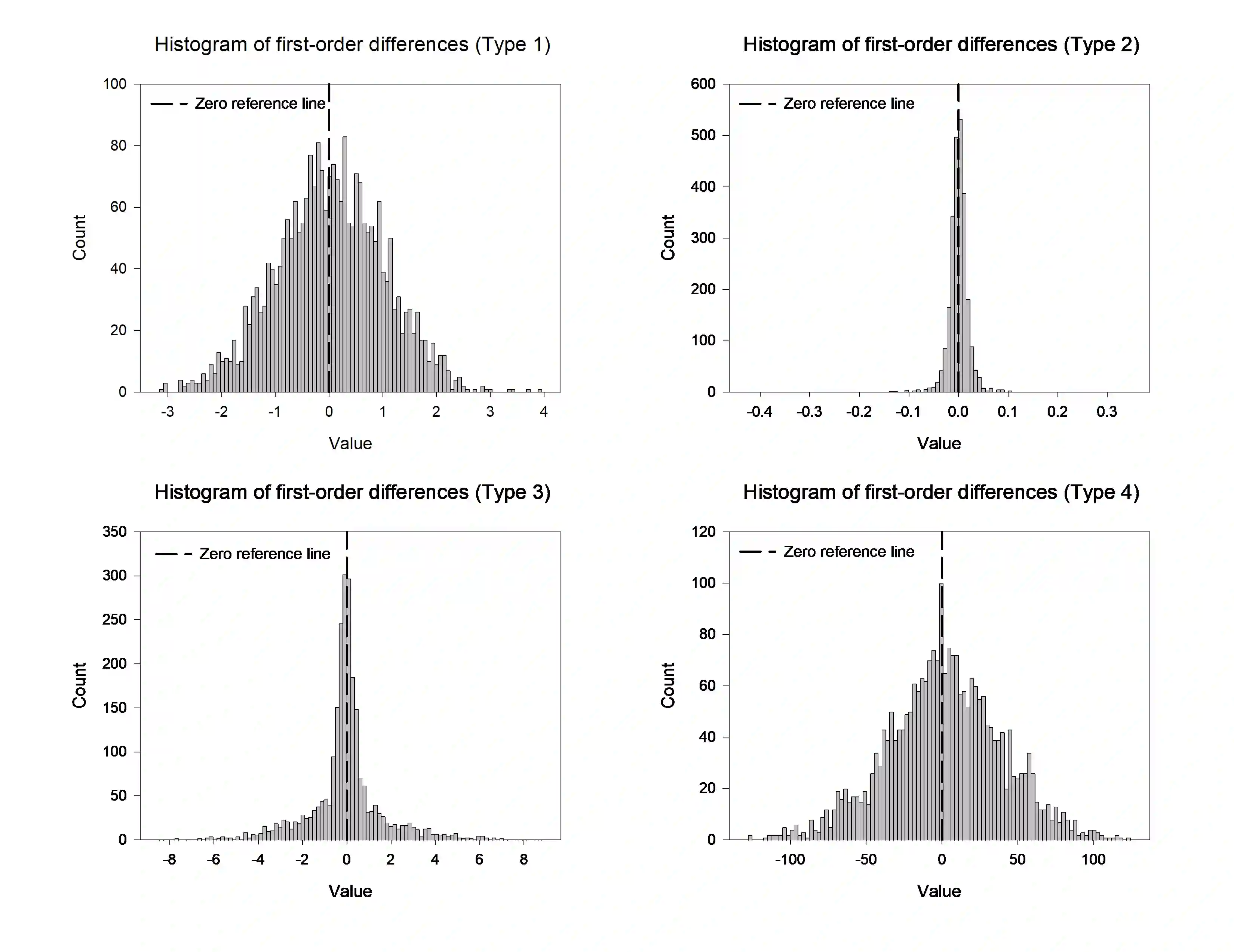
This study introduces a movement-prediction-adjusted na\"ive forecast, which is the original na\"ive forecast with the addition of a weighted movement prediction term, in the context of forecasting time series that exhibit symmetric random walk properties. The weight of the movement term is determined by two parameters: one reflecting the directional accuracy and the other representing the mean absolute increment. The settings of the two parameters involve a trade-off: larger values may yield meaningful gains over the original na\"ive forecast, whereas smaller values often render the adjusted forecast more reliable. This trade-off can be managed by empirically setting the parameters using sliding windows on in-sample data. To statistically test the performance of the adjusted na\"ive forecast under different directional accuracy levels, we used four synthetic time series to simulate multiple forecast scenarios, assuming that for each directional accuracy level, diverse movement predictions were provided. The simulation results show that as the directional accuracy increases, the error of the adjusted na\"ive forecast decreases. In particular, the adjusted na\"ive forecast achieves statistically significant improvements over the original na\"ive forecast, even under a low directional accuracy of slightly above 0.50. This finding implies that the movement-prediction-adjusted na\"ive forecast can serve as a new optimal point forecast for time series with symmetric random walk characteristics if consistent movement prediction can be provided.
翻译:本研究提出了一种运动预测调整的朴素预测方法,该方法是在原始朴素预测的基础上增加一个加权的运动预测项,适用于预测具有对称随机游走特性的时间序列。运动项的权重由两个参数决定:一个反映方向准确性,另一个代表平均绝对增量。这两个参数的设置涉及权衡:较大的值可能相对于原始朴素预测产生有意义的增益,而较小的值通常使调整后的预测更可靠。这种权衡可以通过在样本内数据上使用滑动窗口经验性地设置参数来管理。为了统计检验调整后朴素预测在不同方向准确性水平下的性能,我们使用四个合成时间序列模拟了多种预测场景,假设在每个方向准确性水平下都提供了多样化的运动预测。模拟结果表明,随着方向准确性的提高,调整后朴素预测的误差减小。特别是,即使在略高于0.50的低方向准确性条件下,调整后的朴素预测相比原始朴素预测也实现了统计上显著的改进。这一发现意味着,如果能够提供一致的运动预测,运动预测调整的朴素预测可以作为具有对称随机游走特性的时间序列的一种新的最优点预测方法。




相关内容





 微信扫码咨询专知VIP会员