

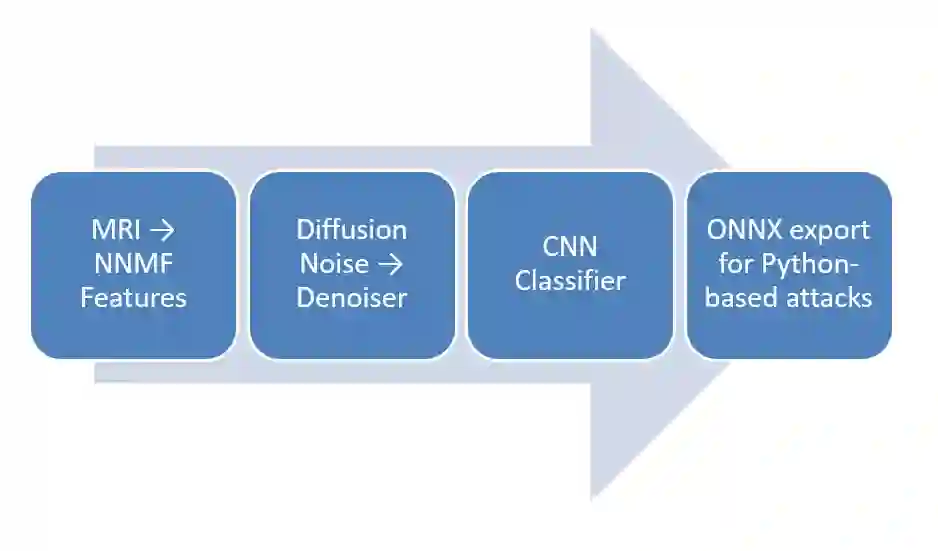
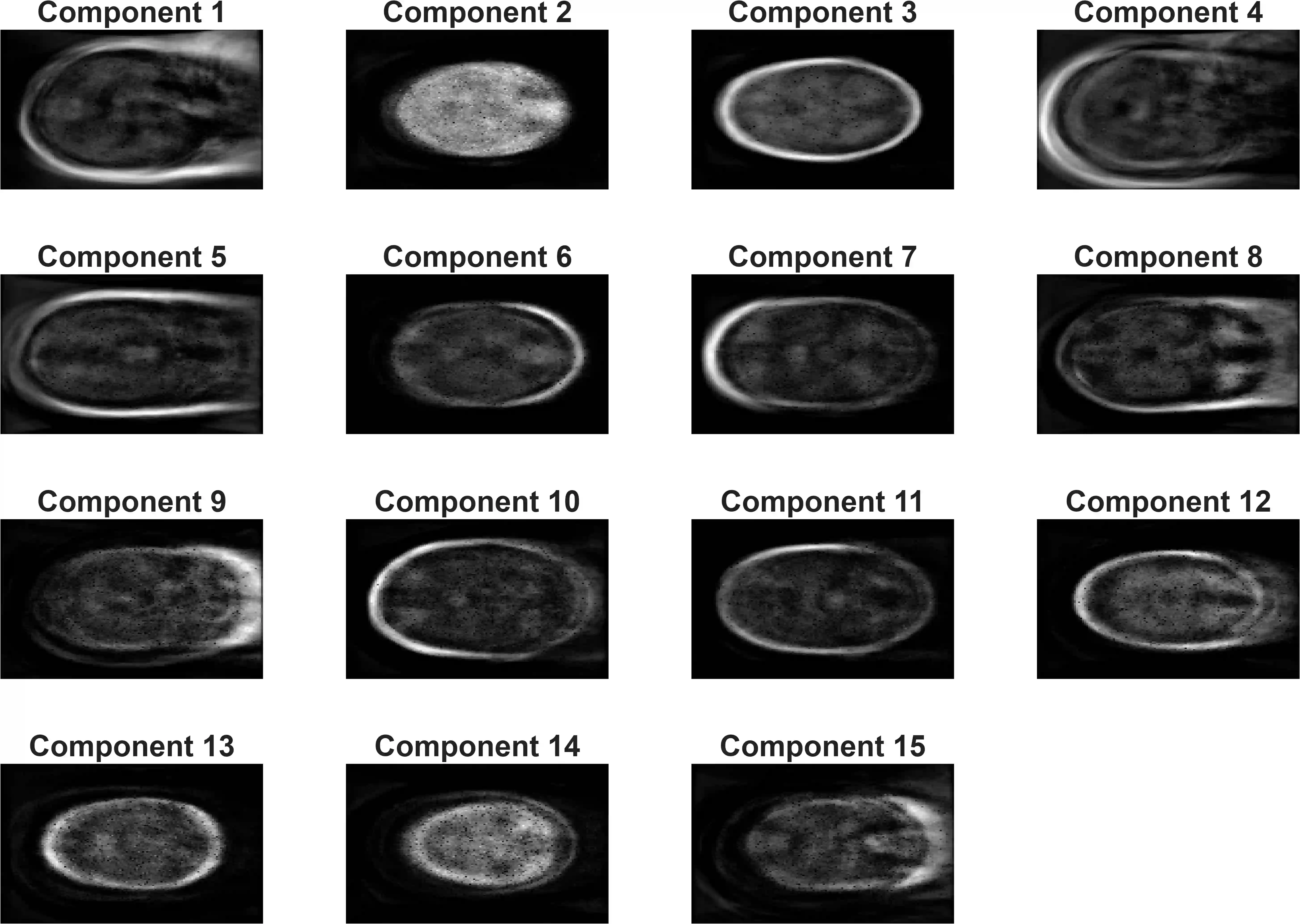
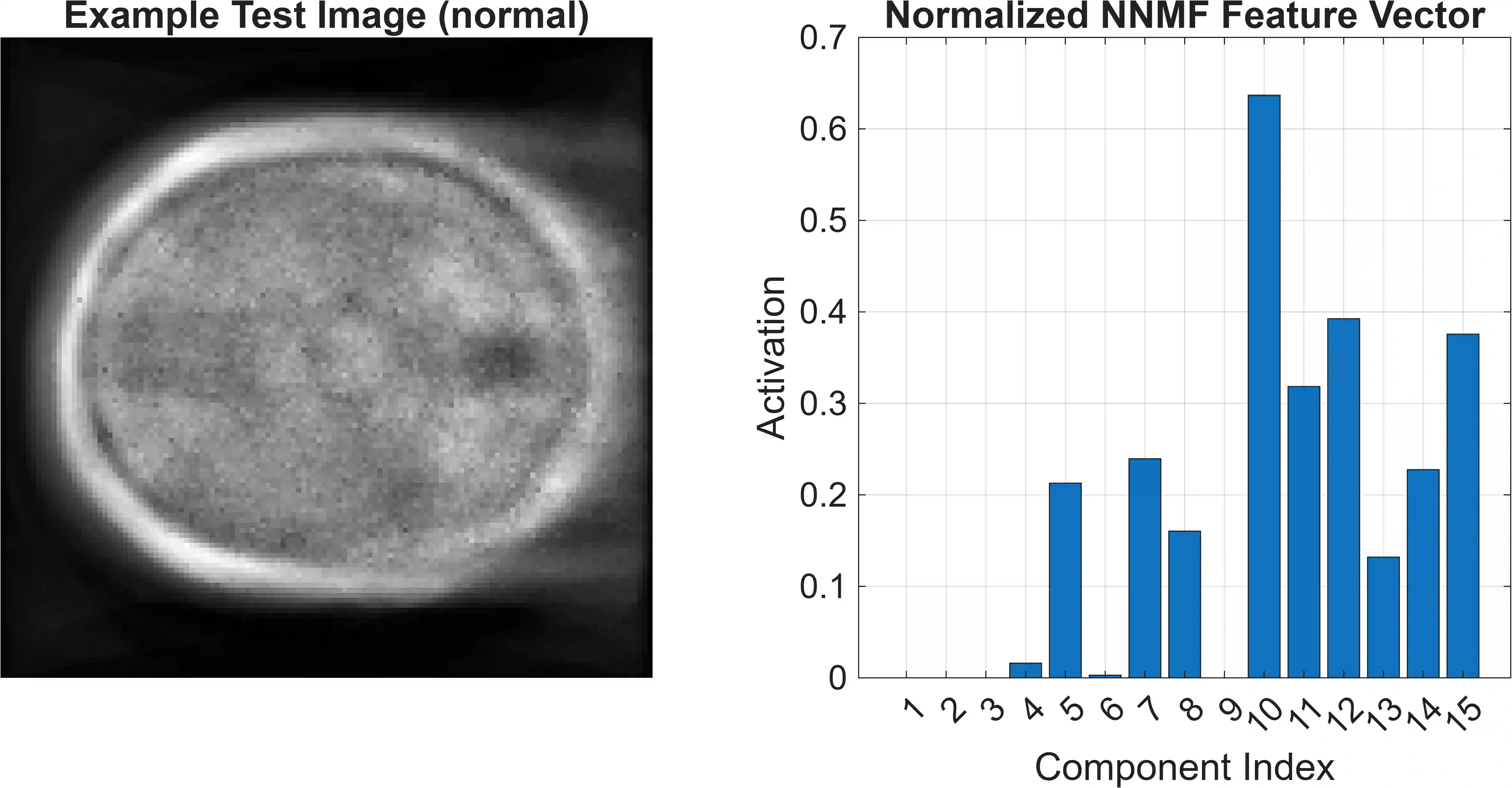
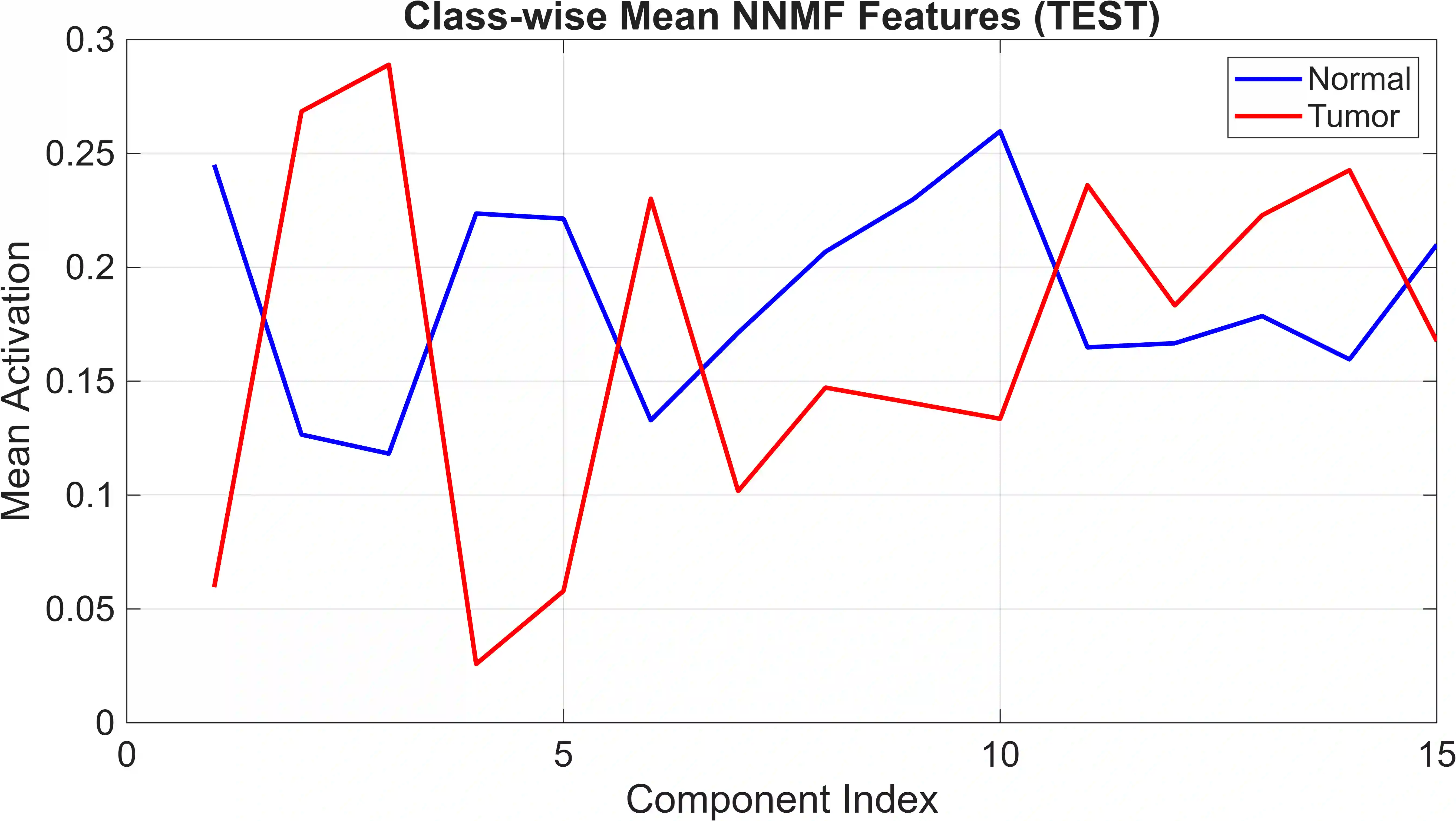
Brain tumor classification from magnetic resonance imaging, which is also known as MRI, plays a sensitive role in computer-assisted diagnosis systems. In recent years, deep learning models have achieved high classification accuracy. However, their sensitivity to adversarial perturbations has become an important reliability concern in medical applications. This study suggests a robust brain tumor classification framework that combines Non-Negative Matrix Factorization (NNMF or NMF), lightweight convolutional neural networks (CNNs), and diffusion-based feature purification. Initially, MRI images are preprocessed and converted into a non-negative data matrix, from which compact and interpretable NNMF feature representations are extracted. Statistical metrics, including AUC, Cohen's d, and p-values, are used to rank and choose the most discriminative components. Then, a lightweight CNN classifier is trained directly on the selected feature groups. To improve adversarial robustness, a diffusion-based feature-space purification module is introduced. A forward noise method followed by a learned denoiser network is used before classification. System performance is estimated using both clean accuracy and robust accuracy under powerful adversarial attacks created by AutoAttack. The experimental results show that the proposed framework achieves competitive classification performance while significantly enhancing robustness against adversarial perturbations.The findings presuppose that combining interpretable NNMF-based representations with a lightweight deep approach and diffusion-based defense technique supplies an effective and reliable solution for medical image classification under adversarial conditions.
翻译:磁共振成像(MRI)中的脑肿瘤分类在计算机辅助诊断系统中扮演着关键角色。近年来,深度学习模型已实现较高的分类准确率。然而,其对对抗性扰动的敏感性已成为医疗应用中重要的可靠性问题。本研究提出一种鲁棒的脑肿瘤分类框架,该框架结合了非负矩阵分解(NNMF或NMF)、轻量级卷积神经网络(CNN)以及基于扩散的特征净化。首先,对MRI图像进行预处理并转换为非负数据矩阵,从中提取紧凑且可解释的NNMF特征表示。使用包括AUC、Cohen's d和p值在内的统计指标对最具判别性的成分进行排序和选择。随后,直接在所选特征组上训练轻量级CNN分类器。为提升对抗鲁棒性,引入了基于扩散的特征空间净化模块:在分类前采用前向加噪方法及经学习的去噪网络进行处理。系统性能通过干净准确率与在AutoAttack生成的强对抗攻击下的鲁棒准确率共同评估。实验结果表明,所提框架在实现有竞争力分类性能的同时,显著增强了对对抗性扰动的鲁棒性。研究结果表明,将基于NNMF的可解释表示与轻量级深度学习方法及基于扩散的防御技术相结合,可为对抗环境下的医学图像分类提供有效且可靠的解决方案。




相关内容


 微信扫码咨询专知VIP会员